













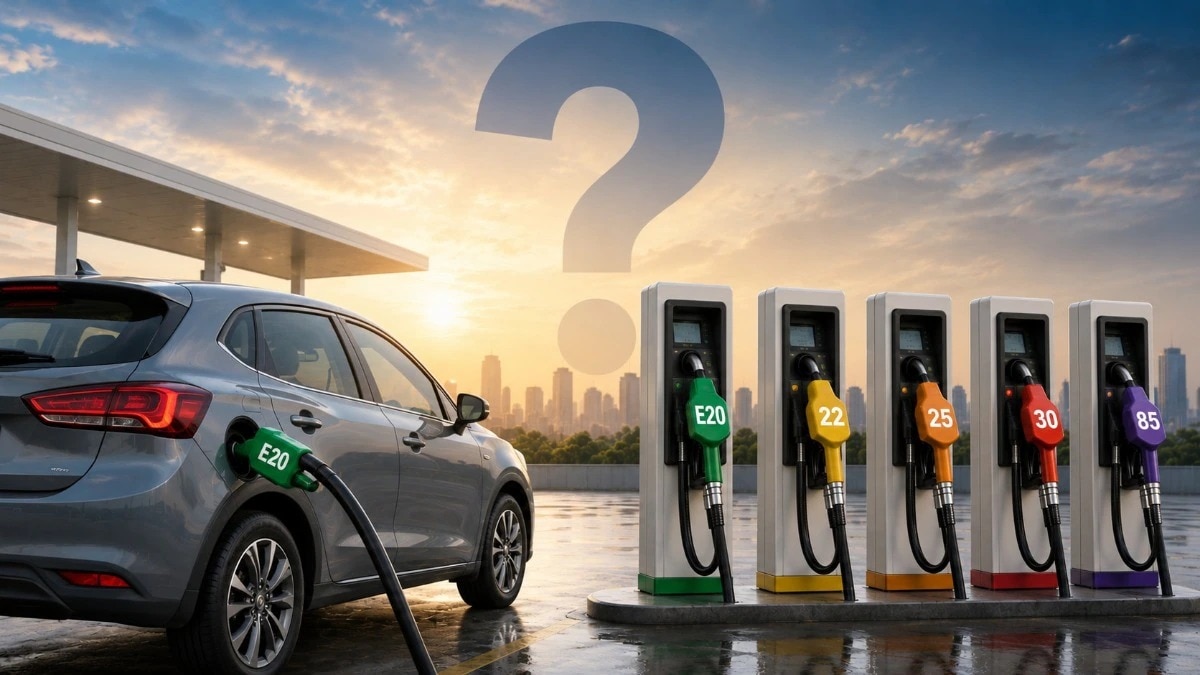
The Indian government’s plan to increase ethanol blending in petrol to over 20% aims to kill two birds with one stone: cut down the fuel import bill and boost farmers’ incomes. While the former became an immediate fiscal need after the rupee went into a free fall against the US dollar and oil turned expensive, the latter is political expediency.
The proposal to increase ethanol blending in petrol to 25% runs roughshod over 300 million car and two-wheeler owners whose vehicles are not compatible with the proposed mix. Already, social media is abuzz with scores of car owners expressing mileage-related concerns from E20, which has 20% ethanol and 80% petrol. These concerns are not without reason.
Sample this. If an individual bought a petrol-powered car before January 2023, it is likely that it is not E20-compliant. Hence, demand for E10 (compatible fuel) to be made available alongside E20 is fair. Ethanol is, after all, more corrosive than petrol, causing faster wear and tear in older engines not built to handle it. Besides, it has a 30% lower calorific value than petrol. In August 2025, the Ministry of Petroleum and Natural Gas, citing studies by Indian Oil Corporation Ltd, Automotive Research Association of India and India’s apex auto industry body, the Society of Indian Automobile Manufacturers (SIAM), clarified that E20 causes a “marginal” 3–6% decrease in fuel efficiency in “older non-compliant” vehicles. The details of the study were never released.
According to a survey by LocalCircles, five in 10 petrol vehicle owners who bought in 2022 or before are experiencing lower mileage post the E20 petrol mandate in 2025, and three in 10 are reporting unusual wear and tear.
Sunderdeep Singh, a Ludhiana-based car reviewer, says the E20 mandate is wrecking turbo cars with advanced Gasoline Direct Injection engines. Singh, who owns three cars of European brands, says he has been facing spark plug and electronic power control light issues for the last two years. While one of his cars is from 2013, the other two were purchased in 2021 and 2022, respectively. “Since my cars are out of warranty, I bear the expenses from my pocket,” he says. “If you read the manual of E10 cars, it says you should not use ethanol-blended petrol above E10. If this is what the manual says, how can anyone assume these cars will not face problems due to E20?” he asks.
SIAM, while responding to the Ministry of Petroleum and Natural Gas’ proposal for ethanol blending in 2020, said non-availability of E10 fuel after E20 implementation is a safety issue and a critical concern for existing pool of vehicles. “This may cause material degradation, which could lead to fuel seepage/leakage and, hence, a safety issue. Besides, fuel efficiency loss and poor drivability, especially for low-powered 2W, will not be acceptable to the customer,” it said. “E10 availability for existing vehicles/customers is a must and SIAM would strongly recommend dispensing of E10 fuel even after the E20 deployment.”
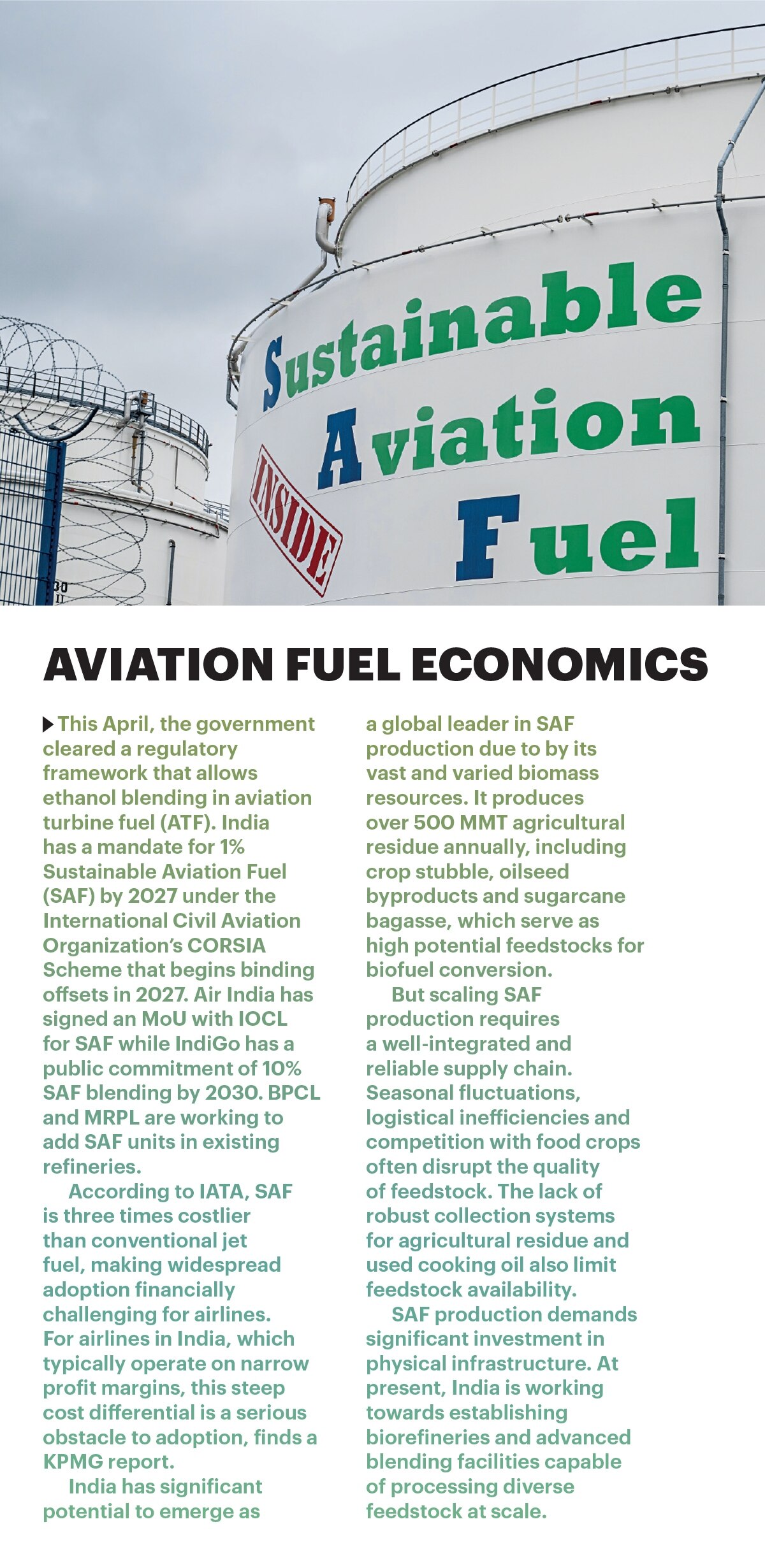
In 2014, ethanol blending in petrol was 1.53%. In 2022, it was 10%. India achieved the 20% target in July 2025, five years ahead of the 2030 deadline. With the West Asia war causing a spike in crude oil prices, the government is planning to double down on ethanol by mandating 25% blending before the end of the decade.
The Option
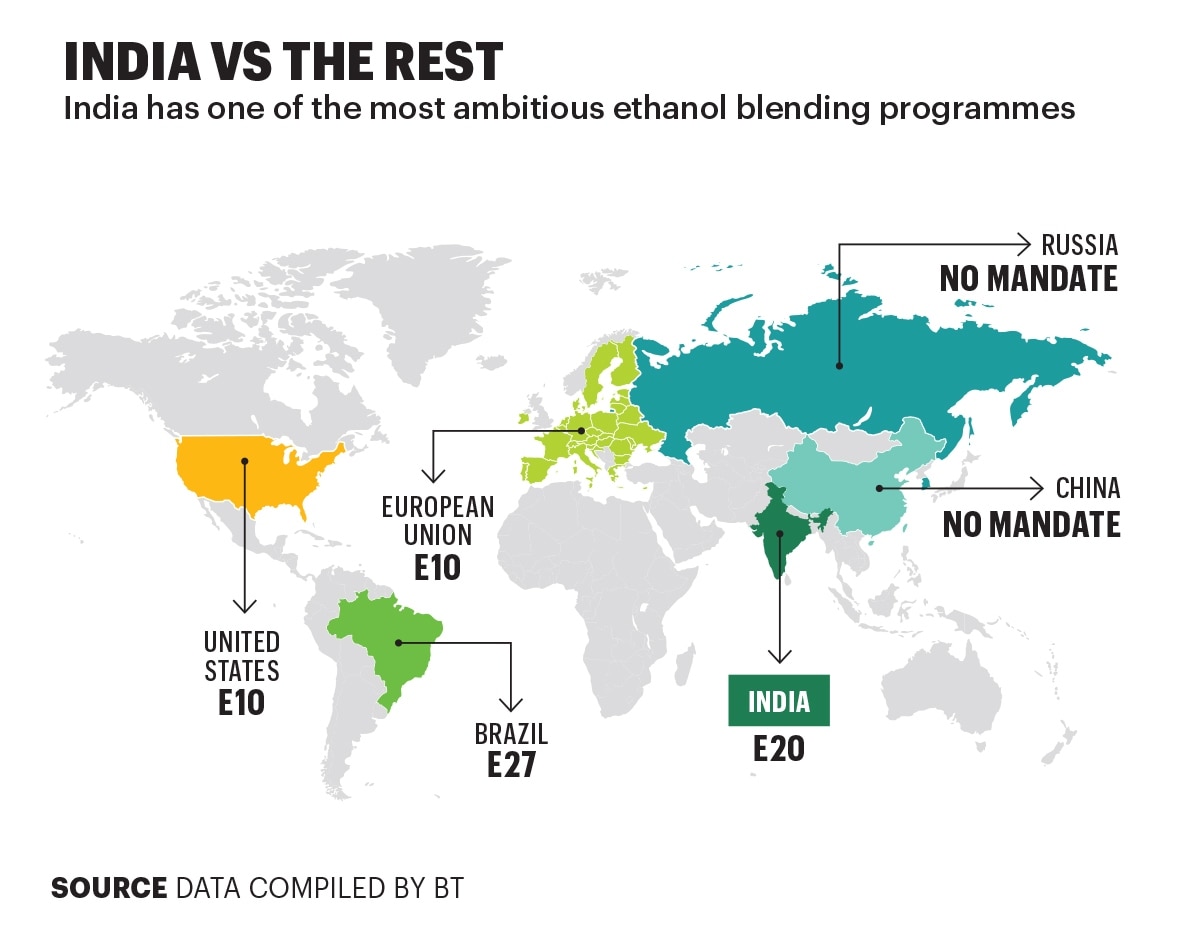
Indian policymakers who cite Brazil as an example of a successful ethanol programme ignore that over 80% of cars in the south American nation are flex-fuel vehicles. In contrast, India has a large legacy fleet originally engineered for lower ethanol blends. In Brazil, the transition to higher blends happened over three decades.
The haste with which the Centre is pushing ethanol cannot be ignored. Union Minister of Road Transport and Highways, Nitin Gadkari, recently warned there is no future for petrol and diesel vehicles, nudging automakers to adopt alternatives such as biofuels.
“We are all for increasing biofuel content in the energy mix. That is a sure-shot way to make ourselves atmanirbhar and whether it comes through E25 or through a rapid shift to E85 and E100 (flex fuel), we are for it,” says Harshavardhan Chitale, CEO of Hero MotoCorp.
India’s clean mobility transition, say industry leaders, cannot depend on a single technology. By 2030, India’s car market is expected to swell to nearly six million annually. Even in the most optimistic scenario, EV penetration may reach only 20%. That will still leave nearly 4.8 million internal combustion engine cars. The country’s dependence on imported fossil fuels could deepen instead of easing. The International Energy Agency has already flagged India as a major driver of future fossil fuel demand growth, projecting that more than one-third of global oil demand growth could come from the country.

“This scenario is going to be disastrous not only for the environment but also the economy. The current account deficit is going to go through the roof,” says Toyota Kirloskar Motor country head Vikram Gulati. “If you go electric, you are increasing the import bill for EV parts. That is going to reduce when indigenisation happens. But that is going to take some time,” he adds.
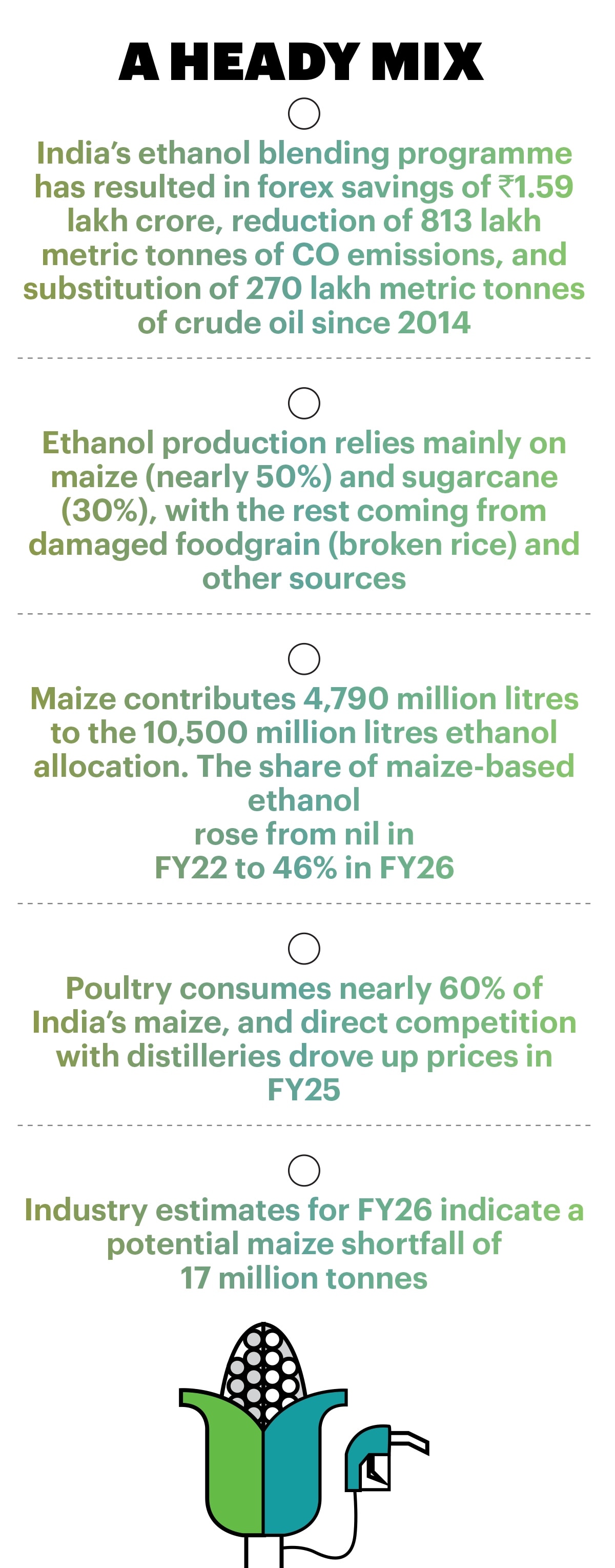
India’s ethanol blending programme has resulted in foreign exchange savings of about `1.59 lakh crore, reduction of 813 lakh metric tonnes of CO emissions, and substitution of 270 lakh metric tonnes of crude oil since 2014, according to government data.
Shailesh Chandra, MD & CEO of Tata Motors Passenger Vehicles, says the government and OEMs have always been working over the years to develop a roadmap for improving the ethanol mix. “We have always been supportive of this move and any further increase.”
Caution On E25
While the details of the 2021 study on E20 remain elusive, discussions have already started on a similar testing for E25 on non-compliant E10 and E20 vehicles. In May, the Bureau of Indian Standards notified fuel specifications for higher ethanol blends, including E22, E25, E27 and E30 petrol.
“With E25, it is important to test older vehicles, because it can potentially have some impact,” says Gulati. “The assessment of whether E25 is feasible or not will be only consequent to the outcomes of the study. There are two parameters one has to look at: legacy vehicles and new vehicles. The government and the industry will have to do a cost-benefit analysis to see if that makes sense,” he says.
However, raising the baseline ethanol blend in quick succession may not be a wise move.

“Taking ethanol blending from the current 20% (E20) to higher levels will have to be done with care, taking into account multiple factors such as vehicle safety, engine compatibility for older vehicles, fuel economy and mass availability of ethanol-blended fuel,” says Rajesh Jejurikar, ED and CEO, Auto and Farm Sector, Mahindra & Mahindra Ltd.
Any further increase in the baseline ethanol blend may prompt customers to buy diesel cars instead of petrol. “Increasing blending to E25 is less disruptive and largely compatible with modern engines, but consumer concerns over mileage loss and maintenance might prompt some shift towards diesel, particularly in cost-sensitive segments,” says Ravi G Bhatia, President, JATO Dynamics. However, stricter emission norms and the long-term phase-down of diesel are likely to limit any significant transition over the long term, he adds.
It’s no wonder that the share of petrol-powered cars in the country declined from 51% in 2024-25 to 47% in FY26 while that of diesel has remained stable at 18%. The trend is likely to continue as ethanol-wary customers may opt for diesel cars in search of better fuel efficiency.
While the government has taken a leaf out of Brazil’s biofuel programme when it comes to ethanol, the same alacrity has not been shown for biodiesel, mainly because India is a net importer of vegetable oils used in biodiesel. India’s ethanol production currently relies mainly on maize (nearly 50%) and sugarcane (30%), with the rest coming from damaged foodgrain and other sources, according to NITI Aayog.
Ethanol production is dependent on the vagaries of the weather. A weak monsoon could hit sugarcane and maize output, disrupting ethanol supplies. Besides, there are concerns around excessive use of water in sugarcane farming.
India has already shifted from being a net exporter of maize to a net importer in 2024 due to the ethanol push. Production of maize-based ethanol rose from nil in 2021–22 to 46% in 2025–26, with maize contributing roughly 479 crore litres to the 1,050 crore litre ethanol allocation. According to the All India Distillers’ Association, poultry alone consumes nearly 60% of India’s maize. Industry estimates for 2025–26 indicate a potential maize shortfall of 17 million tonnes.
With food security also a concern, it will take a lot of trial and error for India to reach its ideal ethanol mix.
@karandhar


