













"His Rolls-Royce became an omnibus, bearing parties to and from the city... ”, wrote F. Scott Fitzgerald, describing the opulence of Gatsby in his canonical piece The Great Gatsby.
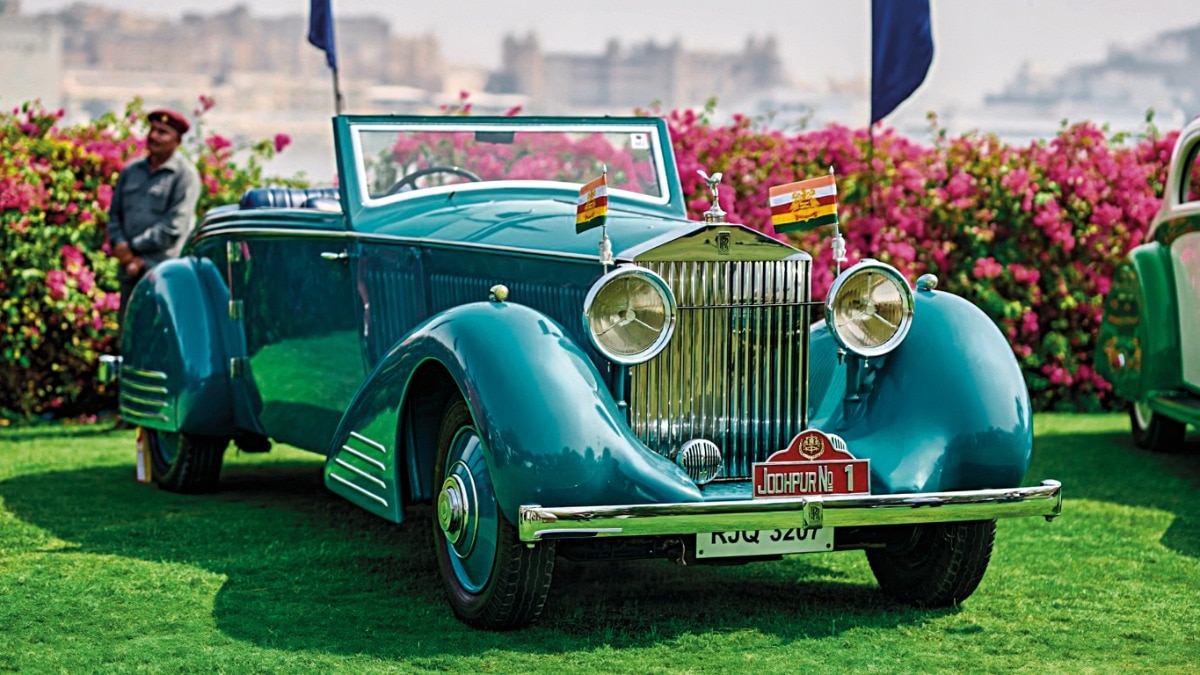
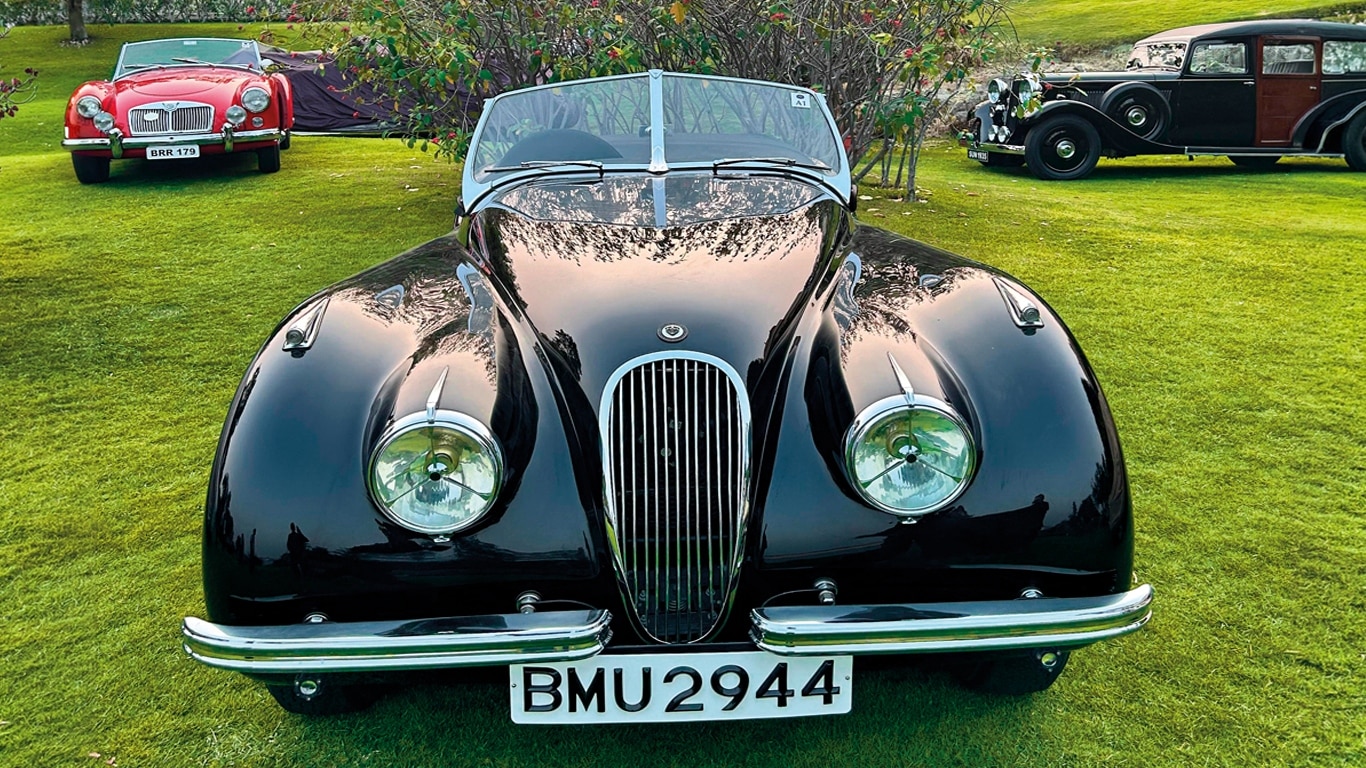
Similarly, in a show of luxury and wealth, Udaipur turned sepia as vintage and classic cars rolled into the city for the second edition of The Oberoi Concours d’Elegance—a show where cars are displayed and judged on their appearance and restoration work. From pre-war European and American cars to post-war classics, many of these cars have a storied history.
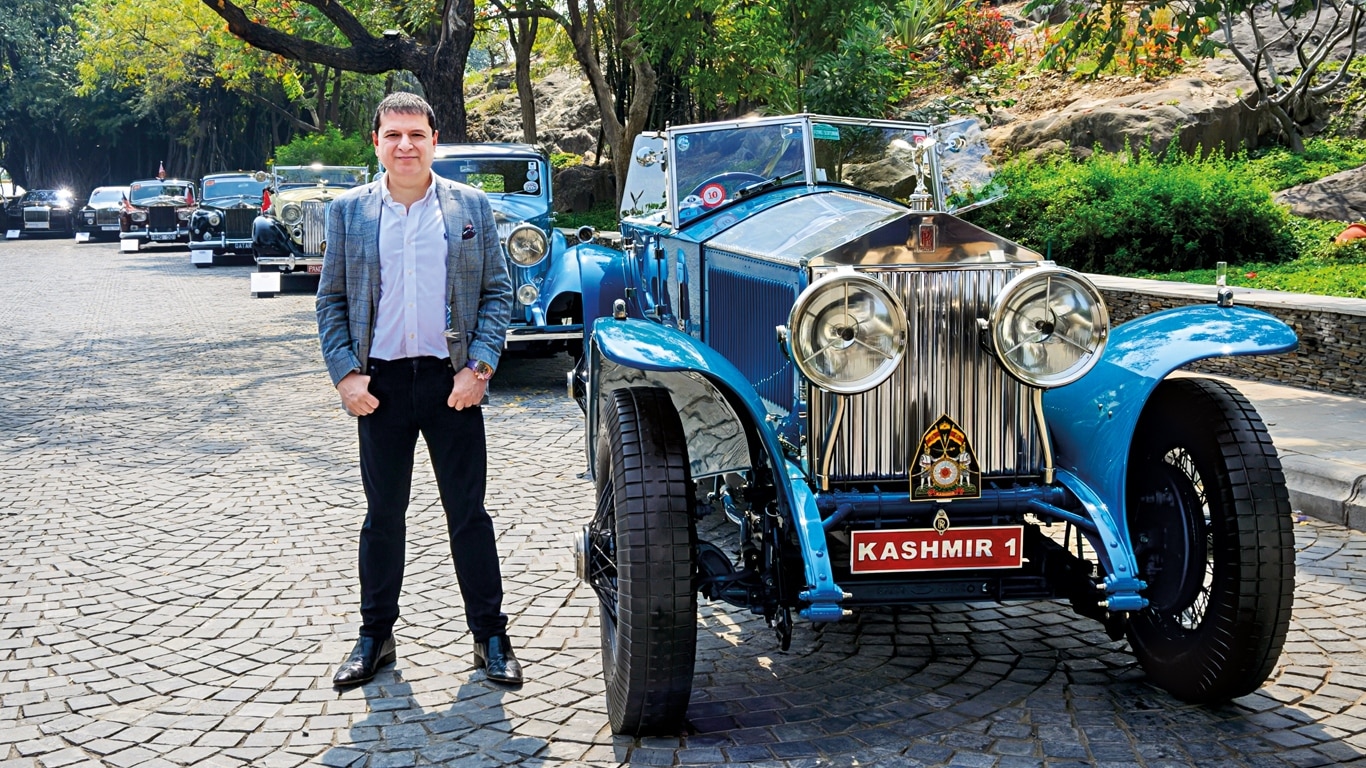
Take, for instance, billionaire Yohan Poonawalla’s Rolls-Royce Phantom 1, which was designed and built in 1928 by Henry Royce himself. The car, first bought by the Hari Singh, Maharaja of Kashmir, spent several years in the country before it left Indian shores in early 1970s.
“It changed several famous hands in Europe including Victor Muller. Then I happened to get my hands on it a couple of years back,” Poonawalla tells Business Today.
This one-off car, also known as 17 EX (experimental), was built to beat Bentley at Le Mans and do the 100-mile-an-hour in those days, according to Poonawalla. Before the Second World War, India was one of the biggest markets for Rolls Royce.
“India accounted for one-fourth of Rolls-Royce’s total sales from 1912 to 1947. Maharajas saved Rolls-Royce during the war years. Indian royals would go to London and Paris shows and buy cars there. The Kashmir car was bought in a show,” says Manvendra Singh Barwani, automotive historian and the curator of the Oberoi Concours d’Elegance.
After India gained Independence, import of cars for personal use was prohibited under the Licence Raj and only embassies were allowed to import, says Barwani.
The value of vintage cars fell subsequently, prompting buyers from other countries to buy these. As a result, many of these cars left India, including the one belonging to the Maharaja of Kashmir.
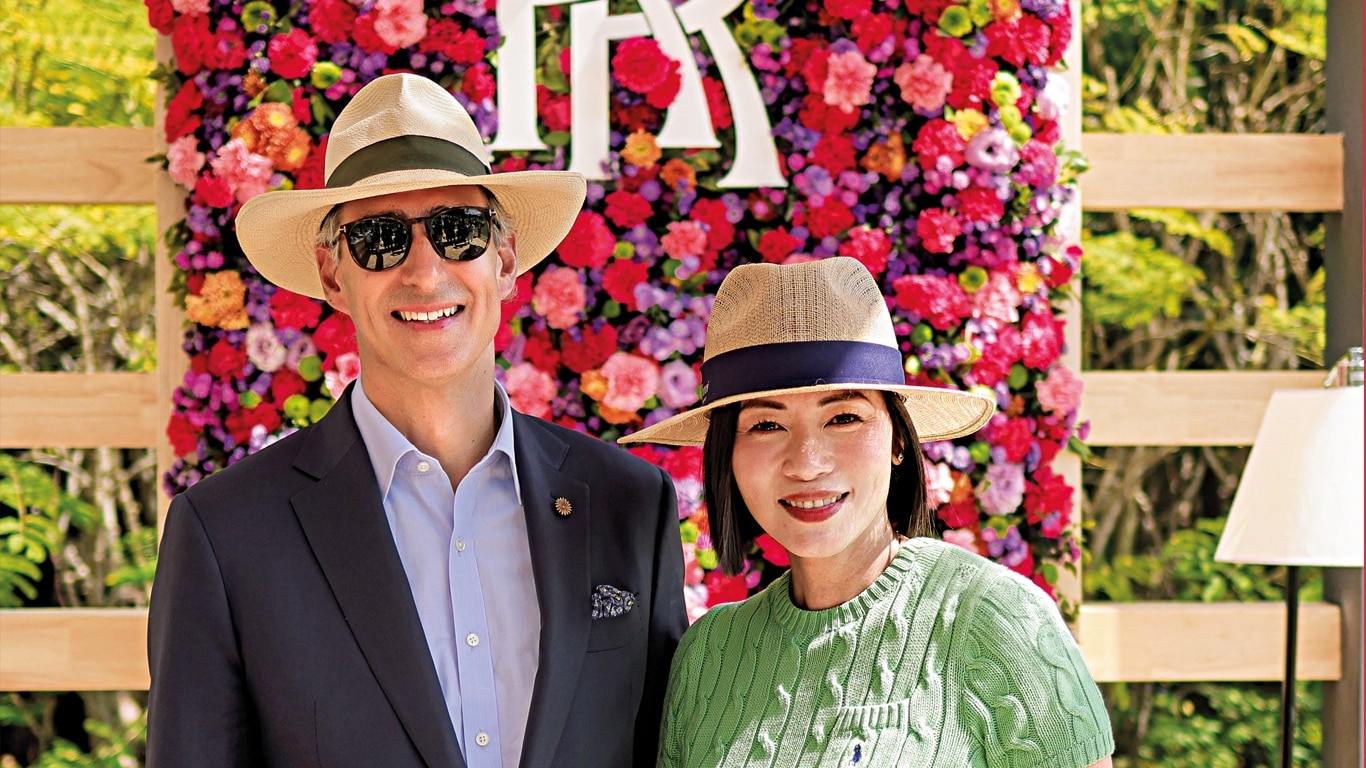
There was a time when Rolls-Royce was an established brand in India, says Irene Nikkein, Regional Director Asia-Pacific, Rolls-Royce Motor Cars. “The Maharajas had a very strong appreciation of it. Over the years, there have been some changes in the market with duties and taxes. Of course, there was a natural decline. Over the last few years, we saw it slowly picking up again,” says Nikkein.
Things turned a corner in 2013 as the government allowed import of vehicles manufactured before 1950.
“India has around 6,000 vintage cars from the British era. About 300 cars have been recently imported after the government allowed people to import,” says Barwani.
These rules were further eased in February 2025, as the government notified new norms allowing import of cars older than 50 years. All this has spawned a new crop of vintage car collectors and restorers in India who don’t let lack of available auto parts to come in the way of their passion.
Passion is probably the key factor that drives collectors, says Poonawalla. “You always have to be on the lookout because these cars are in different parts of the world. Getting them all together is no mean task. I have been working on them for the last 20 years. And no single collector has put together this Phantom showcase at any one single event. It is very special,” says Poonawalla, whose showcase of seven Phantom cars included a 1979 Rolls-Royce Phantom VI previously owned by Queen Elizabeth II. “It is a logistical nightmare to get them all together at one spot at the same time.”
Passionate collectors—mostly businessmen who like to splurge on flamboyant automobiles and a few descendants of royal families from erstwhile princely states—go above and beyond to restore these cars.
Pallab Roy, a vintage car collector who belongs to the Cossimbazar royal family in West Bengal, says getting parts is the biggest challenge. Roy restored a Mercedes-Benz 170 V Roadster from 1938 after buying it as scrap. “It was only the chassis with half a door and half a fender. From there, we built it in our workshop. We went to Stuttgart to get parts from Mercedes. But they had nothing for us,” says Roy, who also restored the iconic 1937 German Wanderer which was used by Netaji Subhas Chandra Bose to escape house arrest during the British Raj in 1941.
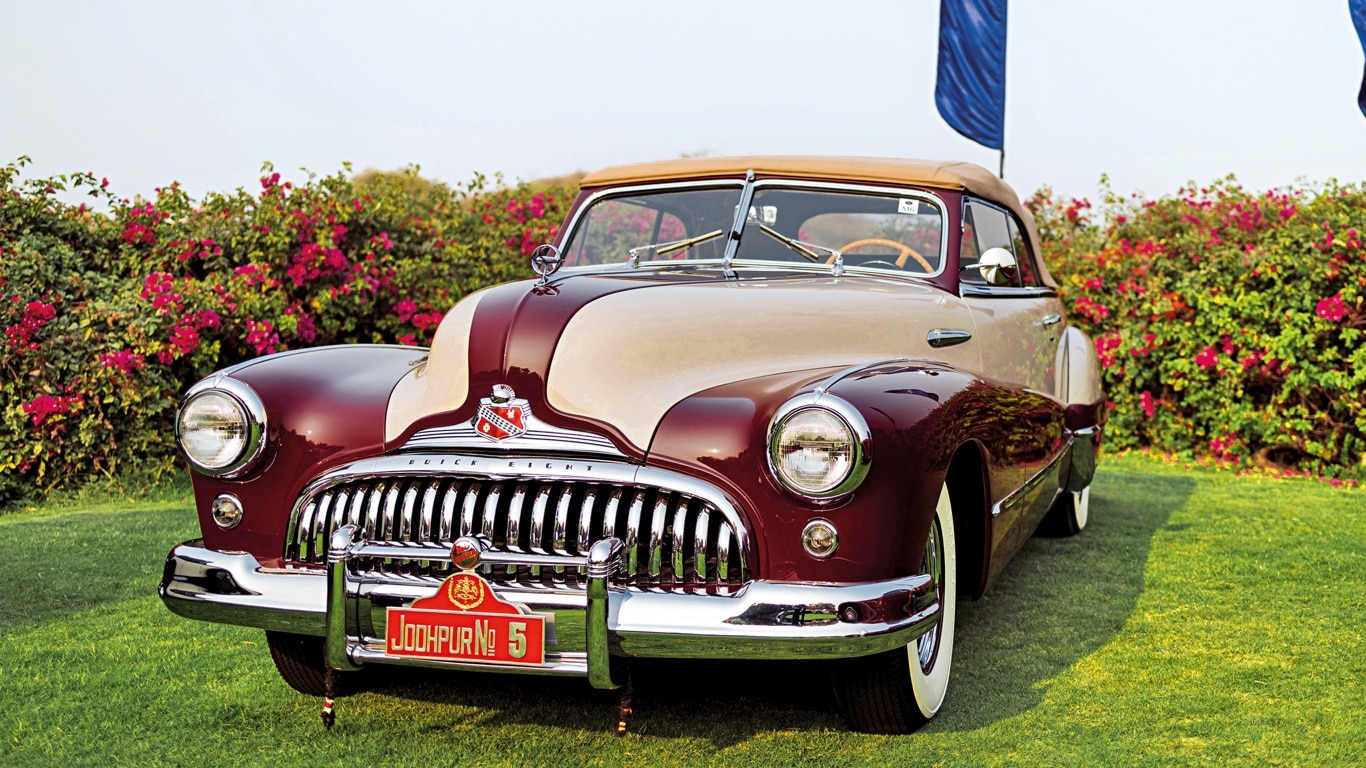
Getting parts for American cars has also become difficult, says Allan Almeida, a restorer who worked on Maharaja of Jodhpur’s dual-tone 1947 Buick. “The only challenge was getting parts. For American cars, parts were easy to get. But post Covid, it has become difficult. Anything that’s hard to get, we ebay,” he says.
Rolls-Royce’s Nikkein says lack of spares is not easy to tackle. “They work better with third-party suppliers. Engineering behind vintage cars is different from modern cars,” she says.
This year’s show put the spotlight on cars coach built in India from 1910 to 1945 and India’s motorsport heritage. In Pre-War American Classics, the competing cars ranged from the rare 1905 Oldsmobile to the 1936 Dodge, a convertible sedan owned by the Benares royal family. Pre-War European Classics on display included Lagonda Weymann Saloon, Alvis Sports Tourer, and Bentley Drophead Coupe among others. Other famous marques included Bugatti, Delaunay-Belleville, Alfa Romeo, Cadillac, and Sunbeam.
Vintage car collectors have restored these cars to precise standards and specifications as they came out of the factory, Arjun Oberoi, executive chairman of EIH, the holding company of Oberoi Hotels, tells BT. “We are seeing a renewed interest from Indian collectors. Some of the cars have been in the same family for generations. Maybe they skipped a generation where their parents or grandparents didn’t really appreciate what they had. So, the younger generation suddenly said wow, this is something unique. Let’s restore it.”
For collectors and enthusiasts alike, events like the Oberoi Concours d’Elegance are not merely exhibitions of wealth or nostalgia, but celebrations of craftsmanship and motoring heritage that continue to captivate generations.
@karandhar11


