Vinit Bolinjkar: While I believe some near-term caution is justified due to stretched valuations and froth in select segments, the broader outlook for India remains very bullish. Short-term corrections or periods of consolidation should be seen as healthy pauses rather than threats. India’s macroeconomic stability, earnings resilience, and strengthening global positioning continue to support a long-term growth story. We see this as a structural bull market with temporary dips that offer better entry points, not signals to exit.
Q: Which sectors look the most promising for long-term investors right now?
Bolinjkar: A few sectors stand out as particularly promising. Manufacturing and industrial automation are benefitting from multiple tailwinds like the China+1 strategy, PLI schemes, and growing defence production. Financial services—especially private banks, selective NBFCs, and insurance—are supported by rising credit demand, formalization, and digital adoption.
Renewable energy and green technology is another exciting space. From solar to EV infrastructure and hydrogen, India’s energy transition is a multi-decade opportunity. Healthcare and pharma are well-positioned due to both global supply chain realignments and domestic healthcare needs. And lastly, consumer discretionary segments like autos, durables, travel, and premium QSRs are benefiting from rising middle-class incomes and aspirational spending.
Q: Could you share one or two stock ideas that Ventura is currently bullish on?
Bolinjkar: One name we like is Samhi Hotels. We see strong growth over the next 12–24 months driven by high occupancy rates, brand strength, and improving earnings visibility. A short-term price consolidation may even present tactical buying opportunities. Another stock we’re optimistic about is Aegis Vopak, which is a play on India’s energy logistics and import-driven infrastructure growth. While execution of capex plans and key milestones must be tracked, we believe the long-term earnings outlook supports a re-rating.
Q: How do you balance short-term calls with long-term investment advice at Ventura?
Bolinjkar: We adopt a dual approach. In overheated or high-valuation segments, we take a cautious tactical stance. But our focus remains firmly on long-term themes supported by structural reforms, manufacturing expansion, and digital transformation. We treat market pullbacks as opportunities to build positions in high-conviction stocks rather than reasons to exit. This balance allows us to manage risks while staying aligned with India’s long-term growth trajectory.
Q: What are some common mistakes you see retail investors making in today’s market?
Bolinjkar: One of the biggest mistakes is blindly chasing momentum. Investors jump into stocks—especially microcaps, PSUs, or hot sectors—after massive rallies without evaluating fundamentals. Another common issue is ignoring valuations, if prices will keep rising indefinitely. Many also over-concentrate their portfolios in one theme or sector, increasing risk.
Retail investors often confuse short-term cyclical rallies with long-term structural trends, and many ignore asset allocation entirely—going all-in on equities during euphoric phases. Another pitfall is chasing low-priced stocks without assessing business quality or governance. Finally, there’s a reluctance to book profits, with investors holding on too long due to greed. Discipline, diversification, and understanding what you own are key.
Q: Are mid and small-cap stocks getting too expensive now, or is there still value to be found?
Bolinjkar: There’s no blanket answer. Some pockets in the mid- and small-cap space are definitely overheated, and we would not recommend indiscriminate buying. However, deep research and disciplined stock picking can still uncover quality businesses with multibagger potential. With India on track to become a $10 trillion economy over the next decade, many future leaders will likely emerge from this space. The focus should be on companies with strong fundamentals, scalable models, and sound management—not just recent price performance.
Q: How does Ventura identify and manage risks in stock selection, especially amid global uncertainties?
Bolinjkar: We use a multi-layered approach. First, we analyse business fundamentals, including revenue and profit sustainability, balance sheet strength, and capital allocation. We also assess macro and global linkages—especially for sectors like IT, chemicals, or metals that depend on exports or commodity cycles.
Valuation risk is another key area. We avoid overpaying, even for quality businesses. Liquidity and sentiment risks are also monitored closely, especially in small-cap stocks that may see sharp movements in volatile markets. Our goal is to combine bottom-up stock selection with top-down risk checks to ensure resilience across different scenarios.
Q: Is Ventura adopting any new tools or technologies—such as AI—to improve research and client experience?
Bolinjkar: Absolutely. We’ve developed an in-house AI system—what we call our “black box”—which scans thousands of data points in real time to flag emerging opportunities. It allows our team to zero in on potential high-conviction ideas faster.
We’ve also automated the maintenance of our databases, so our analysts always have updated insights on earnings, corporate actions, and macro indicators. And to reach a broader audience, we’ve launched multilingual podcasts to deliver research and education in regional languages. Technology is central to how we scale both research quality and investor accessibility.
Q: What are the biggest risks investors should watch for in the next 6–12 months?
Bolinjkar: Several risks are on the radar. Globally, delayed US Fed rate cuts, persistent inflation in the West, or slower growth in China could affect sentiment. Geopolitical tensions—whether in Eastern Europe, the Middle East, or between the US and China—can trigger volatility.
Domestically, some mid- and small-cap valuations look overextended, and any disappointment in earnings could cause sharp corrections. There’s also the risk of changing liquidity conditions if foreign investors pull back. Policy uncertainty or fiscal slippage post-elections could also dent sentiment.
Our message is to stay selectively cautious in the short term, maintain a quality bias, and be disciplined. Corrections should be viewed as opportunities in a market that still offers long-term potential.



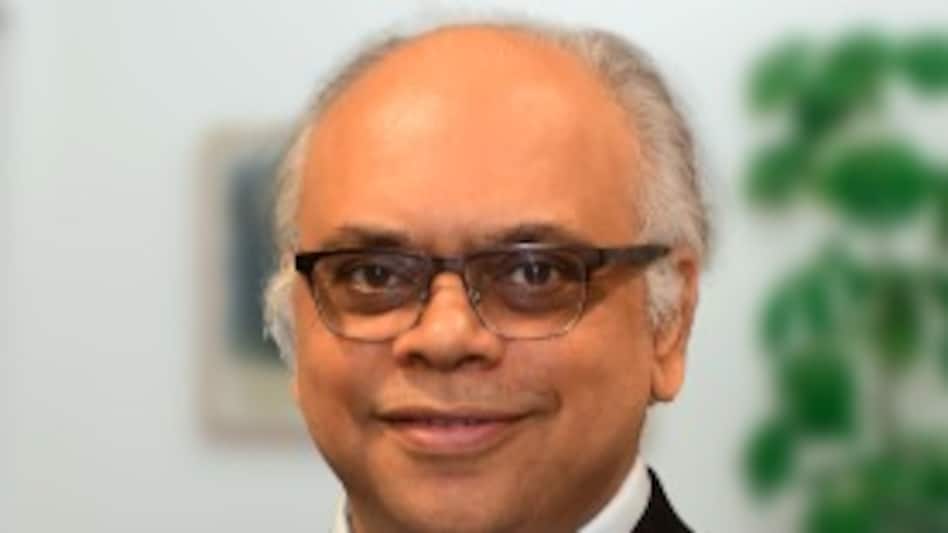 Vinit Bolinjkar, Head of Research at Ventura Securities
 'RBI letter does not mention listing': Noel Tata seeks full briefing on Tata Sons-RBI talks
 Tata Trusts asks Tata Sons to explore options other than listing, says ‘Tata Model has to be saved’
 Tata Trusts proposes ₹25,000 crore plan for SP Group, says Tata Sons listing is not an option
 Chandrasekaran had assured all necessary steps were being taken to remain private: Noel Tata
 'We cannot put the cart before...': Noel Tata's argument against N Chandrasekaran's reappointment
 How India Changed In 12 Years: PM Modi’s Journey From Economic Reforms To Viksit Bharat
 Modi @76: From Twitter To Instagram, How His Digital Outreach Has Evolved
 Stock Picks To Watch: Shibani Kurian Reveals Kotak AMC’s Market Bets
 Gold ETF vs Physical Gold: Know the Tax Rules, Charges and Key Differences
  PPF vs NPS: Tax Benefits, Returns and Lock-in Period Explained for Retirement Planning
 Hero Motors IPO subscribed 3.37 times on Day 2; retail portion subscribed over 5 times
 NSE IPO: India's largest exchange gets 43% subscription on Day 1; NIIs, retail see strong demand
 Rentomojo shares settle maiden trade nearly 32% above IPO price; what should investors do now?
 Sensex slips, Nifty settles higher; Tata stocks gain after N Chandrasekaran reappointment
 Cochin Shipyard, KRBL, RITES, Ramky Infrastructure among stocks to turn ex-dividend on September 18
 Who is Sethuraman Panchanathan? Chennai-born scientist honoured with NAE’s prestigious Bueche Award
 Vijay’s UK visit brings ₹15,300 crore investment commitments to Tamil Nadu, over 10,000 jobs
 From seafood waste to reef recovery: How 500,000 tons of oyster shells helped restore the Gulf
 Micron workers reject 68 months’ pay, demand 15% of AI boom profits
  Australia to restrict family visas for international students: What Indian applicants need to know












