












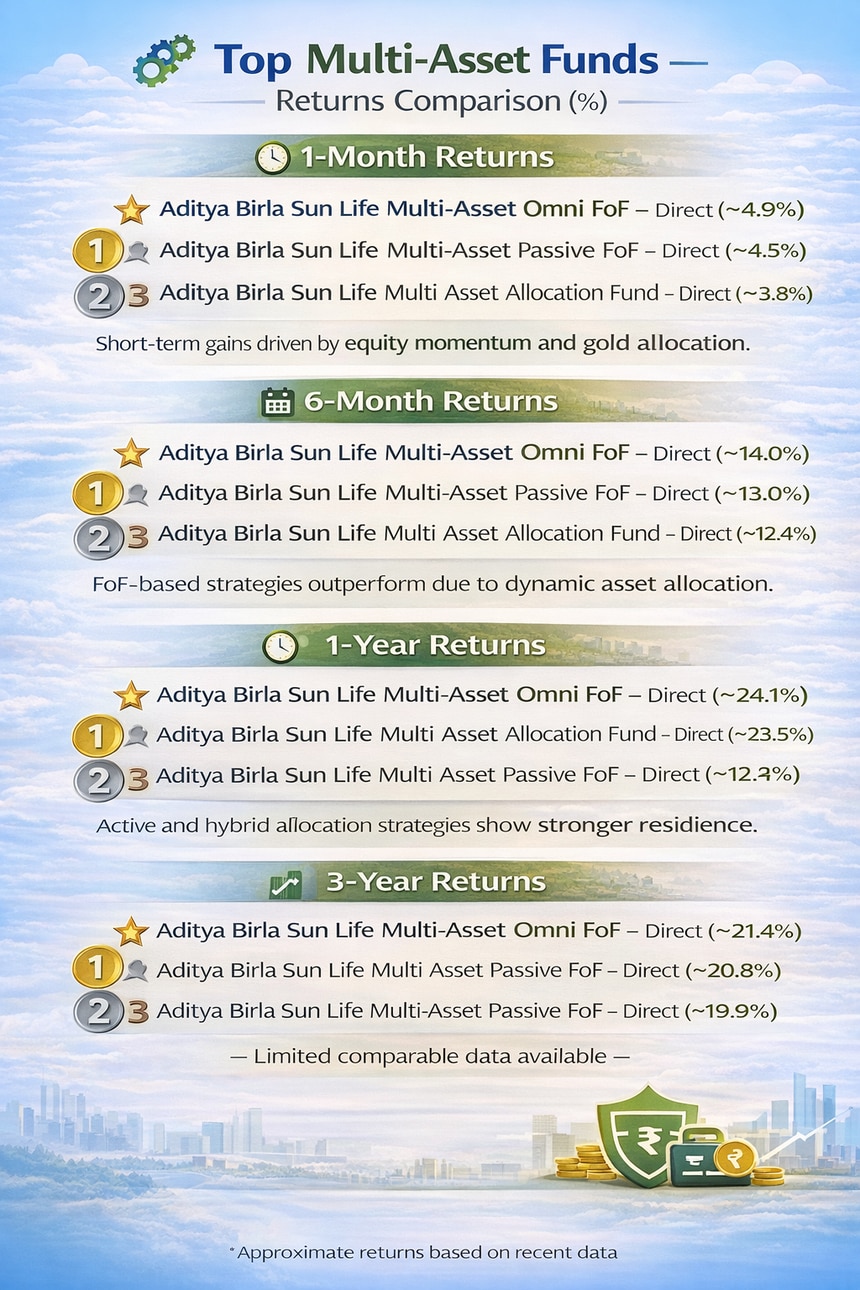



 Market experts said multi-asset funds have benefited from performance-led inflows, as exposure to gold and silver helped them outperform several equity fund categories.
Multi-asset allocation funds recorded a sharp surge in investor inflows in December, underscoring growing demand for diversified investment strategies amid volatile equity markets. Inflows into the category jumped 40% month-on-month to Rs 7,425 crore, compared with Rs 5,314 crore in November 2025. On a year-on-year basis, inflows rose 188% from Rs 2,574 crore in December 2024, according to industry data.
The sharp rise has been largely driven by strong performance in gold and silver, which outpaced equities during the period and lifted returns for multi-asset funds with allocations to precious metals. This relative outperformance has drawn increased participation from both retail and institutional investors seeking alternatives to pure equity exposure, particularly at a time when market volatility and global uncertainty remain elevated.

 'AI ending humanity is nonsense': Ex-Infosys CEO Vishal Sikka rejects growing doom warnings
 'Majority among two is two': Tata Trusts says Chandrasekaran reappointment failed AoA condition, has no legal effect
 ICAI plans further reforms to scale up homegrown accounting firms
 'Modi admin has done a phenomenal job': Blackstone's Jon Gray on what changed in India
 'SC/ST Act is being weaponised': Tech CEO backs IIT Bombay Professor, calls for case withdrawal
 Gold Price Target 2026: Expert Sees MCX Gold At ₹1.8 Lakh By Year-End Amid Strong Demand
 Health Insurance: Why Pre-Existing Diseases And Waiting Periods Matter For Buyers
 Crude Oil Above $100: How High Energy Prices And Rupee Weakness Impact Gold Prices In India
 CEA On India’s Manufacturing Rise, Atmanirbhar Bharat And Modi’s Economic Policy
 Health Insurance Buying Guide: 7 Things First-Time Buyers Must Check Before Choosing A Policy
 SpaceX weight in Nasdaq 100 to jump to 2.82% following quarterly index rebalance: Report
 Tata Motors or Ashok Leyland? Analyst reveals his preferred auto stock for near-term gains
 Maharashtra Scooters, Dixon Tech, Bharat Dynamics, Jai Corp among stocks to turn ex-dividend on Monday
 Jindal Supreme, SS Retail, Hero Motors IPOs subscribed up to 181 times on final day; details here
 Sensex, Nifty post sixth weekly loss; TCS, Titan among top laggards, slip up to 4%
 Major milestone: Rajasthan's 700 MWe nuclear reactor begins initial fuel loading, enters key commissioning stage'AI ending humanity is nonsense': Ex-Infosys CEO Vishal Sikka rejects growing doom warnings'SC/ST Act is being weaponised': Tech CEO backs IIT Bombay Professor, calls for case withdrawal
 IMD warns of extremely heavy rain as Bay of Bengal low-pressure system heads towards Andhra-Odisha coast
 EAM S Jaishankar, former Army chief get SIR notices in Delhi


