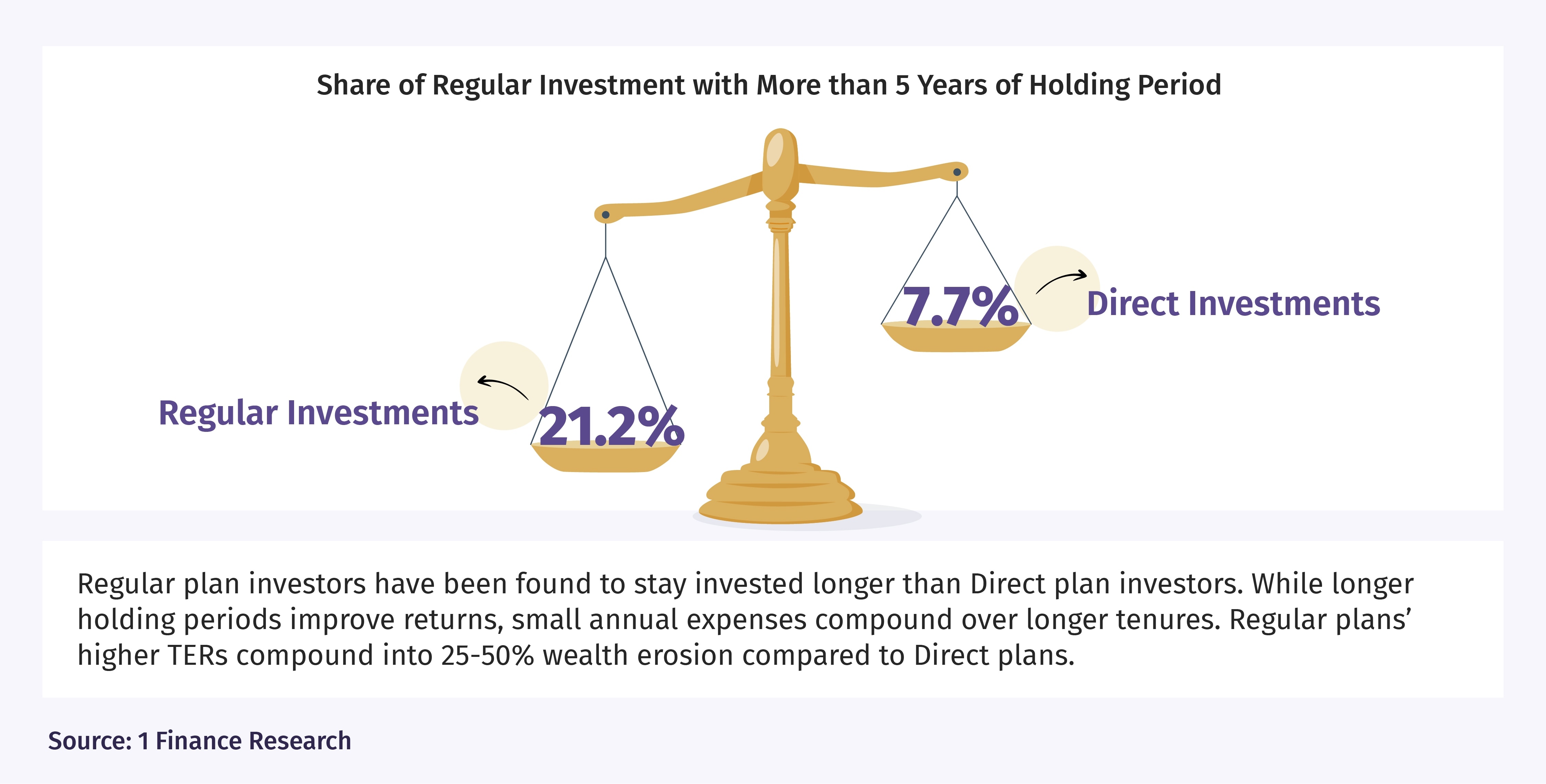



 While the gap between Direct and Regular plans may appear modest over five years, it widens sharply over longer holding periods.
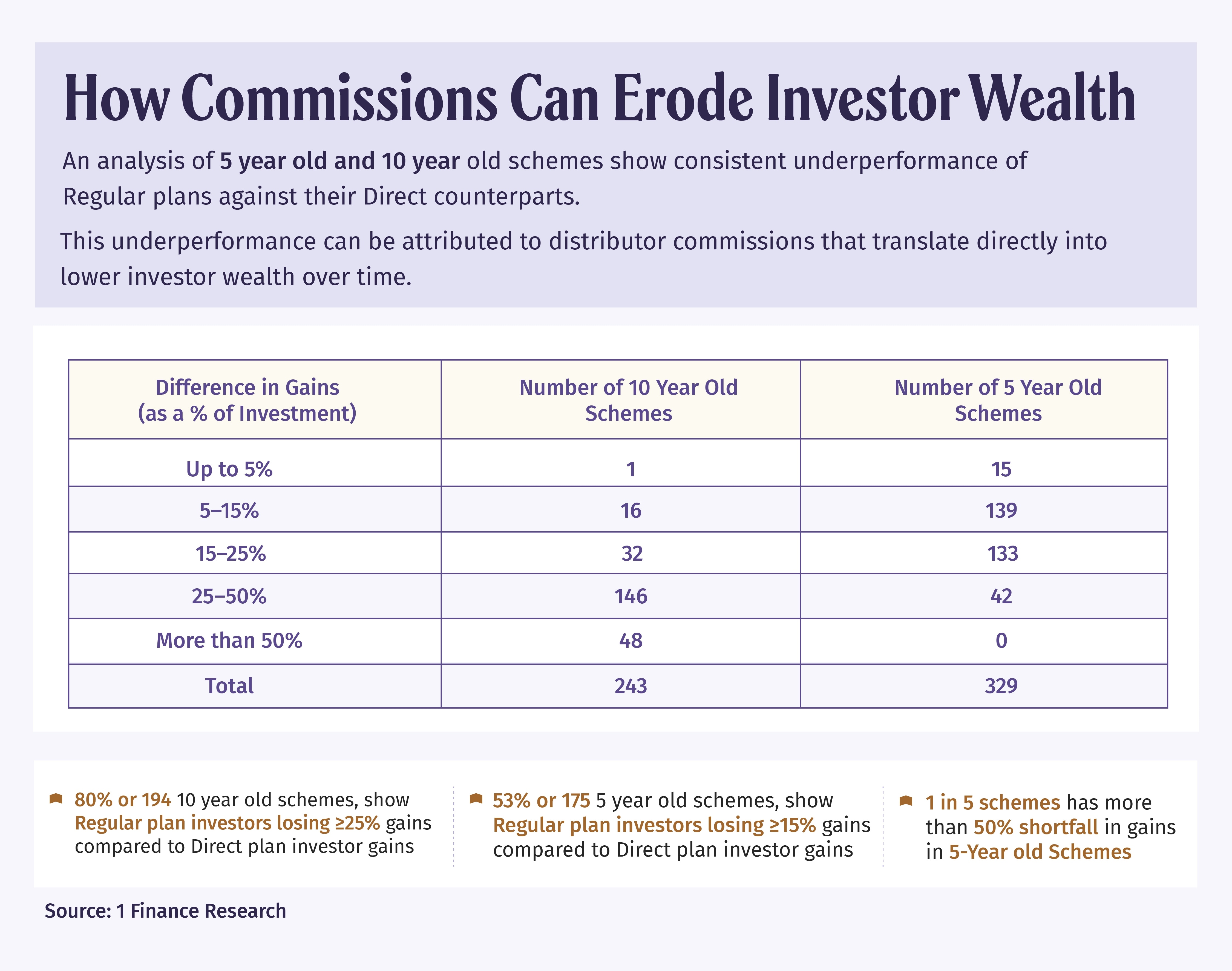
Hidden commissions in regular mutual fund plans can significantly erode long-term investor wealth, with most investors losing more than a quarter of their potential gains over a decade, according to a new study by 1 Finance Research.
The report found that over a 10-year holding period, more than 80% of equity mutual fund schemes delivered at least 25% lower wealth to investors in Regular plans compared with Direct plans of the same fund. Nearly one in five schemes showed a wealth gap of over 50%, driven purely by the compounding impact of higher expense ratios embedded in Regular plans.

 IDBI Bank employees and pensioners have nothing to fear: DIPAM Secretary
  'I wish I was 20 years younger': Sunil Mittal on India's next 20 years, recalls OneWeb pitch to Rishi Sunak
 RIL group to become India's largest conglomerate by m-cap after Jio IPO: Uday Kotak
 NDMC announces two-day closure of Connaught Place's Central Park ahead of CJP's 'Lehra Do Tiranga' march on Friday
 IDBI Bank sale to Fairfax faces union resistance, black-badge protest on October 16
 Jio Platforms IPO: ₹30,000 Crore Issue Opens October 21, Valuation At ₹10.3 Lakh Crore
 Weekend OTT Releases: The Diplomat 4, Aasha, Sacrifice And More
 How Jio Transformed India From Data Scarce to Data Abundant! | Akash Ambani | Jio Platforms IPO
 Akash Ambani Decodes Jio's Financial Muscle | Reveals The 5 Key Business Drivers | Jio Platforms IPO
 From Dhirubhai’s 1977 IPO to Jio's Mega Launch | Uday Kotak Calls Jio IPO a ‘Moment in History’
 RIL group to become India's largest conglomerate by m-cap after Jio IPO: Uday Kotak
 Gold eyes sharp recovery; can MCX prices hit Rs 1.5 lakh? Vandana Bharti explains
 Tech Mahindra Q2 results: PAT rises 33% YoY to Rs 1,586 crore; recommends 1:1 bonus issue
 Jio Platforms IPO: How HFCL promoter Mahendra Nahata's investment could rise over 110 times
 South Indian Bank shares hit 52-week high on Q2 earnings, close higher
  Akasa Air, IndiGo extend suspension of flight to Saudi Arabia till October 24
 Top 5 Biggest IPOs In India: Jio Set To Break Hyundai’s Record With ₹30,213 Crore Issue
 PM Modi Meets Indian Athletes After Asian Games 2026, India Wins 85 Medals
 Supreme Court Strikes Down ₹8,415 Crore AT-1 Bond Write-Off For Yes Bank | What Happened?Jio Platforms IPO: ₹30,000 Crore Issue Opens October 21, Valuation At ₹10.3 Lakh Crore