









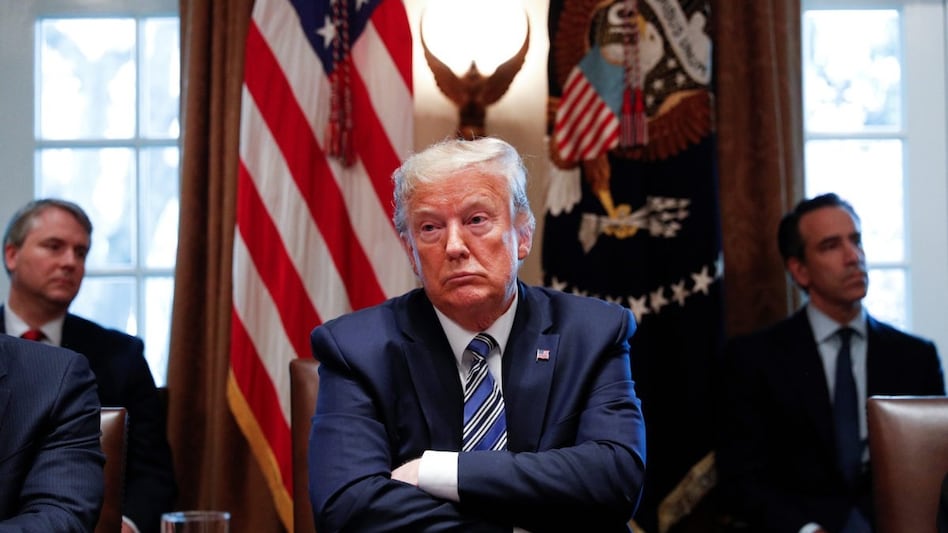
 Trump administration limits international students to 15% at top universities
  Trump administration limits international students to 15% at top universities
 The Trump administration has issued a new directive that limits the number of international students at some of the nation’s top universities, capping their enrollment through the Student Visa Exchange Program at no more than 15 percent of the total undergraduate population. This move is part of a broader policy aimed at regulating academic admissions and funding, and it is set to have significant repercussions for colleges and universities across the United States.
Trump Administration Targets Top Universities
The new policy targets nine prestigious US universities, including Massachusetts Institute of Technology (MIT), University of Pennsylvania, and University of Southern California, among others. The directive also imposes a further restriction: students from any single country cannot make up more than 5 percent of the undergraduate student body.
The universities affected were selected due to their willingness to engage with the initiative and provide feedback, although the White House has not publicly explained why these specific institutions were chosen.
Broader Requirements for Universities
This policy is part of a larger "Compact for Academic Excellence in Higher Education," which includes multiple sweeping changes. In addition to the enrollment caps, universities will be required to:
Make admissions and hiring decisions based solely on merit, without considering race or gender.
Publicly release anonymised admissions data categorised by race, national origin, and gender.
Require all prospective students, including international applicants, to take standardised tests like the SAT.
Freeze tuition fees for five years and reduce administrative spending.
Publish graduate earnings data by program.
Provide tuition waivers for students in “hard science” disciplines at universities with endowments exceeding $2 million per undergraduate student.
Compliance and Accountability
Universities agreeing to the compact will need to self-monitor with the help of independent auditors, who will conduct anonymous surveys of faculty, students, and staff. The results will be shared with the Justice Department, and institutions that fail to meet the agreement’s requirements could face financial penalties, including the repayment of federal funds and private donations.
Impact on Institutions
The directive comes amid growing tensions between the Trump administration and universities, particularly over diversity policies. Some institutions, such as Columbia and Brown, have reached financial agreements, while others, including Harvard, remain in dispute.
DePaul University has already experienced the effects, announcing a reduction in spending after a 30% drop in international student enrollment this fall. With US universities now facing these significant changes, the long-term impact on international student mobility and the broader academic landscape remains to be seen.
 'You're crazy': Trump erupts at Netanyahu in expletive-filled call over Lebanon escalation
 Govt notifies changes in immigration rules: Foreigners in India can now do this…
 Acme Solar QIP kicks off: Floor price set at Rs 294.13, stock in focus
 NHPC OFS today: Stock reaction likely as floor price set at 8% discount
 Special fixed deposits explained: Bank Special FD schemes offer up to 7.95% interest; check top options
 Piyush Goyal: Most India-U.S. Trade Issues Already Resolved
 India’s $11 Billion Semiconductor Plan | Extreme Summer Gadget Tips + MacBook Neo Review
 "Complete Nonsense…": NVIDIA's Jensen Huang Explains Why AI Won't Steal Software Engineering Jobs
 Gold Demand Falls 70% After Duty Hike; What Lies Ahead For Gold And Silver Prices?
 India Inc. Posts 15% Profit Growth In Q4FY26 As Revenue Expands At Fastest Pace
 Glenmark, Auro Pharma, Wockhardt: Top pharma stocks to trade— Key levels, targets & more
 Stock market strategy: Sensex, Nifty fall 3-4% in 30 days but Morgan Stanley sees strong year ahead - Here's why
 Nifty, Sensex, Nifty Bank outlook for today: GIFT Nifty down 200 pts; key levels to watchAcme Solar QIP kicks off: Floor price set at Rs 294.13, stock in focusNHPC OFS today: Stock reaction likely as floor price set at 8% discount