Anshuman Magazine, Chairman, India and South East Asia, CBRE
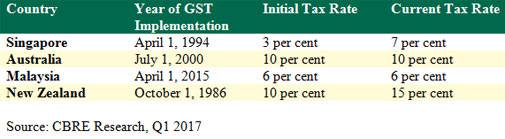
The Goods and Services Tax (GST) has finally become a reality, nearly one-and-a-half decades after it was first mooted. The journey towards a single tax system has not been particularly smooth as the GST has faced innumerable challenges due to issues regarding its structure, tax brackets and subventions for states that may face revenue losses. But in spite of the challenges and resistance, the determination of the government to implement GST showed the result, and it finally came into force on July 1.
GST is a destination-based tax and will incorporate the various indirect taxes currently levied by the central and state governments, including excise duty, service tax and value-added tax (VAT). There will be two components of GST - the Central GST (CGST) and the State GST (SGST). Both central and state governments will simultaneously levy GST across the value chain, on every supply of goods and services. The central government will levy and collect CGST while state governments will levy and collect SGST on all transactions within the state.
 ‘Welcome the decision wholeheartedly’: Shapoorji Pallonji on RBI’s decision on Tata Sons listing; full text
 NSE IPO: India's largest exchange gets 55% subscription on Day 2 so far; NIIs, employee portions fully booked
 NSE IPO, Hero Motors IPO, SS Retail IPO, Jindal Supreme IPO: GMP of four ongoing issues rises up to 32%
 ‘An Indian consumes 1/10th of an average American’: Amb Kwatra says energy security comes first
 UPI MDR: BharatPe distances itself from Ashneer Grover's remarks, says UPI to remain free for consumers
 Midcap Stocks To Auto & Metals: Where Investors Can Find Market Opportunities Amid Earnings Growth
 What To Watch This Weekend? 5 OTT Picks From Lust Stories 3 To Zakir Khan’s Papa Yaar
 From Putin To Meloni: World Leaders Send Birthday Wishes As PM Modi Turns 76
 Tata Sons Board Votes To Bring N Chandrasekaran Back As Chairman For 5 Years
 Corporate Health Insurance Vs Retail Policy: Why You Need Personal Health Cover Too
 IndiGo shares rise 2% as Jefferies retains Buy call, sees 20% upside
 Bharat Electronics wins additional orders worth Rs 648 crore, check stock reaction NSE IPO: India's largest exchange gets 55% subscription on Day 2 so far; NIIs, employee portions fully booked
 Elevate Campuses IPO opens Sept 23: Check price band, key details, business model, risks and more
 NSE IPO: Nirmal Bang and Sparks say 'Subscribe', cites structural growth potentialIndiGo shares rise 2% as Jefferies retains Buy call, sees 20% upsideBharat Electronics wins additional orders worth Rs 648 crore, check stock reaction
  A kill switch won’t save us from rogue AI, tech leaders say amid growing concernsNSE IPO: India's largest exchange gets 55% subscription on Day 2 so far; NIIs, employee portions fully bookedElevate Campuses IPO opens Sept 23: Check price band, key details, business model, risks and more