








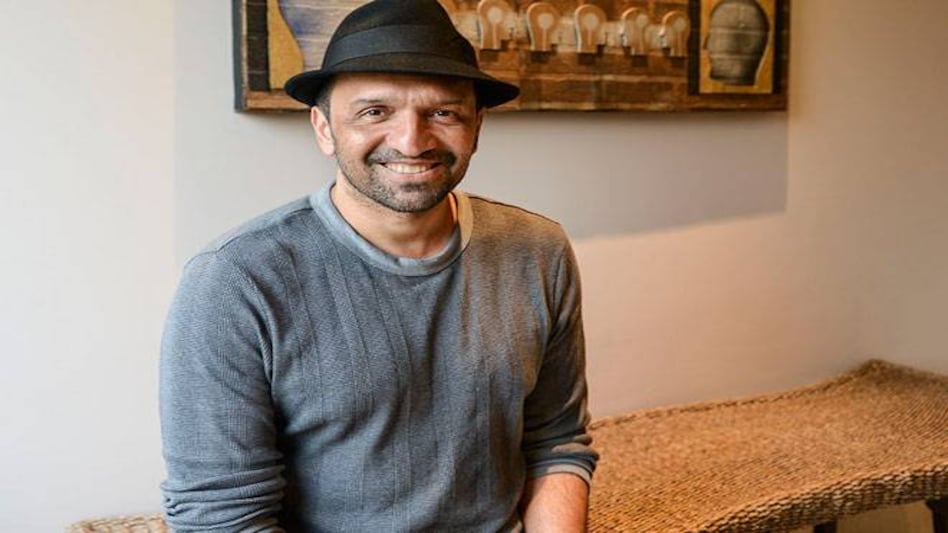
 Atul KasbekarAtul Kasbekar
Atul Kasbekar, ace photographer turned movie producer with Neerja, is now moving big-time into the movie-making business. He shares his plans with Business Today in an interview.
BT: You have evolved from photography to celebrity management to currently producing movies…
Atul Kasbekar: My father keeps telling me I have the attention span of a grasshopper. It is a bit unfair but partially true, which is why I keep doing different things. I passed out from Brooks photography school and worked in Los Angeles for a year, where I realised all photographers there just did photography. Agents handled everything else. When I came back to India, there were no agents. I would have done even better had I had someone representing me, even after paying their commission. Creative people should not be talking their own dhanda. It's not our cup of tea. I became an excellent negotiator in getting work. Nowadays somebody from my company does that on my behalf. And will do a better job.
So I always had the celebrity management idea at the back of my head. As far as producer is concerned, a happy set of circumstances led to it. One of my partners in my celebrity management firm, Bling, was of the opinion that we should get into the intellectual property space. She came across a seven-page story and brought it to me. I was one of the few people familiar with Neerja Bhanot's story. Nobody remembers the name or that she was the youngest and only woman Ashoka Chakra recipient. I thought it was a story worth telling.
BT: What made you take a risk on such a story? Especially of a movie shot within a plane…
Kasbekar: We had put up the development money and got it ready where it was set to go. This included locking in the writers, screenplay, stars, director and initial payments. Hats off to fox studio for taking the risk. People today want to go to the theatre for a reason. And it better be a damn good reason.
BT: Will production be the future for you and the company?
Kasbekar: We are in talks for another 7-8 movies. We should lock one in April. One is a thriller, another a slice-of-life comedy. There's also an out-and-out comedy. No biopic yet, though I find myself inevitably drawn towards stories of women. Strong women. We are also looking at broadening our celebrity management business by signing up directors, writers… basically people in the creative field.
BT: What excites you at work? A great script or telling a good story?
Kasbekar: People ask me what I do. In my analogy, I'm essentially playing Zubin Mehta. I ensure that there is harmony without playing any instruments myself. The filmmaking process is so difficult that one discordant note can throw off the film. I would rather work with well-meaning, talented guys rather than a difficult, brilliant guy. The film Neerja is testament to a film made with great positive energy. People thought we were crazy making a movie with two women in the lead, no male lead, a woman no one has heard of who dies at the end of the movie.
BT: What advice would you give to aspiring photographers?
Kasbekar: They must get exposure to other art forms. And be prepared to work really hard. Any idiot today can be a technician. Or hire someone to do the Photoshop. One must get great depth of all-round knowledge that goes into making a great visual as against taking a snap or taking clicks, both words that I hate. You only become a good photographer when you can consistently create good images time after time.
BT: Can photographers make a good living from this field, save a few top guys?
Kasbekar: It's very difficult, if next to impossible currently. This will change only when people see photography as a viable art form. Only people with a keen sense of art will eventually see photography as long-term value.
BT: Where do you see the future of photography?
Kasbekar: The future is visual artists, as against pure photographers. I see the potential of big collaboration between artists. People that come to me for advice, I tell them to become DOP (director of photography). You're still doing the same thing but in motion. Video is the future, because there is always someone shooting video nonstop.
 Blackstone’s 9.99% stake acquisition in Federal Bank deal gets RBI green light: Report
 SEBI ends expiry day margin benefit for single stock derivatives to curb risk
 Crypto slump deepens: Bitcoin breaks below $70,000 as ‘digital gold’ claim faces fresh test
 'Deeptech does take a J curve': Lightspeed’s Hemant Mohapatra on the strategy behind deeptech funding
  Sarvam AI unveils 'Sarvam Vision', a multilingual document intelligence model
  Metropolis Q3FY26 Growth Led By Specialty, Wellness Diagnostics
 Piyush Goyal Explains Roadmap Of India–U.S. Trade Deal | What Happens Next?
 #Promo | World Governments Summit 2026 Dubai: India Today Exclusive Coverage
 AI Hype Vs Reality: Ex-French Minister & VC Fleur Pellerin On What Comes Next
 Rahul Gandhi Vs Ravneet Bittu: “Traitor” Remark Sparks Sikh Row Outside Parliament
 SEBI ends expiry day margin benefit for single stock derivatives to curb riskBlackstone’s 9.99% stake acquisition in Federal Bank deal gets RBI green light: ReportCrypto slump deepens: Bitcoin breaks below $70,000 as ‘digital gold’ claim faces fresh test
 Tata Motors PV reports net loss of Rs 3,486 crore in Q3 as JLR cyber hit weighs
  IndiGo shares fall on CCI probe trigger; here's what analysts advise