




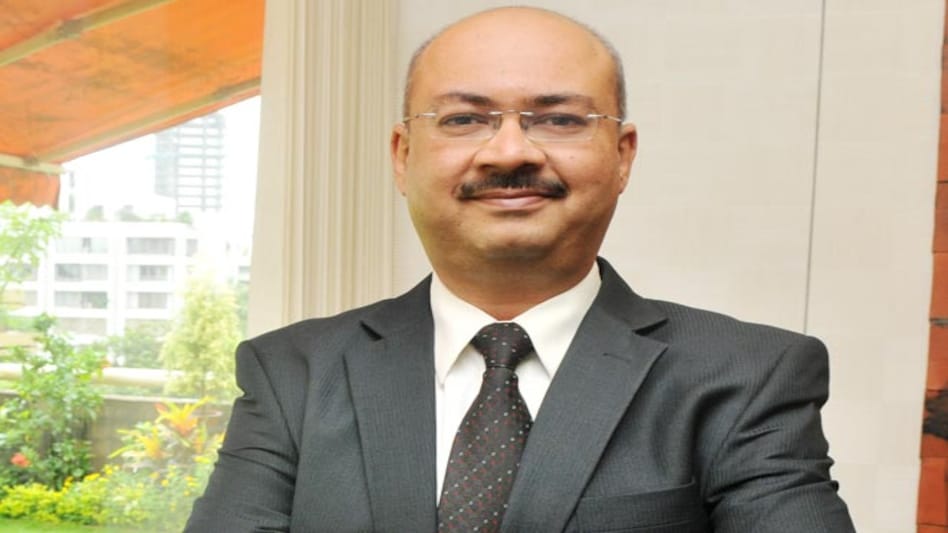
Puneet Nanda, executive director, ICICI Prudential Life Insurance Company tells businesstoday.in that the life insurance schemes launched by the government will increase insurance awareness and penetration levels.
Businesstoday.in: Several companies have launched unit-linked plans that are sold exclusively online. They are comparatively cheaper than policies sold offline. Do you have such plans? How much cost effective are they compared with plans sold offline?
Puneet Nanda: We have successfully ported all our products onto the digital platform to provide customers with flexibility and convenience. Our philosophy is to provide all customers with a superior and seamless on boarding and service experience, irrespective of the channel through which they buy our products.
Businesstoday.in: The company was one of the first to introduce tablets for agents. Has this improved productivity?
Nanda: ICICI Prudential Life embarked on a digitisation drive a few years back. The implementation of a platform which facilitates a sale - right from the need analysis stage to form filling, e- KYC, real time underwriting decision and premium payment - has worked to provide a smooth on-boarding experience to customers and also increased distribution network efficiencies. The customers are involved in the entire purchasing process.
It makes customers aware of the importance of buying life insurance, they know the product they have purchased and understand how it will help them to achieve their long-term goals. The form-filling and documentation process has become practically paperless, thanks to the digital platform. Today, our distribution spends much lesser time in procuring and processing the documents required to complete a sale - which earlier took days. A sale can be concluded in a single interaction and in a matter of minutes. This has reduced the time taken to issue a policy and has improved the efficiency of the distribution network.
Businesstoday.in: What are some of the concerns in distribution space for life insurers?
Nanda: India is a developing country with a significant portion of its population comprising young working individuals. As the income and financial awareness levels increase, more and more people will seek to invest in financial instruments. It is a unique combination of opportunity and challenge where one needs to reach out to more and more people to increase their awareness on the importance of buying life insurance.
While the digital platform has been steadily gaining traction, the majority of the consumers, excluding the metros may not be savvy in making electronic / online payments.
Businesstoday.in: Recent amendments to the draft guidelines on open architecture in insurance distribution will bring respite to bank-promoted insurance companies. What is your take on the recent guidelines?
Nanda: In all the actions of the regulator, there is a lot of emphasis on protecting customer interests and providing the best to them in the form of products.
The regulator has been building a framework to make life insurance available to a larger section of the country's population, and a new channel of distribution will only facilitate better penetration of life insurance products and services. A multi-channel distribution will provide choice and convenience to customers.
Businesstoday.in: How do you see the insurance industry in the ongoing financial year?
Nanda: The domestic life insurance industry has provided customers with consistent returns over the long term. This coupled with the use of technology to provide a seamless on-boarding experience and good quality service have been the driving force. The digital platform has empowered customers to take informed decisions and access information on their policies at their convenience. Collectively, the industry has been working towards settling all genuine claims in the quickest possible time. Today, the claimants / nominees have the option to raise claims through the digital channel without leaving the comfort of their home.
The life insurance schemes launched by the government have gained significant traction and will only increase life insurance awareness and penetration levels. The passing of the Insurance Bill will provide a boost to the capital-intensive life insurance sector. This will attract money in the long run which can be gainfully deployed to build scale and distribution, increase use of technology etc to further propagate the importance of life insurance.
 Vodafone Idea shares: Emkay doubles Vi target price, upgrades stock from 'Sell' rating
 SBI Q3 earnings stronger than private banks for 3rd quarter; price targets raised
 Are Indian refiners avoiding purchasing Russian oil? Here’s what we know
  India-US trade deal: No reprieve for Tesla despite tariff cuts for high-end American cars
 US visa bond: B1/B2 visitors from 38 countries to pay a $5,000–$15,000 fee on entry
  BT Golf 2025-26 Kochi, Kerala Awards Ceremony Marks A High-Energy, Successful Conclusion
 Golf Is An Addiction. We Eat And Sleep Golf!
 The Fairway Fixes Everything. Mindset, Life, Relationships
 BT Golf LIVE: Join AU Small Finance Bank Presents BT Golf 2025-26 For Its 4th Leg In Kochi, Kerala
 AI Will Change MBAs, Not Leadership: IMD President On India’s Global Education Rise
 Kalyan Jewellers: MOFSL retains 'Buy' rating, shares target price post Q3 results
 Stock market today: Gift Nifty rises over 200 points; key levels for Nifty, Sensex & Nifty BankSBI Q3 earnings stronger than private banks for 3rd quarter; price targets raisedVodafone Idea shares: Emkay doubles Vi target price, upgrades stock from 'Sell' rating
 Stocks in news: RIL, Tata Steel, IREDA, Kalyan Jewellers, BEML and more