








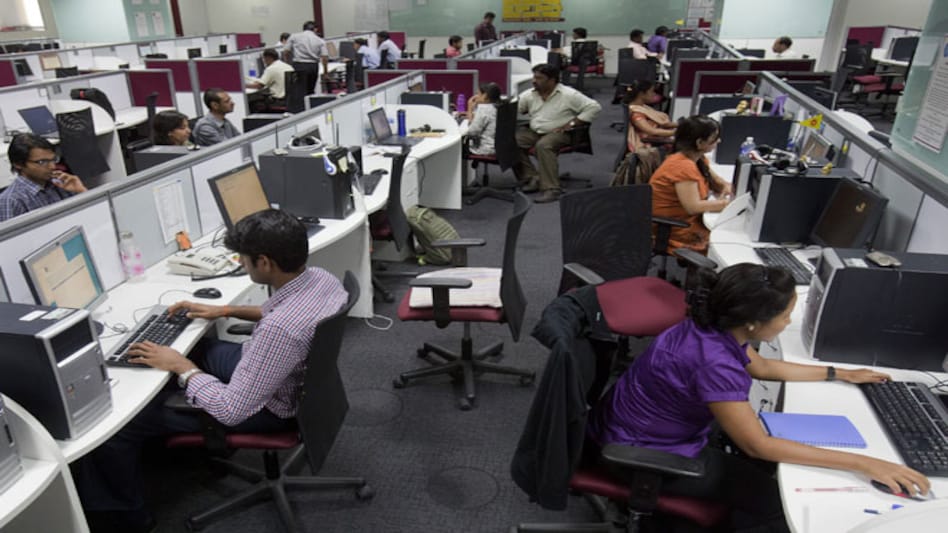

But sample this: according to Gender Diversity Benchmark-2012 report released by Catalyst, a non-profit organisation that works for gender diversity at workplaces, only 30 per cent of all economically active individuals in India are women. Equally worrying is the fact that while 29 per cent of the junior level employees are women, the number drops significantly to 9 per cent if we look at senior lever or leadership roles in India Inc.
But one can say that slowly, more and more companies in India are coming up with women-friendly policies in order to reduce the gender gap in workplaces by retaining existing women talent and employing more women across management levels. It seems India Inc has realised that having a gender diverse workplace makes business sense too. It adds diverse perspectives, which lead to better decision-making and creating shareholder value.
"Women employees are more creative and have a more holistic approach also, thinking towards the larger good of the company and not just profitability. Moreover, there is huge customer base of women influencing buying decisions so having women employees in strategic roles enables better understanding of customer needs," said Nirmala Menon, Founder and CEO of Interweave Consulting, a diversity management consultancy.
Companies are increasingly focusing more on attracting, training and retaining women talent to build a pipeline of women employees for leadership roles. For instance, Boston Scientific, a global medical devices manufacturing company, has started a 'NARI programme' to nurture women talent and prepare them for future leadership roles.
"Women are a very important talent group for any organisation and giving them a workplace environment that nurtures talent, provides equal opportunity has now become critical. We started NARI initiative to focus on strengthening our women leadership pipeline in the organisation," said Prabal Chakraborty, VP & Managing Director, Boston Scientific India.
Other companies are going beyond initiatives to address an extremely important issue: maternity. Recently, Flipkart rolled out its new maternity leave policy of 24 weeks plus additional four months of flexi-working hours with full pay against the mandatory requirement of 12 weeks of maternity leave. The company is also offering a one-year career break without pay.
Another recent example is Citibank India which has announced its new policy of providing childcare allowance over and above their salaries worth up to Rs 1.32 lakh a year for spending on daycare services intended at retaining employees who have recently attained motherhood, to pursue their careers uninterrupted.
The policies of Flipkart and Citibank make sense, given that a sizeable number of women employees drop out once they get married or have kids. This reduces the chances of a women employee getting promoted for leadership roles. "Women employees till few years back mostly opted for support functions and limited their chances for being considered for leadership roles ahead in their career." added Menon.
The trend is changing, as more women opt for an operational role and focus more on their careers. Mentoring women employees, guiding them to improve their work-life balance, showing them role models and a career path will help companies retaining their women talent and prepare them for future leadership positions.
"We believe continuous development and mentoring is the need of the hour and we are doing this aggressively. Focused programs and initiatives like NARI are great for nurturing women talent. It provides them with platforms for interaction where they can network and can be mentored by other senior women leaders in the organisation." said Chakraborty.
Companies are also trying to reduce the gender gap by implementing women-centric policies and helping them improve their work-life balance.
"Gender diversity has now entered into the boardrooms, bound by compulsion, coercion and coaxing of corporates. It is mandatory for companies to appoint women directors. Companies with good corporate governance have taken advantage of this to appoint women who can contribute and not just be silent spectators at boardrooms. It would never be like earlier when the Chairman of the Meeting would say 'Welcome Gentlemen' for there is now a lady and who needs to also be welcomed," a senior official of a Hyderabad-based infrastructure company said.
He was of course, referring to SEBI's new directive to promote gender diversity in corporate board rooms by mandating listed companies to have at least one woman director on their boards from April 1, 2015 onwards.
Not surprisingly, many companies seem to have undermined the importance of gender diversity and also ignored SEBI's initial deadline of April 1 2015. "While the initial deadline was not met by several companies, we are now seeing renewed effort in complying with the requirements," says Hetal Dalal, COO of Institutional Investor Advisory Services (IiAS) a proxy advisory firm.
Some companies have, however, started taking advantage of the SEBI's directive and understood the need to improve diversity. "Law is a starting point for any substantial change and gradually companies have started accepting the SEBI directive as a positive move." Menon added.
The new generation of women has career aspirations and moreover they intend to be financially independent. We can expect more gender diverse workplaces in coming years, but for that to happen, the companies need to take their own initiatives instead of waiting for government orders.
 Cyber attacks, AI misuse and data privacy rules emerge as top boardroom risks for India Inc
 'India has played it pretty safe, deal is very balanced': Top agri economist on India–US trade agreement
 Shell firms, circular trading: Fake GST invoice frauds continue despite curbs
 'The real sting is the monitoring': Brahma Chellaney flags risk for India in Trump's Russian oil order
 Moltbook hype unravels: Viral posts were human-written, not AI, finds MIT Technology Review
 BT Golf 2025-26 Kochi, Kerala Awards Ceremony Marks A High-Energy, Successful Conclusion
 Golf Is An Addiction. We Eat And Sleep Golf!
 The Fairway Fixes Everything. Mindset, Life, Relationships
 BT Golf LIVE: Join AU Small Finance Bank Presents BT Golf 2025-26 For Its 4th Leg In Kochi, Kerala
 AI Will Change MBAs, Not Leadership: IMD President On India’s Global Education Rise
 RIL, SBI, Kotak Bank, Kalyan, HAL, BEML, BDL among stocks in focus next week; here’s why
 NSE IPO may unlock mega gains for billionaire investors RK Damani, Premji
 SBI Q3 Results: Profit jumps 24% to Rs 21,028 crore; asset quality improves
 IDBI Bank stake sale: Kotak Mahindra Bank says ‘has not submitted a financial bid’
 BDL, Mazagon Dock, MRF, Hindustan Copper, RVNL, others to turn ex-dividend next week