








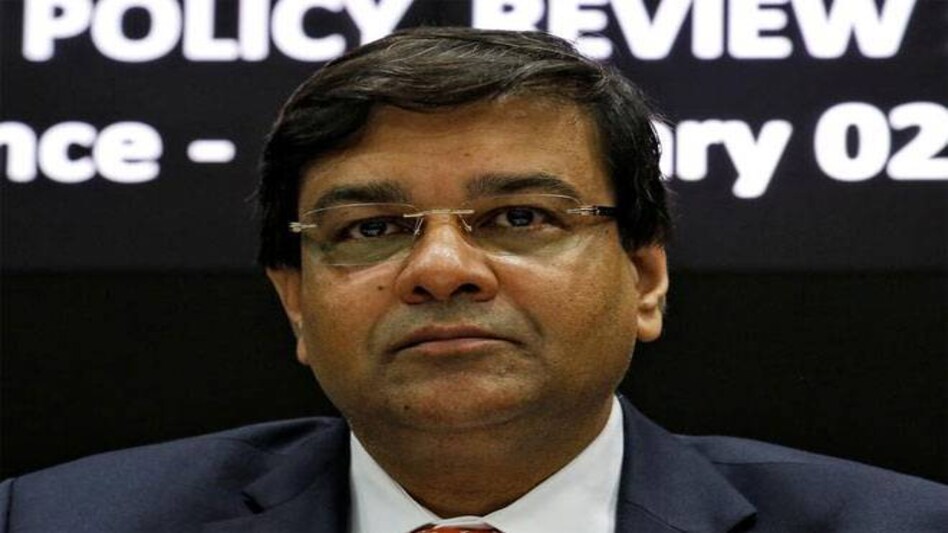

Some eight years ago when career bureaucrat D. Subbarao landed at the Reserve Bank headquarters, the financial stability of the country was in danger as the global financial meltdown had pushed many well-known global financial institutions into bankruptcy. Subbarao's successor - a globally renowned economist - Raghuram Rajan entered the scene when India witnessed one the worst currency crises as rupee value tumbled like nine pins. There is relatively more 'peace' in the market when new Reserve Bank Governor Urjit Patel is taking over as the 24th Governor. But Patel has challenges of an altogether different nature as he is presiding over RBI at a time when many of the earlier initiatives are either 'work in progress' or need nurturing.
Reduce friction between the government and the RBI
In the past eight years, the friction between the government and the RBI came out in the open when it came to growth projection and inflation. The two agreed to disagree on the objectives of maintaining low and stable inflation and supporting growth and employment in the economy. The government always has growth and employment as its prime objective. This view is often short term as there are political considerations. On the other hand, RBI looks at a long-term objective of having low and stable inflation, which is a prerequisite for sustainable high growth. With the governor's veto power gone, Patel will have a six-member committee to strike a balance between these objectives. Governor with additional two RBI members has a casting vote or a second vote in case of a tie. Many say the three members owing allegiance to the government would have growth and employment as the objective in mind before voting. Patel's tenure would be keenly watched in terms of how he steers the committee and achieves the twin objectives.
Oversee banking consolidation and mitigate the risk that comes with 'too big to fail'
The public sector banks (PSBs) are all set to change the banking landscape as the government is very keen to create half a dozen large banks by merging them. The first big merger of SBI and its five associate banks is already underway. The consolidation needs careful watch of the RBI as the PSB pack controls two-third of the banking business in terms of deposits and advances. There are huge integration challenges. In fact, the consolidation is kicking off at a time when the asset quality is deteriorating and banks have capital constraints to support growth in the economy. The new large entities would certainly create financial stability issues as they are not the best in terms of operational efficiency, profitability and new age digital banking.
Nurture new banking models
The new banking models - payments banks and small finance banks - are still in the drawing board stage. These banks are expected to be operational in the next one year. Imagine two dozen new banks making their debut in the market. They will definitely disrupt the market, but also create supervisory issues. The RBI itself was looking at these models as an experiment to see whether it helps in achieving financial inclusion and also less cash economy. Patel has a tough task ahead in managing this new set of banks.
Protect rupee value and also build foreign exchange reserves
There was a clamour in certain government circles for a weaker rupee value against the US dollar for protecting exports that were on decline for long. In fact, the exports have come in the positive zone, but a depreciating rupee is seen as giving a push to the 'Make in India' initiative. The argument put forward was the depreciation in the currencies of Brazil, China, South Korea, etc. Rajan shouted down the 'rupee depreciation' lobby by making a case for productivity gains rather than currency excuse for not being competitive. This lobby would again go after the new RBI governor.
Create a market for distress assets
Will bankruptcy code will be a game changer? There are a host of measures for asset reconstruction companies (ARCs), special debt restructuring (SDR) and sustainable structuring for stressed assets. These measures are not enough for restructuring a business. In fact, the government was suggesting setting up of a bad bank to take over stressed assets, but Rajan was against it. Patel has to tweak many of Rajan's initiatives after discussion with banks to make them workable.
 Cyber attacks, AI misuse and data privacy rules emerge as top boardroom risks for India Inc
 'India has played it pretty safe, deal is very balanced': Top agri economist on India–US trade agreement
 Shell firms, circular trading: Fake GST invoice frauds continue despite curbs
 'The real sting is the monitoring': Brahma Chellaney flags risk for India in Trump's Russian oil order
 Moltbook hype unravels: Viral posts were human-written, not AI, finds MIT Technology Review
 BT Golf 2025-26 Kochi, Kerala Awards Ceremony Marks A High-Energy, Successful Conclusion
 Golf Is An Addiction. We Eat And Sleep Golf!
 The Fairway Fixes Everything. Mindset, Life, Relationships
 BT Golf LIVE: Join AU Small Finance Bank Presents BT Golf 2025-26 For Its 4th Leg In Kochi, Kerala
 AI Will Change MBAs, Not Leadership: IMD President On India’s Global Education Rise
 RIL, SBI, Kotak Bank, Kalyan, HAL, BEML, BDL among stocks in focus next week; here’s why
 NSE IPO may unlock mega gains for billionaire investors RK Damani, Premji
 SBI Q3 Results: Profit jumps 24% to Rs 21,028 crore; asset quality improves
 IDBI Bank stake sale: Kotak Mahindra Bank says ‘has not submitted a financial bid’
 BDL, Mazagon Dock, MRF, Hindustan Copper, RVNL, others to turn ex-dividend next week