










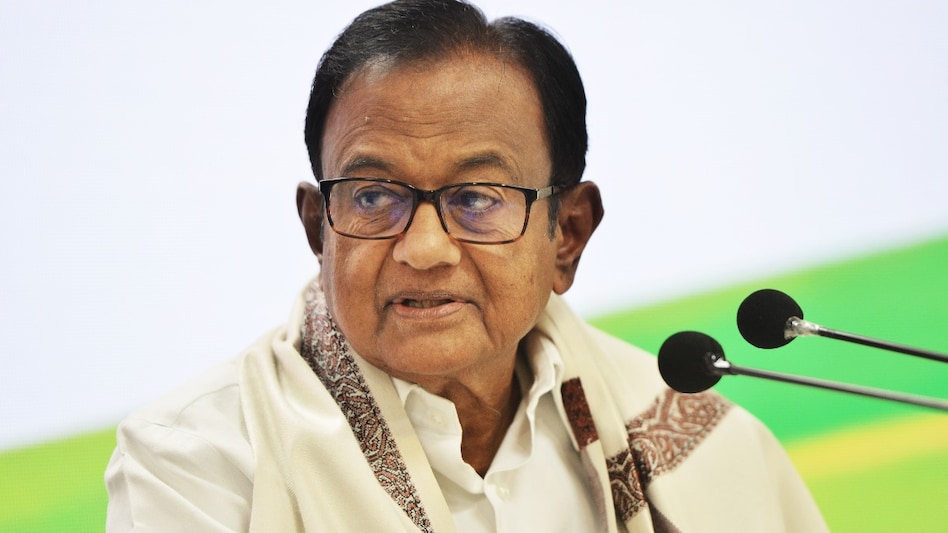
 Former Finance Minister P Chidambaram
  Former Finance Minister P Chidambaram
 Former Finance Minister P Chidambaram has expressed approval for the decision by several major Indian banks to waive the minimum balance requirement for savings accounts. Describing the rule as "obnoxious," Chidambaram highlighted that many banks had profited significantly, earning "hundreds of crores per year" from penalties imposed on customers failing to maintain the stipulated balance. The waiver follows long-standing complaints from account holders who found the policy burdensome.
Chidambaram drew attention to the persistent nature of the rule, despite repeated requests from customers for its removal. He noted that banks had ignored these pleas, resulting in penalties if customers did not keep their accounts above a certain balance. "In the last few years, savings account holders have complained to banks against the government-introduced rule of ‘minimum balance’ in the account, and pleaded for waiver of the rule. It was a reasonable request, but banks turned a deaf ear. If a customer failed to maintain a minimum balance, he/she was slapped with a penalty. Some banks earned hundreds of crores of rupees a year under this obnoxious rule," he stated.
The decision by banks to eliminate this requirement marks a significant shift. Among the institutions making this change are the State Bank of India, which initiated the move in 2020, followed by other public sector banks such as Canara Bank, which led in removing the requirement earlier this year. Many banks have announced similar measures, indicating a broader trend of reducing such charges. This move is seen as a response to the growing discontent among customers who were burdened by these penalties, as well as a strategic shift to enhance customer satisfaction and loyalty.
Historically, the minimum balance rule was a standard practice among banks, requiring savings account holders to maintain an average monthly balance. Falling below this threshold resulted in penalties, with the amounts varying based on account type. The Reserve Bank of India provided the regulatory framework that allowed banks to implement this policy, which has now been largely relaxed, making banking more accessible to the general public. This relaxation is expected to encourage more individuals to open and maintain savings accounts, thereby increasing financial inclusion across the country.
The recent changes come amid growing pressure from customers and market dynamics that have forced banks to reconsider such policies. As Chidambaram remarked, "Banks have caved in. At least five banks have waived the minimum balance requirement. What reason could not do, economics has achieved! Hurrah!" His comment underscores the economic motivations behind this shift as banks respond to consumer demands and competitive pressures.
This shift not only alleviates financial strain on customers but also positions banks as more consumer-friendly, potentially enhancing their reputation and market position.
Indian Bank announced a new policy on Monday that allows all account holders to waive the minimum balance requirement, aiming to enhance accessibility and affordability in banking services. This decision follows similar actions by Punjab National Bank and Bank of Baroda, which declared the removal of penalty charges for failing to maintain a minimum average balance starting July 1. Canara Bank had already implemented a comparable policy last month, making it the initial PSU bank to eliminate the minimum balance rule. State Bank of India had previously waived the minimum balance requirement in response to the COVID-19 pandemic in 2020.
In the context of industry competition, these changes position the banks favourably in the eyes of consumers, potentially enhancing customer retention and attracting new account holders. The move may also prompt other financial institutions to reassess their fee structures to remain competitive. Key players like HDFC Bank and ICICI Bank could face increasing pressure to adapt similar approaches to retain their market share in the banking sector.
 'Not in congruence with my personal values, ethics': HDFC Bank part-time chairman Atanu Chakraborty quits
 BPCL, HPCL, IOC shares in focus as Brent oil nears $113 level on Iran attacks
 Trump administration plans on sending thousands of troops to West Asia: Ground deployment in Iran under review
 Rajputana Stainless IPO shares listing today: Check latest GMP before stock market debut
 Dhurandhar 2: Aditya Dhar apologises over screening glitches and delays in parts of India
 Tamil Nadu Village In Crisis: Toxic Water Claims Rise Near SIPCOT Industrial Zone
 Iran War Threatens Fertiliser Supply: Is India’s Kharif Crop At Risk?
 Iran War Impact: Medicine Prices In India May Rise Amid Supply Concerns
 West Asia Crisis Pushes LPG Costs Up, Chai Gets Costlier At Local Tea Stalls
 From SRK To Ambani: Indian Celebs’ Dubai Luxury Homes In Focus Amid Israel-Iran War
 BPCL, HPCL, IOC shares in focus as Brent oil nears $113 level on Iran attacksRajputana Stainless IPO shares listing today: Check latest GMP before stock market debut
 Sensex, Nifty: Gift Nifty down 570 pts! Why stock market may see steep fall today
 Top stocks in news: HDFC Bank, UltraTech, Gaudium, Manappuram, Mazagon, Nazara, Vedanta
 HDFC Bank shares in focus today as Chairman Atanu Chakraborty resigns