


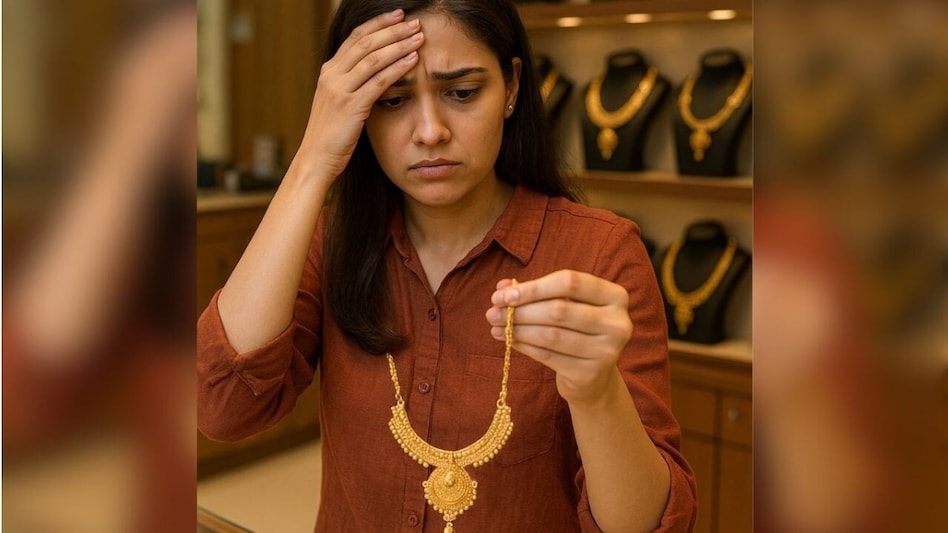
 While schemes like Gold Monetization and Sovereign Gold Bonds exist, Aittreya says they are no substitutes for real-time risk controls.
India’s obsession with gold, long viewed as a symbol of security and wealth, may be laying the groundwork for a financial crisis.
That’s the warning from Aittreya CA, a gold hedge fund manager, who argues that India’s $2 trillion gold stockpile—mostly held by households and small jewelers—is dangerously exposed to a price shock that could upend the economy.
“For 25 years, Indian households have trusted gold more than banks, bonds, or governments,” Aittreya wrote in a widely discussed LinkedIn post. “Yet, the very system that regulates currencies and credit refuses to manage gold price risk.”

 BT Big Story: Is 66% = zero? The Tata Sons question on everyone’s minds
  From Gulf to US: How the Iran war is redrawing India’s LPG import map
 100-foot red carpet welcome: Trump gives Xi rare tarmac reception; trade talks, AI on agenda
  Graphite, not lithium, may be the battery industry's biggest choke point: Report
 Hormuz shock accelerates the shift to electricity: Why countries are turning to electrification for energy security
 India Growth Outlook Gets Major Boost: S&P, Fitch, ADB Raise FY27 Forecasts; OECD Upgrades 2026 View
 A-One Steels IPO Explained: Key Details, Growth Strategy & Future Outlook | Management Live
 Market Commentary: Nifty Outlook, Stocks & Market Strategy | Deven Choksey
 Ignore Large Caps? Why Investors Are Chasing High P/E Mid Cap Stocks Now
 30 IPOs In A Month: Deven Choksey On IPO Flipping And Secondary Market Liquidity
 Sebi may ease margin requirements for longer-tenure F&O products
 RBI to conduct OMO sale of Rs 25,000 crore in government bonds on September 28
 NSE shares: Deven Choksey lists reasons for long-term investment; calls stock 'shock absorber' in volatile markets
 Crude oil prices fall for sixth session; PL Capital explains what could happen next
 Mazagon Dock, GRSE shares: Does short-term bounce signal trend reversal? Analyst decodes
 Harmanpreet Kaur does what no T20 captain has done before, leaves Dhoni behind100-foot red carpet welcome: Trump gives Xi rare tarmac reception; trade talks, AI on agenda
  Honda's Bullet challenger is here, but the ₹5,000 booking is not the only twist
 Apple Pay India launch: After 90+ markets, is India finally next? What you can expectBT Big Story: Is 66% = zero? The Tata Sons question on everyone’s minds












