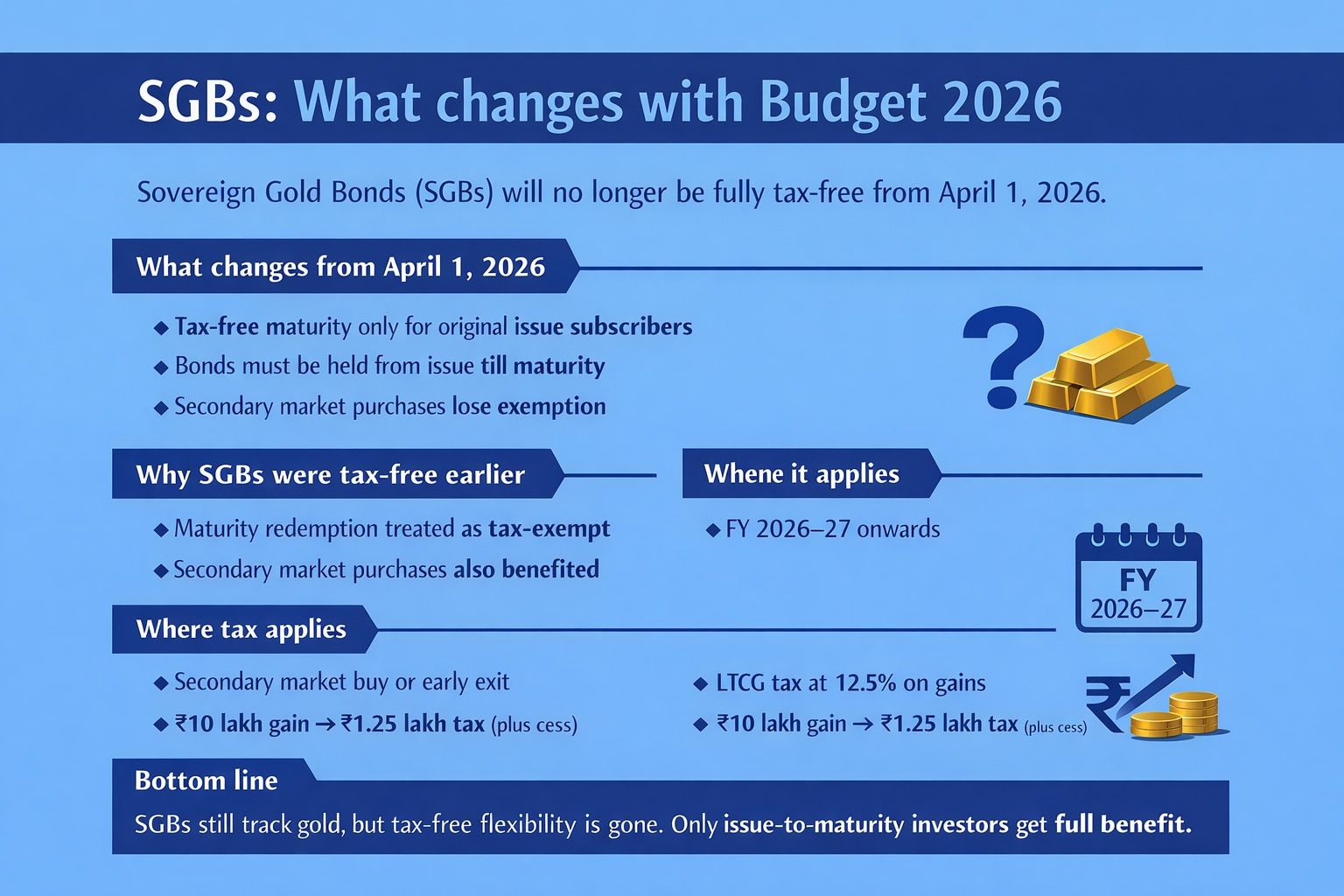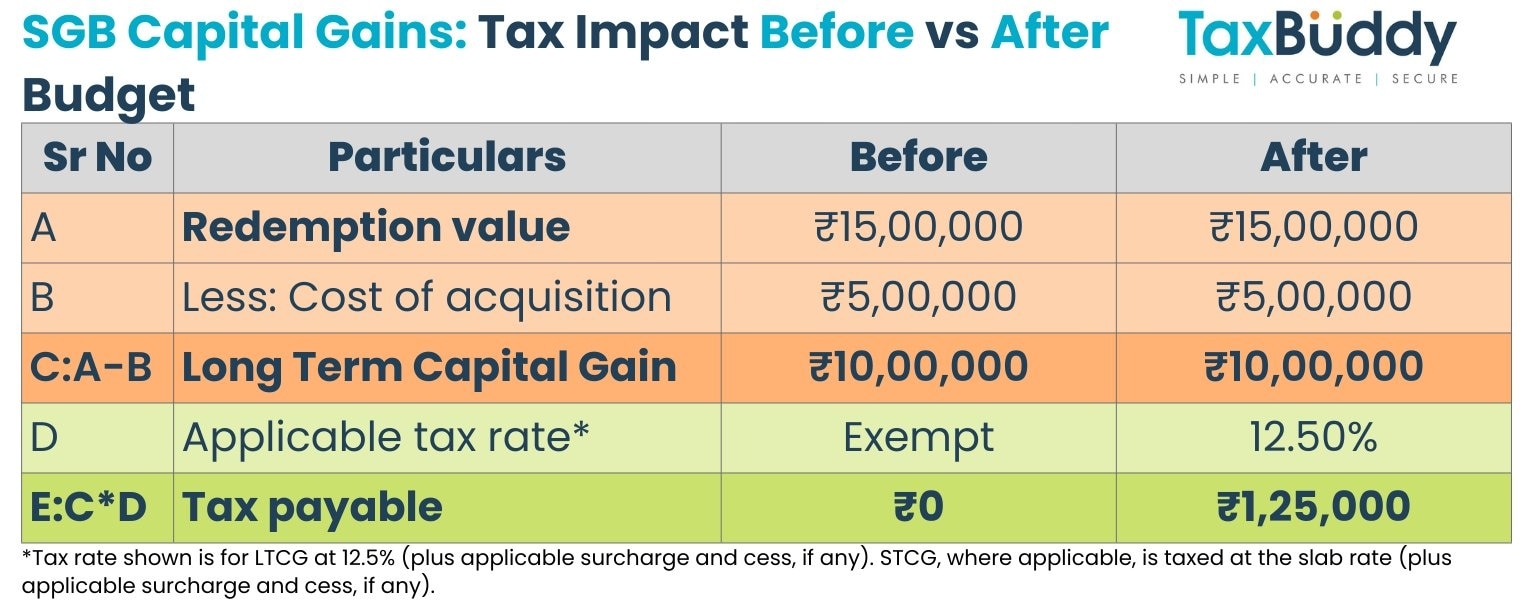



 The Budget Memorandum explains that the amendment aims to ensure uniform application of the exemption and align it with the original intent of the scheme.
 SGB taxation: Investors who have enjoyed sharp gains on Sovereign Gold Bonds (SGBs) were caught off guard after Finance Minister Nirmala Sitharaman clarified changes to the capital gains tax exemption framework in the Union Budget 2026. The clarification relates to the tax treatment of SGBs purchased from the secondary market and has triggered confusion among investors amid a rally in gold prices.
Under the existing law, Section 70(1)(x) of the Income-tax Act provides an exemption from capital gains tax on income arising from the redemption of SGBs issued under the Sovereign Gold Bond Scheme, 2015. These bonds have been issued by the Reserve Bank of India (RBI) in multiple tranches over the years, with each series treated as a separate issuance.

 Missed your minimum balance? Banks pocketed ₹26,100 cr in penalties in just 4 years
 Why Tata Sons got ₹28,291 cr from TCS in FY26, down from ₹32,184 cr in FY25
 What a new report says about India's digital banking frauds
 ‘Extremely disturbing occurrence ’: MeitY reacts to removal of PM Modi video, seeks explanation from Meta
 HUL to further raise prices. Here’s how much
 7.1 Quake Shakes Southern Japan: Roads Split, Buildings Burn, Hundreds Of Thousands Evacuated
 How Mohammad Irfan Went From Street Hawker To India's Most Viral Protest Voice
 Congress Vs BJP Clash In Lok Sabha Over Anti-Paper Leak Bill 2026 As Opposition Questions Police
 "Justice Delayed Is Justice Denied": Bansuri Swaraj Hails Anti-Paper Leak Bill Strict Penalties
 CM Rekha Gupta Approves ‘Delhi Lakshmi Yojana’; Women To Get ₹2,500 Monthly Financial Assistance
 Moschip Technologies, Tamilnad Mercantile Bank shares: Here's what charts indicate
 Sensex, Nifty end lower as FMCG, energy weigh; IT stocks outperform
 L&T Q1 results: PAT rises 14% to Rs 4,123 crore; revenue up 7%
 Tata Capital Q1 results: PAT jumps 56% YoY to Rs 1,547 crore; AUM rises 22%
 KPIT Tech, Firstsource: What to do with these two battered IT stocks?
 CJP warns of fresh nationwide protests if Centre fails to honour July 25 assurances
 Toyota Hilux facelift launched in India at Rs 31.99 lakh7.1 Quake Shakes Southern Japan: Roads Split, Buildings Burn, Hundreds Of Thousands EvacuatedHow Mohammad Irfan Went From Street Hawker To India's Most Viral Protest VoiceCongress Vs BJP Clash In Lok Sabha Over Anti-Paper Leak Bill 2026 As Opposition Questions Police