












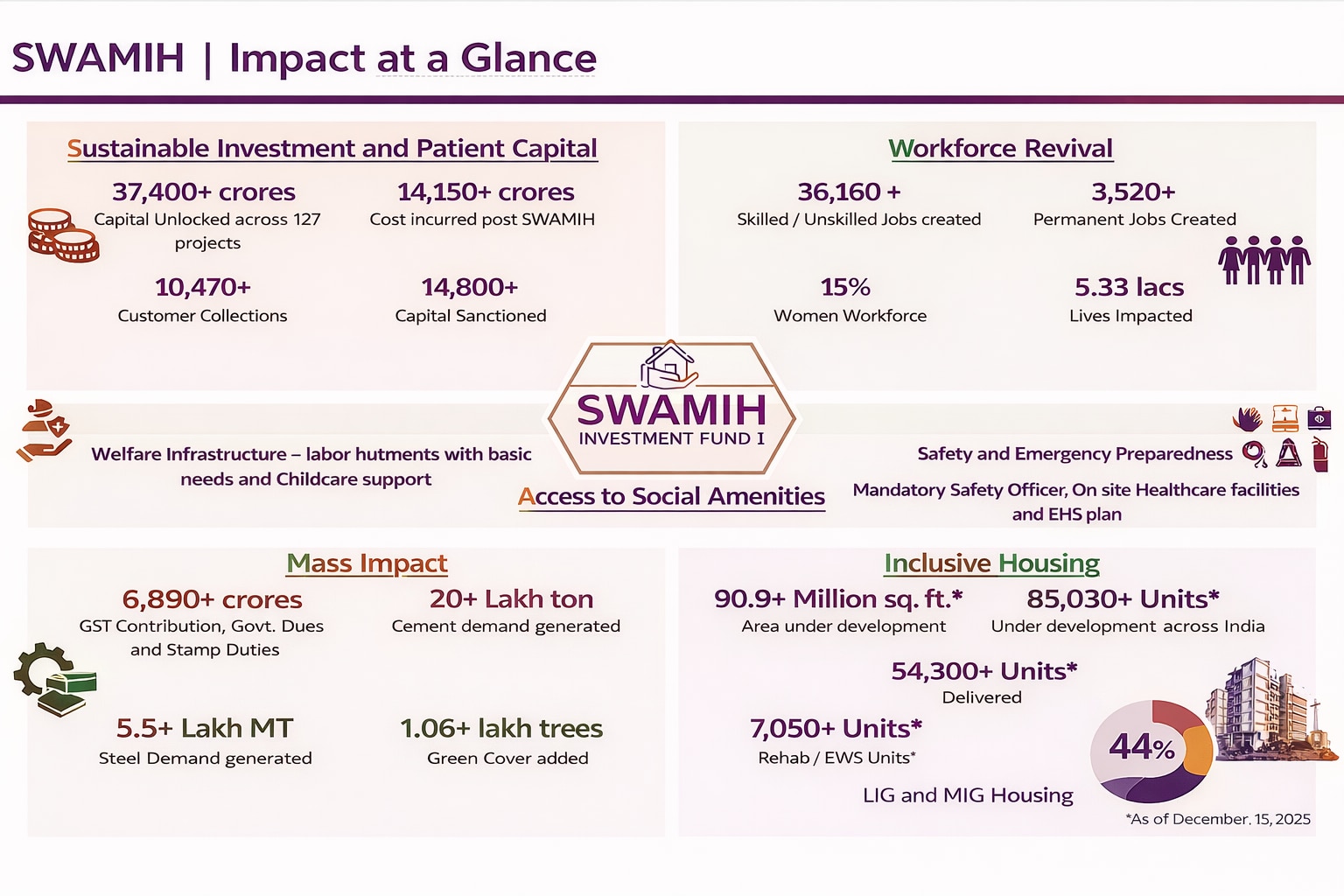



 SWAMIH has unlocked over Rs 37,400 crore across 127 projects, covering 90 million sq ft, with 44% in affordable housing.
The government-backed SWAMIH Investment Fund has emerged as one of the most consequential interventions in India’s stalled housing sector, with officials saying the programme has helped revive delayed projects, protect homebuyers and generate employment across the construction ecosystem.
Launched in November 2019 after approval by the Union Cabinet chaired by Prime Minister Narendra Modi, the Special Window for Affordable and Mid-Income Housing (SWAMIH) was set up to provide last-mile funding to residential projects stuck due to financial stress, litigation or weak developer balance sheets. The fund, supported by the Department of Economic Affairs under the Ministry of Finance, has now fully committed its investible corpus, completing its investment cycle on December 5, 2025.

 'Don't break it': Trump announces immediate 'energy ceasefire' between Russia and Ukraine
 UPI MDR should be cut from 0.4% to 0.08%: IIT-Bombay report proposes new fee structure
 How Elon Musk's Starlink could interfere with sovereign nations. Ukraine war reveals the risks
 Riyadh International Airport on fire after second missile strike in two days
 BT Market Outlook: The drivers, risks and opportunities for the week ahead
 REITs & AI Boom: Can Data Centres And AI-Ready Offices Drive Future Real Estate Growth?
 Should You SIP In REITs During A Market Downturn? Key Risks & Asset Allocation Explained
 REIT Returns Explained: Income, Capital Gains & Risks Investors Need To Know
 REIT Risks Explained: Key Factors Investors Must Check Before Investing In Commercial Real Estate
 Will IRDAI’s Broker Commission Crackdown Make Insurance Cheaper For Consumers?
 BT Market Outlook: The drivers, risks and opportunities for the week ahead
 Market on the back foot, opportunities ahead: where should investors put their money?
 Poonawalla Fincorp Q2 earnings: Net profit zooms 405%, NII at Rs 1,589 crore
  Vedanta, TCS shares to turn ex-dividend; Ola rights issue; 2 stock splits next week
 IPO rush: Rs 50,000 crore worth IPOs to hit Street by Diwali; Jio, Avada to lead fundraise'Don't break it': Trump announces immediate 'energy ceasefire' between Russia and UkraineRiyadh International Airport on fire after second missile strike in two days
 Indian pharma leaders seek faster trials, state-backed market for new drugsUPI MDR should be cut from 0.4% to 0.08%: IIT-Bombay report proposes new fee structureHow Elon Musk's Starlink could interfere with sovereign nations. Ukraine war reveals the risks


