















 Experts said a little tax planning can help you enjoy your Diwali bonus without any post-festival surprises.
As the festival of lights draws near, homes and offices across India are preparing for the annual exchange of sweets, gifts, and bonuses — a hallmark of Diwali celebrations. But while these festive rewards spread joy, few realise that some of them could also invite the attention of the tax department.
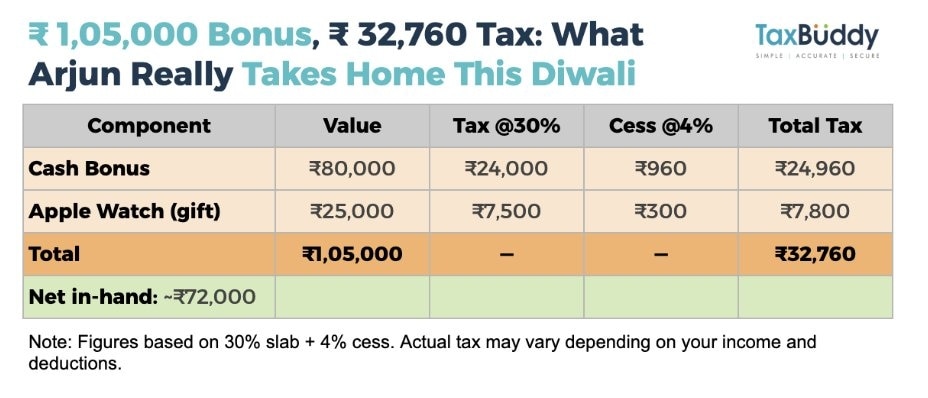
Tax advisory platform Tax Buddy recently highlighted a real-life example that went viral on social media platform X. Arjun, a corporate employee, received a generous Diwali package from his employer:

 Navratri gift: Govt caps margins to 30% for 137 anti-cancer drugs; revised prices from Nov 9
 Regulatory outreach a priority: Incoming CEO Anup Bagchi maps operational plan for HDFC Bank
  YES Bank Q2 profit rises 65% to Rs 1,080 cr; proforma impact of restatement of AT-I bonds revealed
 Yes Bank examining in detail Supreme Court verdict on AT1 bonds: CEO
  FSSAI cracks down on FMCG giants Nestlé India and HUL over misleading labels, safety violations
 Gold Investment Options: ETFs, EGR And MCX Explained | How To Invest In Gold Beyond Physical Buying
 Redmi Note 17 Pro Max Review , Vivo V80, Vivo Vision | Tech Gear EP 20 | Business Today
 Mahindra XUV 3XO ZNG Review: Turbo Power Meets CNG Mileage
 Gold, Silver Prices: Limited Upside Ahead Of Diwali? Expert Sees Gold At ₹1.5 Lakh, Silver At ₹2.3
 Expert Names REITs And INVITs To Watch For Quarterly Payouts And Potential Investment Returns
 10 investing mistakes retail investors should avoid, from overpaying to panic sellingYES Bank Q2 profit rises 65% to Rs 1,080 cr; proforma impact of restatement of AT-I bonds revealed
 ICICI Bank Q2 results: Net profit jumps 20% to Rs 14,843 crore; NIM contracts
 IDBI Bank Q2 net profit falls 39% to Rs 2,205 crore on year-ago's one-off gain
  Axis Bank Q2 net profit surges 38% to Rs 7,003 crore; NIM at 3.36%; key details
 SBI raises home loan rates by 25 bps: How much more will you pay every month?
 Top 10 industries where women make up the majority of the workforce: Here's the list
 Financial Horoscope Today, October 18, 2026: Libra Signs Will Receive Auspicious News, Find Out What Your Sign Says
 'Banarasi Silk', 'Kashmir Pashmina', 'Patan Patola': GI-tagged products to set your festive vibe10 investing mistakes retail investors should avoid, from overpaying to panic selling


