








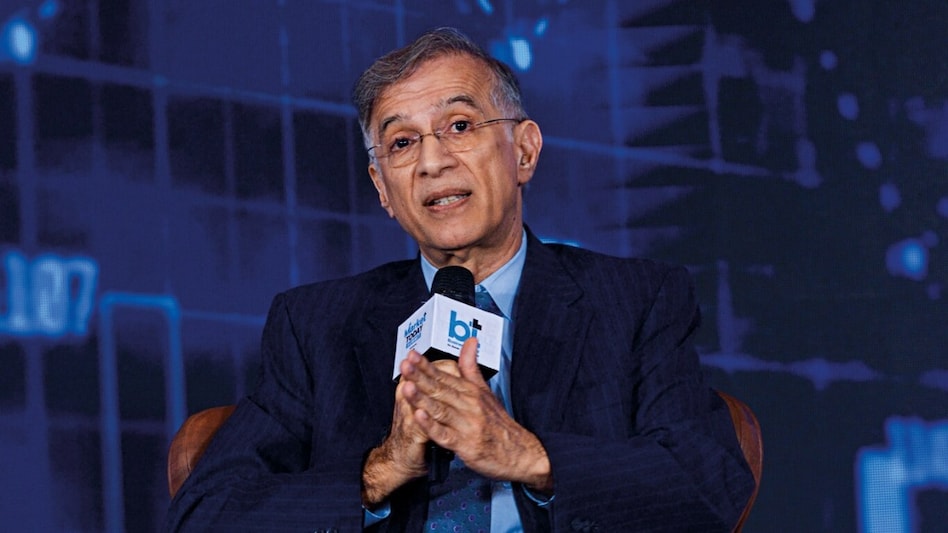
 Hiranandani said Mumbai's recurring water crises are not caused by a shortage of water, but the failure to recycle and reuse it efficiently.

 Hiranandani said Mumbai's recurring water crises are not caused by a shortage of water, but the failure to recycle and reuse it efficiently.
With Mumbai's lake storage falling to a critical low of 10.35 per cent amid delays in the monsoon, the Brihanmumbai Municipal Corporation (BMC) has tightened curbs, with the existing 10 per cent citywide water cut set to continue until storage levels improve. A 20 per cent water cut is imposed on commericial and industrial use. Water supply for ongoing construction sites has been suspended, raising concerns among city developers.
"This happens every other year," said Dr Niranjan Hiranandani, Managing Director of the Hiranandani Group, noting that whenever the monsoon is delayed and a water crisis emerges, construction curbs usually follow.
In an exclusive interview with BTTV, Hiranandani said the monsoon could be just seven days away, as it had already reached Kerala. He said concerns over the curbs should ease once the rains arrive.
To recall, water supply to swimming pools has been suspended. Vehicle washing using potable water has also been banned. Several institutions, including RCF, Western Railway, Central Railway, BPCL, HPCL, MIDC and the Navy, will now be required to use recycled or treated sewage water for operational purposes.
Hiranandani said Mumbai's recurring water crises are not caused by a shortage of water, but the failure to recycle and reuse it efficiently. "The real problem is we don't use water efficiently. We put all the sewage in the sea. If we recycle all the water, we would have 30 per cent more water available to the whole city," Hiranandani said.
"Our racecourse, our gardens, our football grounds and all the other industries are using fresh water. For air-conditioning and for flushing, we can use recycled water. The city of Nagpur recycles so much water that it sells it to industry and makes a profit out of it," Hiranandani said.
Hiranandani called for long-term solutions instead of annual emergency measures. He noted that his company processes seven million litres of water daily in its projects and uses it for gardening, flushing and other aspects.
Hiranandani noted that Nagpur's water requirement had actually come down. "We are now putting up sewage treatment plants, but we have no provision for recycling and reusing the water because water is supplied very cheaply. That is the difficulty we have," Hiranandani said.
He said the cost of the water billed to people is low. Citing example of several buildings, where recycled war is available, as it costs. Instead they use the low cost water offered by municipal corporation.
 No relief for Telegram as Delhi High Court allows temporary India block to continue
 Bring home a Tesla at just ₹6 lakh! Tesla unveils new Model Y ownership plan; here's how monthly plan works
 Infosys shares fall to 5-year low, TCS nears 6-year low: Accenture impact explained
 CJP writes letter to PM Modi, demands Rs 1 crore compensation for NEET students who died by suicide
 Reliance AGM 2026 LIVE Updates: RIL shareholders await Mukesh Ambani speech as industry all ears for Jio IPO, AI strategy
 Which Sectors Worked Best For BOI Mutual Fund? Alok Singh Reveals The Top Performers
 Indian Stock Market News: Why Pharma, Hospitals And Diagnostics Remain Long-Term Compounders
 Why Expert Believes AI Could Trigger The Next Growth Wave For Indian IT Stock
 Falling Oil Prices And A Stronger Rupee: Experts See A Big Opportunity For India
 "India Will Write The Last Word On AI": Piyush Goyal's Bold Tech Vision From France
 MFs pick Lenskart, Groww, RIL, LIC & more in May; ITs, BHEL, Vedanta, L&T among top sells
 IT stocks crash: TCS, Infosys, HCL Tech & others wipe out Rs 1.6 lakh crore - Time to buy?
 Why market is down today: Sensex, Nifty tank on weak IT outlook; Infosys, TCS drag
 Amid market crash, Va Tech Wabag shares rise 5%, hit 52-week high; here's why
  Turtlemint Fintech Solutions IPO opens today: Should you subscribe — Check preview & GMP