












 National disaster planners have identified 47 dams in valleys downstream of these lakes that could be vulnerable to outburst floods.
  National disaster planners have identified 47 dams in valleys downstream of these lakes that could be vulnerable to outburst floods.
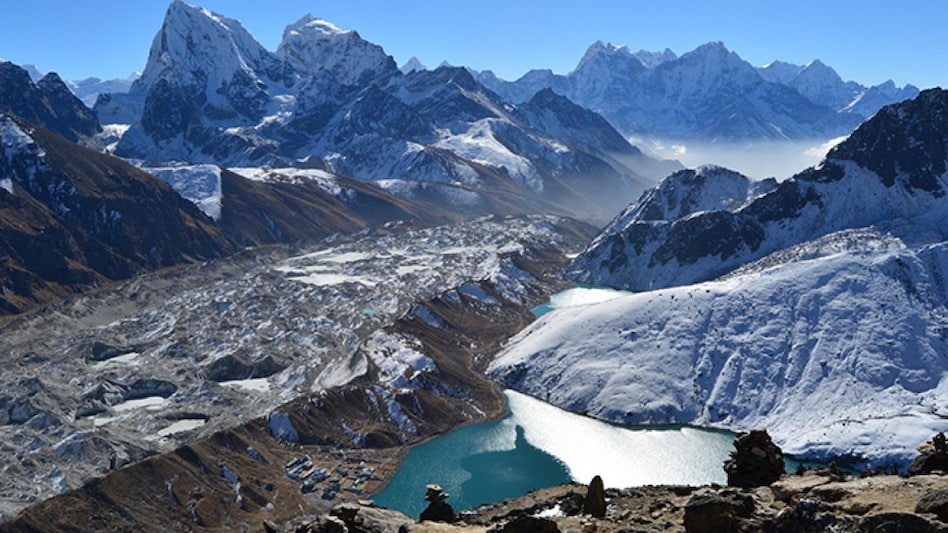
 Climate-driven melting of snow and ice is causing the expansion of many lakes in the Himalayas, which is increasing the risk of catastrophic flooding for communities downstream, according to new data. Researchers who analysed 902 lakes across the region found that over half have grown in size since 2011, with some expanding by more than 40 percent. Overall, the total area covered by these lakes increased by 11 percent during this period, reports India’s Central Water Commission.
These findings underscore the urgent need for “vigorous monitoring” of the rapidly changing glacial lakes and other water bodies, the researchers warn. Many of these lakes are held in place by unstable ice dams and gravel bars, which can collapse unexpectedly, triggering deadly torrents. Such “outburst floods” have claimed thousands of lives in the Himalayas over the past decade, and the warming climate has only intensified the risk. The report emphasises that because outburst floods are difficult to predict, it is crucial to closely monitor even smaller lakes for changes in water spread area.
The new data comes from a comprehensive review of satellite and aircraft imagery covering lakes and glacial bodies larger than 10 hectares across India, China, Nepal, and Bhutan. Of the 902 lakes studied, 458 (51 percent) had grown in size between 2011 and September of this year. The majority of the remaining lakes either shrank or showed no change, though 41 cases were uncertain. The total area covered by 825 of the lakes now measures nearly 600,000 hectares, reflecting a 10.8 percent increase.
The findings align with other recent studies. In April, the Indian Space Research Organisation (ISRO) reported that of 2,431 Himalayan lakes larger than 10 hectares, 676 (28 percent) had expanded between 1984 and 2016.
Irfan Rashid, a climate scientist at Kashmir University, warned that the growth of glacial lakes should serve as a major concern for policymakers, according to a report in Science publication. He also stressed the need for greater cooperation among the four Himalayan nations, as many watersheds cross national borders.
In response, the Indian government launched an $18 million initiative in the Himalayan states of Himachal Pradesh, Uttarakhand, Sikkim and Arunachal Pradesh to address the issue. In Sikkim, researchers have begun evaluating the 16 most vulnerable glacial lakes, assessing risks and exploring mitigation strategies, including monitoring equipment and water diversion channels, according to Sandeep Tambe, secretary of the Department of Science and Technology in Sikkim.
National disaster planners have identified 47 dams in valleys downstream of these lakes that could be vulnerable to outburst floods. Reports on 31 of these dams have been completed, with assessments of whether their spillways are adequate to handle potential floods.
A study published in November estimated that more than 10,000 people across nearly 2,000 settlements in the eastern Himalayas, as well as five bridges and two hydropower plants, are at risk from outburst floods.
 Meta, Oracle layoffs: Indian H-1B workers in US have 60 days to find a job or leave; Here's why
 ‘Deal can happen in 5 seconds if…’: Jefferies on what it will take for Trump to end Iran war
 BT Exclusive: We are providing infra to people coming to work from the beach, says Goa CM Pramod Sawant
 This country is India’s third largest crude oil supplier, ahead of Saudi Arabia, US
 'Unchecked FX depreciation...': What Radhika Rao says on rupee, RBI intervention
 Pakistan’s China-Made JF-17 Faces Scrutiny After Crash During Routine Training Mission
 Europe Blinked First? Putin Gains Big As UK, EU Quietly Return To Russian Oil Dependence
 Rubio’s India Visit Revives Big Questions Over Quad’s Momentum And Strategic Future
 Walmart Warns On U.S. Economy As Fuel Prices Hurt Consumer Spending | Rising Fuel Costs Impact
 Trump Vs Netanyahu: Tense Leak Reveals Massive Fight Over Iran War Ceasefire Deal!
 'Unchecked FX depreciation...': What Radhika Rao says on rupee, RBI intervention
 Dixon, Elecon, JSW Infra, Kaynes Technology shares rise up to 7% amid market rally today
 MTAR Technologies shares hit record high; multibagger stock up 57% in a month; check latest trigger‘Deal can happen in 5 seconds if…’: Jefferies on what it will take for Trump to end Iran war
 This Ashish Kacholia stock tanked 36% in two weeks; what is behind this correction?