


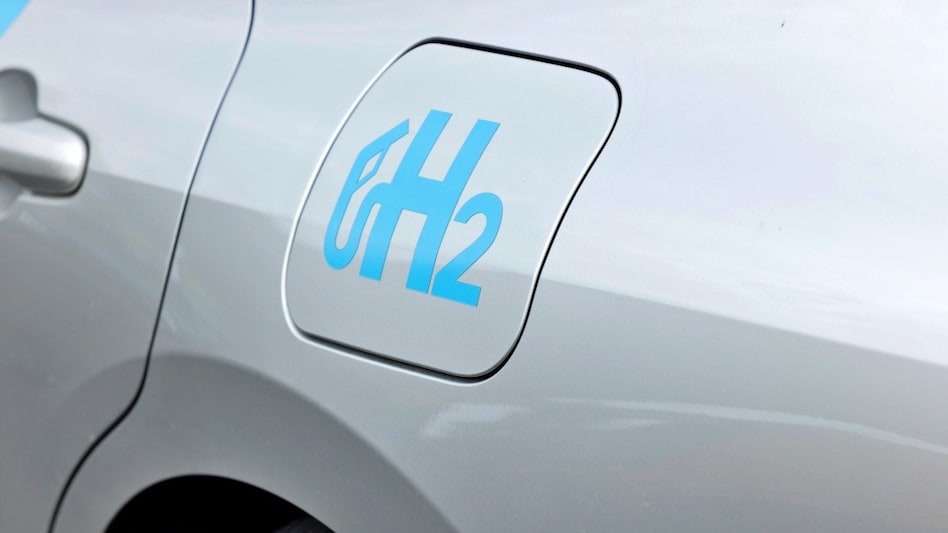
 India has placed big bets on hydrogen as part of its climate strategy.
Researchers at the Indian Institute of Technology-Guwahati have developed a low-cost catalyst to produce hydrogen from water, a step that can support the country’s National Green Hydrogen Mission and accelerate the shift to sustainable energy sources, according to a statement.
Hydrogen is considered an important part of the global move to clean energy because, when used to produce energy, it generates only water as a byproduct, unlike petroleum-based fuels that release pollutants. It is also used in fuel cells and serves as a raw material in several industrial processes, including the production of fertilisers.

 It's official: Xi Jinping will attend BRICS Summit in New Delhi
  Insolvency regulator sounds alarm over misuse of bankruptcy law; tells professionals to dig deeper
 Coforge after OP Bhatt: Advent’s growing influence puts board dynamics under spotlight
 Westinghouse plans 18 nuclear power plants in India by 2047
 BRICS Summit 2026: India to encourage use of central bank digital currencies for cross-border payments
 Nifty Outlook: Which Stocks & Sectors Can Outperform? Axis Bank, ICICI Bank, Defence & More
 Rupee Outlook: Why Crude Oil Is Key, USD/INR Range & Levels To Watch
 ED Raids 18 Locations Linked To Karnataka Minister Satish Jarkiholi In Bar Licence Probe
 HDFC Bank, TCS Stocks: Key Levels To Watch, Long-Term Outlook & Top I.T. Picks
 Delhi PG Horror: 22 Girls Left Without Food, Wi-Fi Or Warden After Satya Niketan Collapse
 MSCI India rebalancing went well under CAS: What SEBI Chair says
 HFCL share price: Why recent rally is a red flag; analyst says this on fresh entry
 Sell IRFC on rallies, railway stocks may stay subdued despite fresh orders, says analyst
 Waaree Energies, Astra Microwave, Texmaco Rail among stocks to turn ex-dividend on September 11
 Manipal Health share price target: What JPMorgan, UBS, BNP Paribas, others say Nifty Outlook: Which Stocks & Sectors Can Outperform? Axis Bank, ICICI Bank, Defence & MoreMSCI India rebalancing went well under CAS: What SEBI Chair saysRupee Outlook: Why Crude Oil Is Key, USD/INR Range & Levels To WatchED Raids 18 Locations Linked To Karnataka Minister Satish Jarkiholi In Bar Licence Probe
 China and India power BRICS trade expansion as intra-bloc commerce gains momentum: Report












