








 The team is now working to automate and multiplex mEM, aiming to process dozens of samples in parallel.
 The team is now working to automate and multiplex mEM, aiming to process dozens of samples in parallel.
A new microchip developed by Scripps Research scientists can reveal how a person’s antibodies target viruses — using just a drop of blood. The technology promises faster, clearer insights that could accelerate vaccine development and antibody discovery.
“This lets us take a quick snapshot of antibodies as they are evolving after a vaccine or pathogen exposure,” says Andrew Ward, professor in the Department of Integrative Structural and Computational Biology at Scripps Research and senior author of the new paper published in Nature Biomedical Engineering on June 3. “We’ve never been able to do that on this timescale or with such tiny amounts of blood before.”
When someone encounters a virus or receives a vaccine, their immune system produces antibodies to recognize and attack the threat. Some antibodies neutralize the virus effectively, while others bind only weakly. Pinpointing exactly which parts of a virus the strongest antibodies target is crucial for designing vaccines that spark robust, protective immunity.
“If we know which particular antibodies are leading to the most protective response against a virus, then we can go and engineer new vaccines that elicit those antibodies,” Leigh Sewall, a graduate student at Scripps Research and first author of the new paper, told phys.org.
In 2018, Ward’s lab introduced electron microscopy-based polyclonal epitope mapping (EMPEM) to visualize how antibodies latch onto viruses. But EMPEM had drawbacks — it took a week to run and required large blood samples.
“During the COVID-19 pandemic, we began really wanting a way to do this faster,” says Alba Torrents de la Peña, a Scripps Research staff scientist, who helped lead the work. “We decided to design something from scratch.”
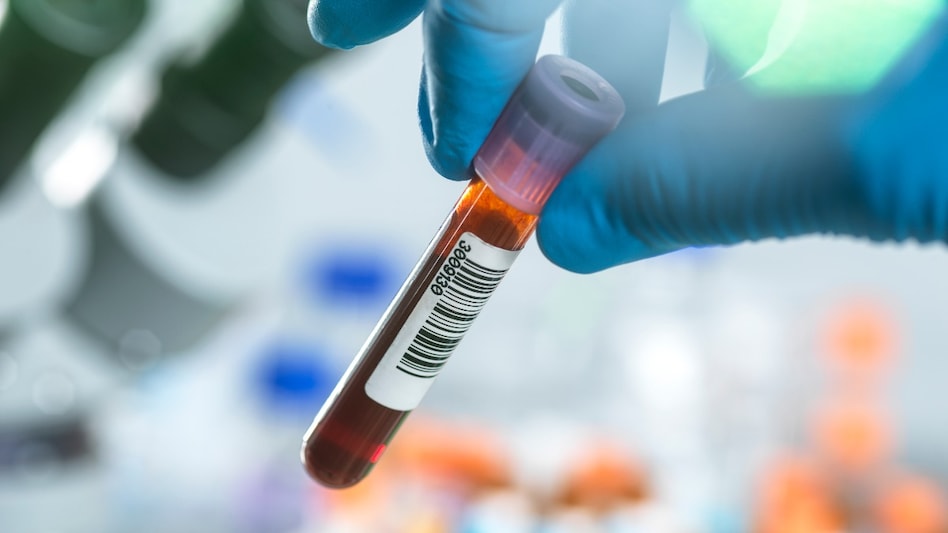
Their solution is microfluidic EM-based polyclonal epitope mapping, or mEM. It needs only four microliters of blood—about one hundred times less than EMPEM. Inside a tiny reusable chip coated with viral proteins, antibodies bind to those proteins as blood flows through. Researchers then release and prepare these complexes for electron microscopy. The entire process takes about 90 minutes.
To validate mEM, the team mapped antibodies in humans and mice exposed to viruses like influenza, SARS-CoV-2, and HIV. The method was not only faster but also more sensitive than EMPEM, revealing previously unseen antibody binding sites on influenza and coronavirus proteins.
The technology also let scientists track how antibodies evolved over time in single animals after vaccination.
“That was something that wouldn’t have been possible in the past, because of the amount of blood needed for EMPEM,” says Sewall. “So to be able to look at an individual over time was really exciting.”
The team is now working to automate and multiplex mEM, aiming to process dozens of samples in parallel. Ultimately, they hope it becomes a routine tool for guiding vaccine design against pathogens ranging from coronaviruses to malaria.
“This technology is useful in any situation where you have really limited sample volume, or need initial results quickly,” says Torrents de la Peña. “We hope this becomes accessible to more researchers as it is simplified and streamlined.”
 ‘No one can dictate our behaviour’: Iran rejects US demands on uranium enrichment despite talks
 Are Indian refiners avoiding purchasing Russian oil? Here’s what we know
  Stocks in news: RIL, Tata Steel, IREDA, Kalyan Jewellers, BEML and more
  Jeffrey Epstein's 'baby ranch' plan: New files detail disturbing plans tied to his New Mexico estate
 Claims of sovereignty loss in India-US trade deal ‘absolute nonsense’: Piyush Goyal
 BT Golf 2025-26 Kochi, Kerala Awards Ceremony Marks A High-Energy, Successful Conclusion
 Golf Is An Addiction. We Eat And Sleep Golf!
 The Fairway Fixes Everything. Mindset, Life, Relationships
 BT Golf LIVE: Join AU Small Finance Bank Presents BT Golf 2025-26 For Its 4th Leg In Kochi, Kerala
 AI Will Change MBAs, Not Leadership: IMD President On India’s Global Education Rise
 Stocks in news: RIL, Tata Steel, IREDA, Kalyan Jewellers, BEML and more
  RIL, SBI, Kotak Bank, Kalyan, HAL, BEML, BDL among stocks in focus next week; here’s why
 NSE IPO may unlock mega gains for billionaire investors RK Damani, Premji
 SBI Q3 Results: Profit jumps 24% to Rs 21,028 crore; asset quality improves
 IDBI Bank stake sale: Kotak Mahindra Bank says ‘has not submitted a financial bid’