


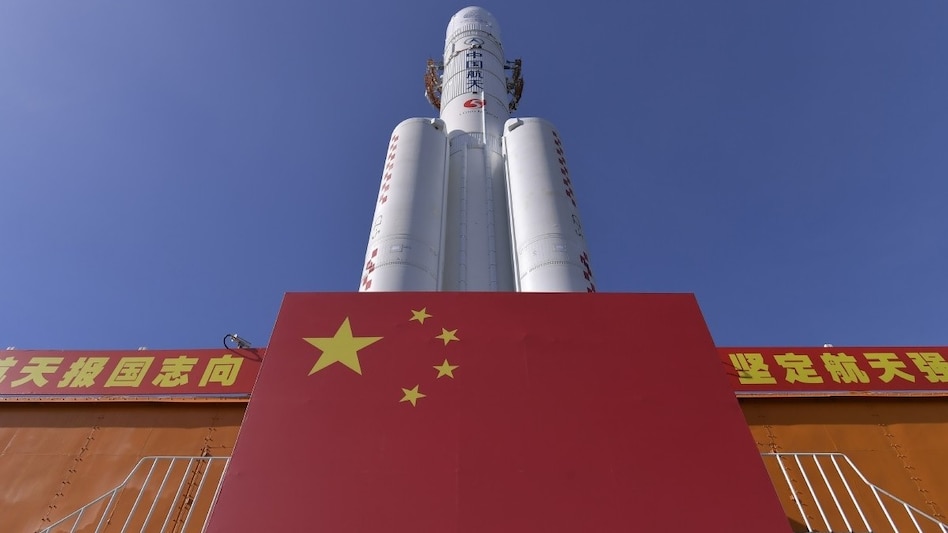
 The development of this heavy-lift rocket is part of China’s 14th Five-Year Plan (2021-2025), with reusable rockets being a key objective in the country’s 2021 White Paper on Space Activities.
 SpaceX’s Starship spacecraft and Super Heavy rocket — collectively known as Starship — represent a fully reusable space transportation system designed to carry both crew and cargo to Earth orbit, the Moon, Mars, and beyond. As the most powerful launch vehicle ever developed, Starship can carry up to 150 metric tonnes in a fully reusable configuration and 250 metric tonnes in an expendable one.
While Starship has garnered significant attention, leading many to assume that the United States — primarily through SpaceX — stands alone in developing a super-heavy rocket aimed at reducing launch costs and enabling missions to Mars, SpaceX may soon face competition from China, which is also developing a super-heavy, reusable rocket: the Long March 9.

 More than a decade after entering India, Amazon is putting boots on the ground to tackle counterfeits.
 No petrol, diesel price hike proposal yet; govt may support OMCs if crude stays high
 Global tax rules being rewritten, BRICS must have greater say: Finance Minister Nirmala Sitharaman
 BT Big Story: Why India Inc is warming up to non-English-speaking executives
  Why can’t India just stop buying Russian crude oil? FM Nirmala Sitharaman explains
 India Growth Outlook Gets Major Boost: S&P, Fitch, ADB Raise FY27 Forecasts; OECD Upgrades 2026 View
 A-One Steels IPO Explained: Key Details, Growth Strategy & Future Outlook | Management Live
 Market Commentary: Nifty Outlook, Stocks & Market Strategy | Deven Choksey
 Ignore Large Caps? Why Investors Are Chasing High P/E Mid Cap Stocks Now
 30 IPOs In A Month: Deven Choksey On IPO Flipping And Secondary Market Liquidity
 RBI to conduct OMO sale of Rs 25,000 crore in government bonds on September 28
 NSE shares: Deven Choksey lists reasons for long-term investment; calls stock 'shock absorber' in volatile markets
 Crude oil prices fall for sixth session; PL Capital explains what could happen next
 Mazagon Dock, GRSE shares: Does short-term bounce signal trend reversal? Analyst decodes
 35% up from 52-week low! Motilal Oswal sees more steam left in this renewable energy player
 Fake ghee, blood stains, rats, roaches: Mumbai FDA takes action against 5 eateries ahead of festive season
 Atom Group secures global insurance broking licence, plans international expansion
 Honda QC3 promises 145km for ₹1.35 lakh, but only five Indian cities get the electric scooter first at launch
 Pay10 Customer App launched: UPI payments, instant transfers; Check all key features
 Why are oil marketing companies facing Rs 530 crore losses daily?












