












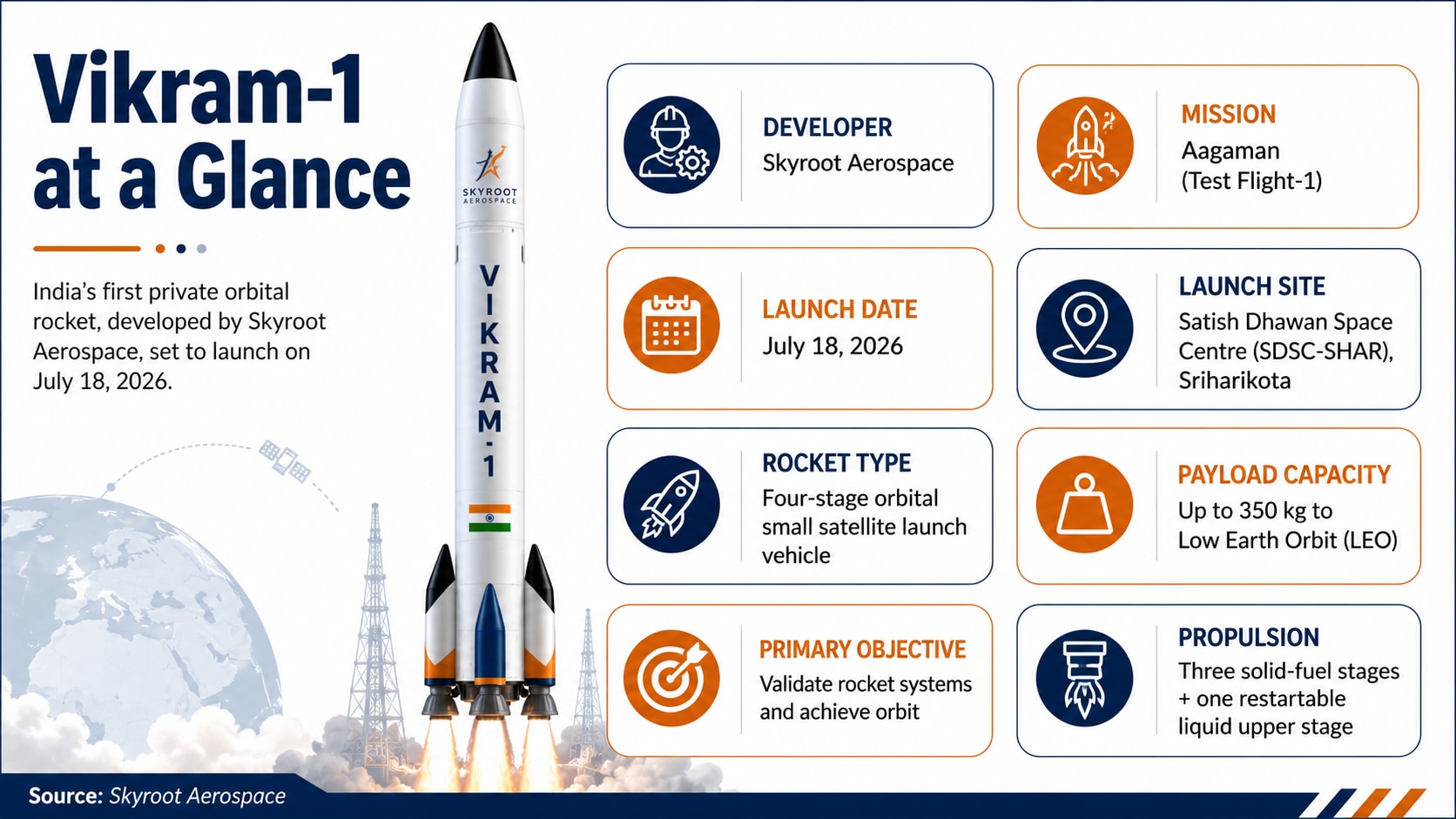



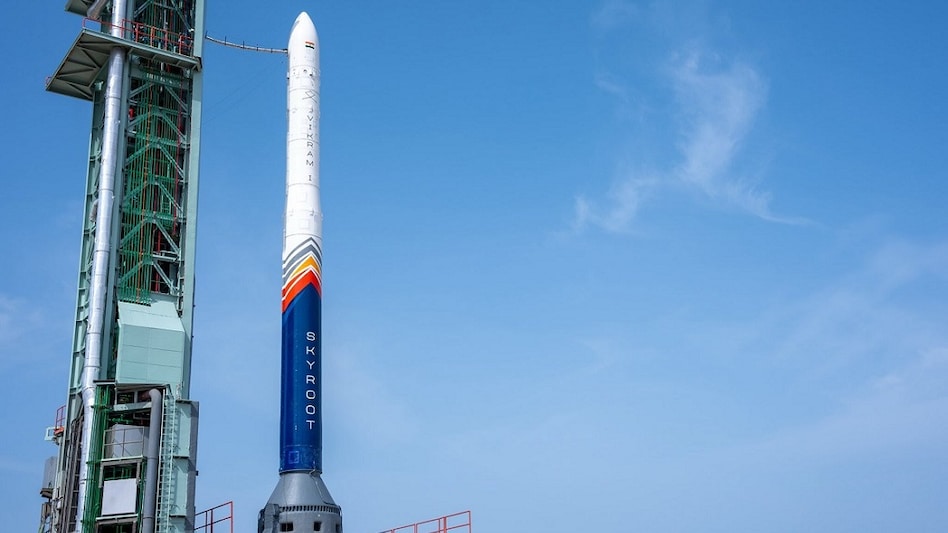
 The vehicle also incorporates lightweight carbon-composite structures and several indigenous technologies developed by Skyroot.
 India is set to witness a defining moment in its space journey as Hyderabad-based Skyroot Aerospace prepares to launch Vikram-1 Test Flight-1, the country's first attempt by a private company to place a rocket into orbit. Scheduled for July 18, the mission — named 'Aagaman' — marks a major milestone in India's rapidly expanding private space ecosystem.
What is Vikram-1?

 Paytm shares: After Bernstein, brokerages raise targets by 30%; check upside potential
 US accuses 40+ nations, including India, Canada, EU of running shadow network helping China dodge Trump tariffs
 Meta under NHRC scanner over ‘paid promotion’ of adult content; Report
 From ₹55 crore to ₹158.66 crore: How N Chandrasekaran's salary increased in a decade
 ‘Time to move on’: Bombay High Court to Vijay Mallya, SBI as ₹15,000 crore recovery takes centre stage
 Rakesh Jhunjhunwala's Unfiltered Advice: Market Rules, Realistic Returns & Riding Indian Bull Run
 India-Russia's Arctic Route: Is Northern Sea Route The New Suez Alternative?
 Tata Motors CV, Auto Ancillaries Gain Momentum: What Is Driving The Sector’s Growth?
 Haldwani Stage "Purified" After Kharge Rally: Heated Congress Vs BJP Clash Reaches Parliament
 Ranchi Student Agitation Intensifies: Crackdown Fails As Probe Demands Mount Against Soren Govt
 Solar Industries share price: Triggers for stock post Q1 earnings; should you buy or sell?
 Zee Entertainment shares jump over 8%; here is whyPaytm shares: After Bernstein, brokerages raise targets by 30%; check upside potential
 Ananya Birla-led Svatantra Microfin files DRHP with SEBI to raise Rs 3,000 crore via IPO
 Zetwerk files updated draft IPO papers with Sebi for Rs 2,600 crore fresh issue
 'Had Modi been PM in 1947…': Yogi Adityanath’s Partition claim puts Congress under fresh spotlight
 IIT-Guwahati develops low-cost nickel catalyst to make hydrogen from waterRakesh Jhunjhunwala's Unfiltered Advice: Market Rules, Realistic Returns & Riding Indian Bull Run
 ‘Do the Right Thing’: Air India CEO Campbell Wilson warns staff against misconduct after terminating 1,000 employees Solar Industries share price: Triggers for stock post Q1 earnings; should you buy or sell?


