


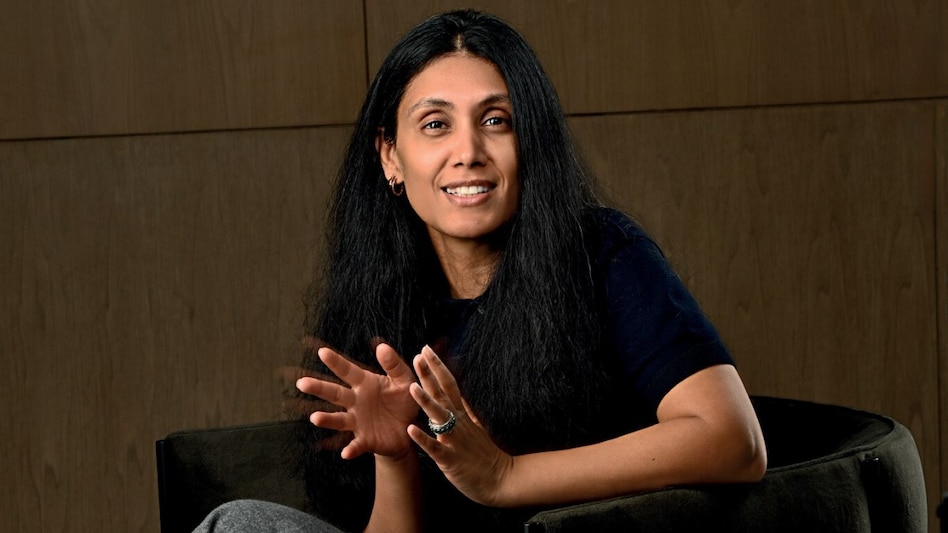
 Calling AI a “structural shift,” she said, “For the first time in history, knowledge itself is being commoditised.” (File photo)
At the India AI Impact Summit 2026, Roshni Nadar, Chairperson of HCL Technologies, called for a fundamental shift in how India approaches artificial intelligence — from scale-driven services to intellectual property-led value creation.
She steered the conversation away from trillion-dollar projections and model sizes, urging leaders to focus on perspective and responsibility in what she described as a defining technological moment.

 Jio IPO GMP rises: Ventura, SMC Global, SBI Securities, 3 others share recommendations
 Brent oil futures hit $110 a barrel! These stocks to watch next week
 ‘Much Appreciated’: Elon Musk responds to Reliance’s statement on Starlink’s India entry
 Jio Platforms IPO: GMP hits new high; what could drive next phase of growth for telecom major
 Finance Ministry clarifies IDBI Bank divestment history amid ₹52,878-crore sale to Fairfax
 Redmi Note 17 Pro Max Review , Vivo V80, Vivo Vision | Tech Gear EP 20 | Business Today
 Mahindra XUV 3XO ZNG Review: Turbo Power Meets CNG Mileage
 Gold, Silver Prices: Limited Upside Ahead Of Diwali? Expert Sees Gold At ₹1.5 Lakh, Silver At ₹2.3
 Expert Names REITs And INVITs To Watch For Quarterly Payouts And Potential Investment Returns
 Jio IPO: Mukesh Ambani's Big ₹30,213 Crore Bet, Reliance Employees Asked To Invest?
 Jio IPO GMP rises: Ventura, SMC Global, SBI Securities, 3 others share recommendationsBrent oil futures hit $110 a barrel! These stocks to watch next week
 LTM shares down 28% in 2026: Buy amid pivot towards short-term AI deals? Target prices
 Punjab National Bank: Buy, hold or sell post Q2 results? MOFSL shares target
 Brent hits $110 as Hormuz ship attacks, Houthi strikes on Saudi trigger oil rallyFinance Ministry clarifies IDBI Bank divestment history amid ₹52,878-crore sale to FairfaxJio IPO GMP rises: Ventura, SMC Global, SBI Securities, 3 others share recommendationsRedmi Note 17 Pro Max Review , Vivo V80, Vivo Vision | Tech Gear EP 20 | Business Today‘Much Appreciated’: Elon Musk responds to Reliance’s statement on Starlink’s India entryBrent oil futures hit $110 a barrel! These stocks to watch next week












