









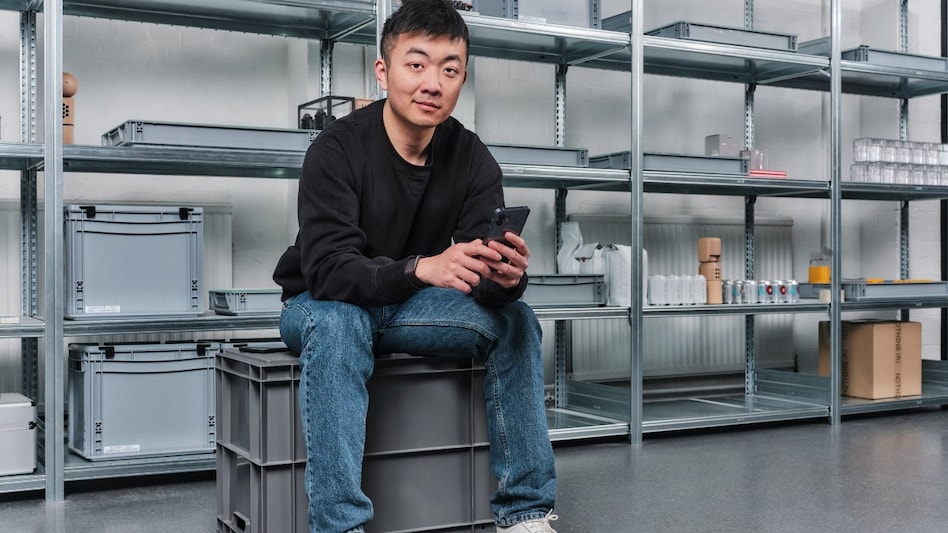
 Carl Pei, CEO and Co-founder of Nothing

 Carl Pei, CEO and Co-founder of Nothing
Nothing founder and chief executive officer Carl Pei has warned that smartphone prices are set to rise sharply as a surge in artificial intelligence (AI) infrastructure spending drives global memory and storage costs to record levels, reshaping the cost dynamics of the handset business.
In a post on X (formerly Twitter) on 14th of January, Pei said the long-standing assumption that smartphone components would inevitably get cheaper has finally collapsed.
“For fifteen years, the smartphone industry relied on a single, reliable assumption: components would inevitably get cheaper… In 2026, that model has finally broken, driven by a sharp and unprecedented surge in memory costs,” Pei wrote.
He said the rapid expansion of AI data centres has reshaped the global memory market, with hyperscalers locking in chip capacity years in advance to fuel the AI boom, leaving smartphone makers competing directly with AI infrastructure for the same components.
“For the first time, smartphones are competing directly with AI infrastructure and memory prices are rising sharply as a result,” he added.
Memory costs surge as AI absorbs global supply
According to Pei, memory has fast become one of the most expensive components inside a smartphone and could soon be the single biggest cost driver in the bill of materials.
“In some cases, memory costs have already increased by up to 3x, with further rises expected as unprecedented demand continues to swallow available supply,” he said.
“Memory is fast becoming one of the most expensive smartphone components and potentially the single largest cost driver in the bill of materials by year-end.”
Pei said memory modules that cost less than $20 (approximately Rs 1,807) a year ago could cross $100 (approximately Rs 9,035) by the end of 2026 for top-tier smartphones.
“When something that used to get cheaper every year suddenly becomes a lot more expensive, the economics of building a smartphone fundamentally change,” he said.
A structural shift
The result, Pei said, is a structural reset for the entire smartphone market.
“This is a reversal of everything we’ve come to expect from this industry,” he wrote.
“Brands now face a simple choice: raise prices by 30% or more in some cases, or downgrade specs. The ‘more specs for less money’ model that many value brands were built on is no longer sustainable in 2026.”
He warned that entry-level and mid-range segments could shrink sharply as affordability comes under pressure.
“Some markets, particularly entry and mid-tier segments, are likely to shrink by 20% or more, and brands that have historically dominated these segments will struggle,” Pei said.
Nothing itself will not be immune, he said. The company plans to upgrade some of its upcoming products to faster UFS 3.1 storage, adding further pressure on costs.
The end of the specs race
Pei argued that 2026 will mark the end of the long-running specs race that has defined the smartphone industry for over a decade.
“2026 is the year the ‘specs race’ ends. As the industry resets, experience becomes the only real differentiator,” he said.
“The era of cheap silicon is over. The era of intentional design is just beginning.”
India expansion continues
The warning comes as Nothing expands its presence in India, one of its fastest-growing markets.
The company recently announced plans to open its first flagship experience store in the country, while its sub-brand CMF is setting up its global headquarters in India. Nothing currently exports three India-made devices globally, the Nothing Phone (3), Phone (2a) and Phone (3a) series.
"Nothing contributes to less than 1% share in the Global smartphone volumes, with more than 70% of its sales volume coming from India. Nothing’s export from India stands at more 50K units for 2025 till Nov," Tarun Pathak, Research Director, Counterpoint Research told Business Today.
"Outside the top five brands, Nothing recorded 31% YoY growth, respectively, in 2025. One of the fastest globally," Pathak added.
Despite rising costs, Pei said the company will continue to prioritise design and user experience over a race for specifications.
“Our focus remains on perfecting how the device feels and works in everyday use,” he wrote.
For Unparalleled coverage of India's Businesses and Economy – Subscribe to Business Today Magazine
 Relief for taxpayers: Govt extends last date for filing appeals before GST Appellate Tribunal
 'Met for 2 hours. He started writing equations': Gita Gopinath names the world leader who left a lasting impression on her
 Cabinet reshuffle around the corner? PM Modi calls top bureaucrats for high-stakes meeting
 Paint prices may fall only after Diwali: Asian Paints, Berger Paints, Indigo price targets
  NCR states likely to waive road tax on new clean-fuel trucks, buses under vehicle scrappage scheme
 Ram Mandir Donation Case: 8 Accused Sent To Judicial Custody, Trust Faces Fresh Questions
 Modi Cabinet Reshuffle Buzz: NDA Allies, U.P. Polls & BJP's Political Strategy Explained
 India's First AAA Game? Inside India's Biggest Gaming Dream
 10 Years Of Amazon Prime And Company’s Roadmap For The Next Decade
 Top 5 Foldable Phones In India | Which One Should You Buy?
 BHEL, HAL, Siemens, BEML, Cummins, BEL: Top defence stocks to buy - Check price targets
 IGL, MGL, Gujarat Gas: Delhi EV policy impact, Nomura shares target pricesPaint prices may fall only after Diwali: Asian Paints, Berger Paints, Indigo price targets
  Maruti Suzuki India shares jump 5% today; here's why
 HDFC Bank, SBI, ICICI Bank, Bank of Baroda: Top baking stocks picks; check targets & more