


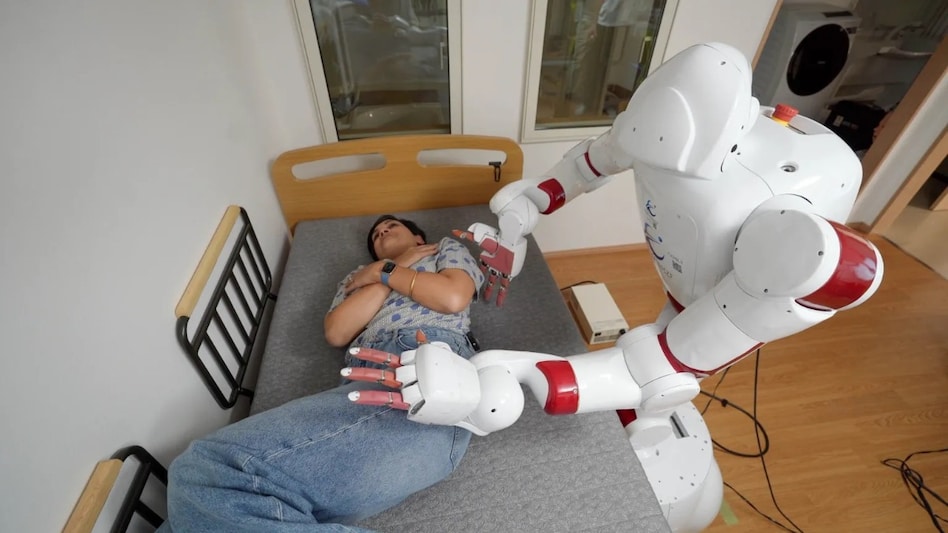
 Japanese caregiving robots (Credits: BBC)
Japan, home to one of the world's most rapidly ageing populations, is facing a severe social challenge: a growing dementia crisis coupled with a critical shortage of human caregivers. To tackle this, the nation is increasingly turning to advanced technology, deploying a range of AI tools and robot assistants to support both patients and the already-stretched-thin care system.
The scale of the problem is stark. With nearly 30% of its people aged 65 or over, Japan saw more than 18,000 elderly individuals with dementia wander off in a single year, with tragic consequences for hundreds of them who were found deceased. With health and social care costs related to the condition expected to soar to 14 trillion yen ($90 billion) by 2030, the government is making a clear, strategic shift towards automated solutions.
One of the most immediate uses of technology is in safety. Across the country, communities are implementing widespread GPS-based tracking systems. Local authorities and care networks are distributing wearable tags that can be attached to shoes or clothing, instantly alerting caregivers when a person leaves a designated safe area. This has created a modern 'community safety net', with staff at places like convenience stores receiving real-time notifications to help locate missing people quickly.
Beyond tracking, AI is being used for early detection. Systems like Fujitsu’s aiGait use AI to analyse subtle changes in an individual’s walking patterns and posture, which are early indicators of cognitive decline, allowing doctors to intervene earlier and potentially help people stay active for longer.
The most visible technology, however, remains the robot. Waseda University's prototype, AIREC, is a 150kg humanoid robot designed to handle physically demanding tasks. It has been demonstrated to assist with movements like rolling a person onto their side (a crucial movement for preventing bedsores) and can perform simple tasks like folding laundry.
Experts acknowledge that these complex humanoid robots are still several years away from widespread deployment in care homes and will initially be very expensive. A point to note here is that both researchers and human care workers stress the fact that this technology is intended to supplement, not substitute, human interaction. While robots can take over routine, time-consuming physical tasks and monitoring, the irreplaceable element of human connection and emotional support remains essential for the dignity and well-being of people living with dementia. Japan's experience is now a vital test case for other nations facing similar demographic pressures.
India itself is no stranger to rising dementia cases, with around 8.8 million Indians over 60 living with dementia as of recent government studies (2023), and the number is projected to hit 17 million by 2036. Observing Japan's progress, adapting and implementing similar technologies can prove to be crucial in tackling the condition at home.
For Unparalleled coverage of India's Businesses and Economy – Subscribe to Business Today Magazine

 Tata Consumer stock: Tata Group's FMCG arm reacts to Q1 earnings show
  Sterlite Technologies: What every investor should know about the stock post Q1 earnings
  NEET to be conducted through a computer-based model? Here’s what we know
 ‘Merely because there is agitation…’: Supreme Court says right to peaceful protest is guaranteed
 BT Explainer | PVR Inox shares: Analysts bet big on Odyssey, Ramayana, Avengers & others post solid Q1
 Nirmala Sitharaman Slams Govt Apathy After Tax Dept's 50-Year Land Struggle In Mumbai
 PM Modi’s Big Message To Youth: Border Villages Are India’s First Villages
 Pralhad Joshi At Davos 2026, Exclusive Conversation Resurrected With New Education Minister
 Should You Buy The Echo Dot Max? Full Review & Honest Verdict
 Smartphone Brain: How Excessive Screen Time May Harm Children's Health | Sneha Mordani Explains
 Infosys fined €175,000 by French authority over employee time tracking system; says no material business impactTata Consumer stock: Tata Group's FMCG arm reacts to Q1 earnings show
  Why KFin Technologies shares surged 9% today
 Sagility shares surge 8%; brokerages retain 'Buy' despite Q1 revenue dip QoQ; check target pricesSterlite Technologies: What every investor should know about the stock post Q1 earnings
  Where are the jobs: Youth unemployment remains high; fewer jobs for those with higher education in IndiaNirmala Sitharaman Slams Govt Apathy After Tax Dept's 50-Year Land Struggle In Mumbai
 Bihar cop who fired AK-47 at NEET protesters suspended; 15-year-old shot in neck, now stablePM Modi’s Big Message To Youth: Border Villages Are India’s First VillagesPralhad Joshi At Davos 2026, Exclusive Conversation Resurrected With New Education Minister









