


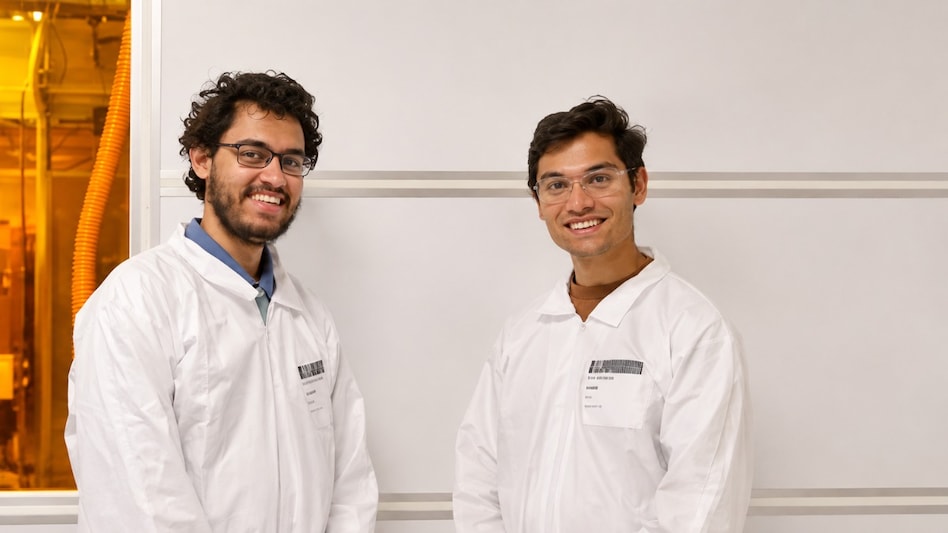
 The startup has already raised $9 million in seed funding in August to advance its research into semiconductor materials. (Picture credit : Linkedin/ Advaith Sridhar)
Two IIT Madras alumni are putting $1 million on the table for anyone who can solve five longstanding problems in materials science, in a challenge that aims to test how far artificial intelligence and researchers can push scientific discovery, Tech crunch reported.
Advaith Sridhar and Akash Ramdas, who met more than a decade ago at IIT Madras, co-founded Discovered Materials, a San Francisco-based startup working on AI-powered methods to discover new materials for semiconductor chips.

 NSE MD Ashishkumar Chauhan is hopeful on the new Samvat, but has a word of caution for investors
 'Temple is not made for India': Deepinder Goyal responds to criticism over Rs 85,000 wearable
 Muhurat Trading 2026: Sensex, Nifty edge lower; key sectors to watch
 'Don't surrender your thinking to AI': Gita Gopinath's advice to 25-year-olds
 Muhurat Trading 2026: Sensex, Nifty open higher in special session; Tata Steel, Sun Pharma shares among top gainers
 Gold Vs Silver In 2026 | Ajay Kedia Recommends 60:40 Allocation To Silver & Gold
 Silver May Rebound Faster Than Gold, Ajay Kedia Sees ₹3 Lakh By Next Diwali
 Large-Cap Stocks: Nilesh Shah Sees Attractive Valuations In These Two Bellwether Stocks
 Equity, Gold or Fixed Deposits: How Should Investors Allocate Money Now?
 Are SIP Investors Bailing Out FIIs? Nilesh Shah Explains India's Financialisation Trend
 NSE MD Ashishkumar Chauhan is hopeful on the new Samvat, but has a word of caution for investors Muhurat Trading 2026: Sensex, Nifty edge lower; key sectors to watchMuhurat Trading 2026: Sensex, Nifty open higher in special session; Tata Steel, Sun Pharma shares among top gainers
 Diwali picks BSE, Adani Power, MCX, TechM, HFCL among top stocks for Samvat 2083 for upto 110% rally
 Tata Steel, Hindalco, Power Grid shares upgraded to 'Buy'; brokerage raises target prices
 Financial Horoscope Today, November 9, 2026: Cancer Signs Will Focus on New Matters, Know the Status of Your Sign
 Epilepsy breakthrough: Experimental gene therapy cuts seizures by over 90% in first human trial
 How much can you withdraw from your retirement corpus every month without running out of money?
 'A bit of feudal history': Economist Shamika Ravi on why Indians remain obsessed with sarkari jobs'Temple is not made for India': Deepinder Goyal responds to criticism over Rs 85,000 wearable












