








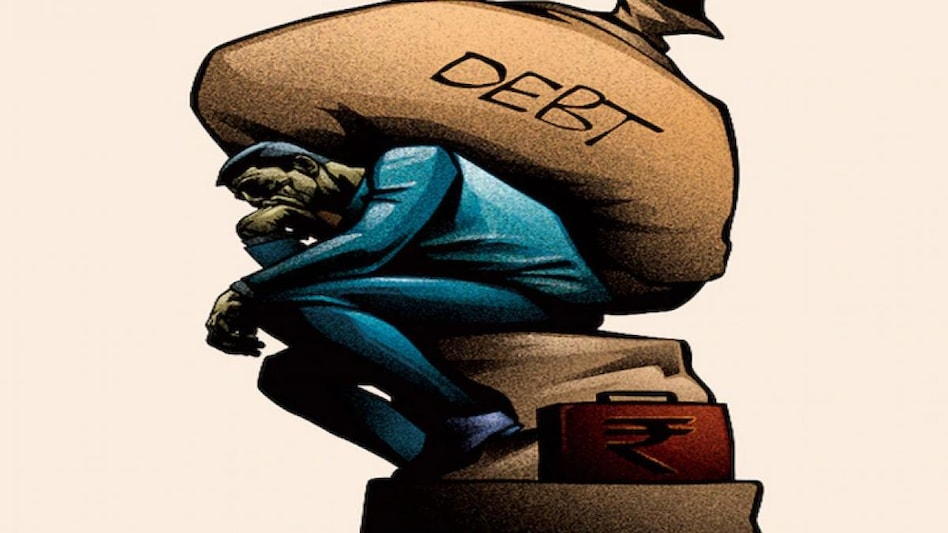
 The government needs to announce new measures/incentives for the revival and growth of the stressed companies/entrepreneurs. The government needs to announce new measures/incentives for the revival and growth of the stressed companies/entrepreneurs.
 Over the last two years, the pandemic shocked the financials of nearly all businesses and laid down various challenges not only for growth but also for the sustainability of enterprises and entrepreneurs.
Several Indian companies have seen a sharp rise in their overall debt.
The servicing of this debt is arduous and as a result, lenders are compelled to classify these debts as stressed assets or stressed companies. Investors are also grudging about investing in such companies. These reasons have formed a bedrock for the government to usher in some stressbusters.
The intent of the Insolvency & Bankruptcy Code (IBC) is to give an opportunity to businesses to revive. While we have seen successes emanating from IBC, if the tax laws are not aligned, this may lead to a huge tax outflow which may be a non-starter for an investor.
Also Read: Expectations from Budget 2022 vis-a-vis insolvency law
Among other issues, waiver of debt, carry forward and set-off of losses, tax liability under Minimum Alternative Tax (MAT) provision for companies incurring losses, etc. are key areas that need to be considered from an Income tax standpoint for the revival and growth of stressed companies.
An investor would like to bet on a company with a healthy balance sheet, especially for long-term investments. In the light of this fact, from a loss-making or a leveraged company, investors may seek an opportunity to carry forward and set off losses of that company against its profit, after acquiring a holding stake in that company and look for a lesser tax outflow due to the availability of losses with the company.
To incentivise such investors, the government had introduced a relaxation for carry forward and setting off of losses where the change in the shareholding of the company takes place under a resolution plan approved under the IBC.
To further incentivise the company where an application for corporate insolvency resolution process has been admitted under IBC, instead of lower of unabsorbed depreciation or brought forward business losses, tax authorities have allowed the aggregate of brought forward business losses and unabsorbed depreciation as a deduction from book profit for computing tax liability under MAT provisions.
A domestic company may opt to pay tax at 22% under the new tax structure. In such a scenario, the company is exempted from paying any MAT on book profit. This exemption from paying MAT for companies opting for the new corporate tax structure could make investing in stressed companies undergoing the corporate insolvency resolution process, more attractive
The government's effort to reduce the hardships of distressed companies is very well appreciated. The following proposed amendments may further foster restructuring and debt resolution of stressed companies:
Given the above, the relaxation of tax implications, including MAT, on account of the conversion of debt into equity as a part of the debt restructuring plan approved under IBC, would be a welcoming incentive for stressed companies.
The government needs to announce new measures/incentives for the revival and growth of the stressed companies/entrepreneurs.
The relief under IBC and certain other regulatory relaxations are only halfway done, various other milestones need to be touched upon from an Income Tax standpoint, for the growth and revival of stressed companies.
(The author is Partner - M&A Tax and Regulatory Services, BDO India.)
 Claims of sovereignty loss in India-US trade deal ‘absolute nonsense’: Piyush Goyal
 SEBI draws line between listing norms and RBI rules in guidance to PNB
 Domestic airfares set to rise as IndiGo capacity cuts hit summer schedule: Report
 Cyber attacks, AI misuse and data privacy rules emerge as top boardroom risks for India Inc
 'India has played it pretty safe, deal is very balanced': Top agri economist on India–US trade agreement
 BT Golf 2025-26 Kochi, Kerala Awards Ceremony Marks A High-Energy, Successful Conclusion
 Golf Is An Addiction. We Eat And Sleep Golf!
 The Fairway Fixes Everything. Mindset, Life, Relationships
 BT Golf LIVE: Join AU Small Finance Bank Presents BT Golf 2025-26 For Its 4th Leg In Kochi, Kerala
 AI Will Change MBAs, Not Leadership: IMD President On India’s Global Education Rise
 RIL, SBI, Kotak Bank, Kalyan, HAL, BEML, BDL among stocks in focus next week; here’s why
 NSE IPO may unlock mega gains for billionaire investors RK Damani, Premji
 SBI Q3 Results: Profit jumps 24% to Rs 21,028 crore; asset quality improves
 IDBI Bank stake sale: Kotak Mahindra Bank says ‘has not submitted a financial bid’
 BDL, Mazagon Dock, MRF, Hindustan Copper, RVNL, others to turn ex-dividend next week