


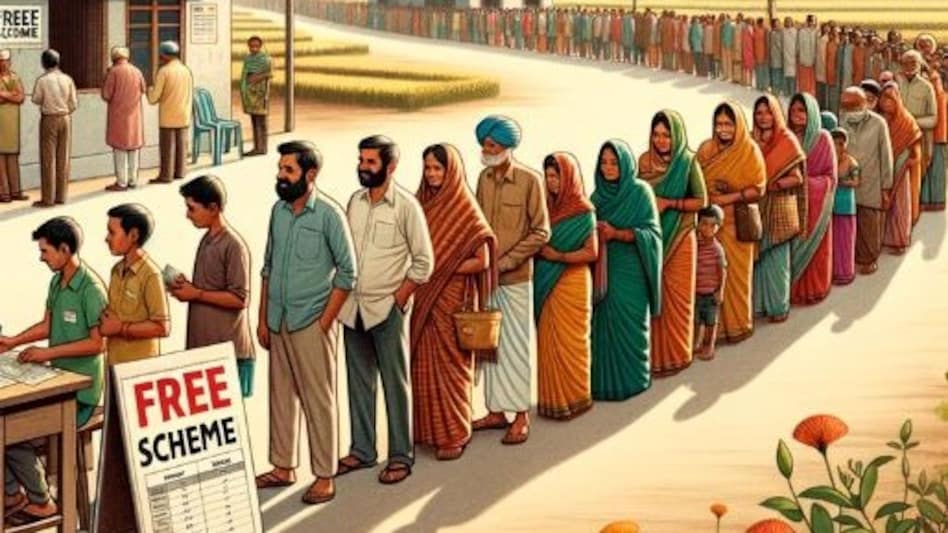
 The document highlights the fiscal trade-offs involved. With state finances already under pressure, higher spending on freebies risks either widening fiscal deficits further or squeezing out capital expenditure.
The Economic Survey 2025-26 has raised concerns over the rapid expansion of so-called “freebies”, particularly unconditional cash transfer schemes run by States, warning that their growing scale could weaken fiscal sustainability and crowd out spending on productive capital investment.
In a detailed assessment of State finances, the Survey notes that revenue expenditure is increasingly tilted towards unconditional cash transfers and other committed outlays. As these schemes absorb a rising share of limited fiscal space, the ability of States to expand capital expenditure on infrastructure, health, education and human capital is getting constrained.

 'Kolkata has become a city of old age pensioners': FM Swapan Dasgupta on Bengal's decline and skill shortage
 Trump made 1,000-plus trades in June: Here's what he bought and sold
 Escalating Hormuz crisis: Boris Johnson sees India as key to US exit strategy in Iran
 Gold jewellery to property: Radhika Gupta on what actually counts as an investment
 Delhi H1N1 outbreak: No cause for panic, currently circulating strain not a new one, says ICMR
 How Retirement Income Is Taxed And What Investors Need To Know
 Commuted Vs Uncommuted Pension: Know The Difference And How Each Is Taxed After Retirement
 Motor Insurance Add-Ons You Actually Need Explained: Zero Depreciation, RSA & Return-To-Invoice
 No Claim Bonus Explained: When Should You Claim Or Pay For Repairs Yourself?
 Motor Insurance Premium: What Factors Determine How Much You Pay?
 Hold YES Bank, Federal Bank; buy HDFC Bank, Kotak Mahindra, Axis: ICICI SecuritiesTrump made 1,000-plus trades in June: Here's what he bought and sold
 ABH Healthcare IPO: Check key dates, price band, issue size, latest GMP, listing details & more
 India stocks lag global markets in 2026: BofA data shows 9.1% decline in USD terms
 'FOMO, fixed return': SEBI proposes revamped ad code for bond portals from misleading investors
 Choosing The Champion States: How we arrived at India’s top-performing manufacturing states
 Same earphones, different sound: Why your smartphone may be secretly changing your music
 Ather’s ₹1 lakh gamble: Its cheapest scooter yet could shake up the EV market
 Windows users, save these: 5 keyboard tricks that could change how you work
 Weather alert: Heavy rainfall likely across these states till August 29. Will Delhi-NCR get rain?












