









 Earlier, fintech firms had stressed on financial inclusion among MSMEs, simplification of lending procedures, and others.

 Earlier, fintech firms had stressed on financial inclusion among MSMEs, simplification of lending procedures, and others.
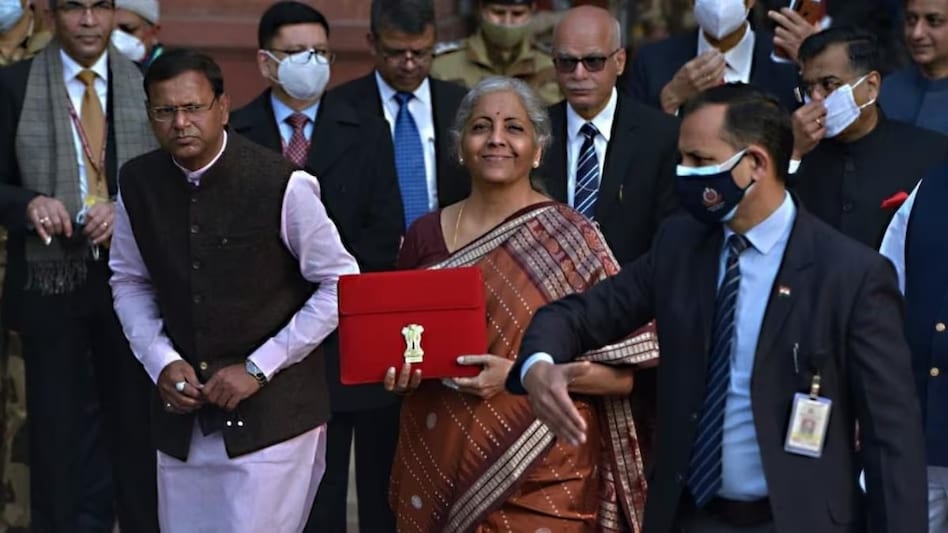
Budget expectations: The Union Budget 2024-25 will be presented next week on July 23. Sectors, like banking, non-banking financial companies, fintechs, are wishing for a level playing field, enhanced financial inclusion and reinforcing digitalisation efforts to sustain growth in respective sectors.
India's fintech sector is expected to significantly contribute an estimated $400 billion to the national economy over the next seven years. Recognised worldwide for its fintech innovations, the industry has been instrumental in providing financial services to previously marginalized communities, thus playing a crucial role in the country's economic landscape.
Fintech companies have been advocating for the government to focus on implementing schemes and incentives to facilitate their growth within underserved Micro, Small, and Medium Enterprises (MSMEs). This push for support from industry stakeholders underscores the importance of enabling fintechs to expand their services to a broader market segment.
Additionally, fintech companies are looking forward to governmental backing to facilitate partnerships with traditional financial institutions and to encourage the development of innovative solutions. It is crucial for these collaborations to be nurtured in a way that ensures financial stability for all parties involved.
Here are their top expectations:
1. “As we approach the Union Budget 2024-25, there is a collective anticipation for policies that will further nurture a growth-friendly environment. Critical factors include enhanced regulatory clarity, better access to funding, lower TDS rate for startups and extending the TDS exemption enjoyed by banks to startups. These would alleviate working capital challenges,” said Arpit Chug, chief financial officer (CFO), Razorpay.
2. “The upcoming full budget is expected to focus on employment, infrastructure and innovation. We expect the government to double down on initiatives relating to upskilling of youth to improve employability. Alongside this, increasing jobs is expected to be the core government agenda. We expect this to be through a dual approach of easing credit access to small and medium businesses to catalyse their growth and through incentives on research and investments from the private sector. Additionally, we believe the government shall continue to view positively the contribution of fintechs as a key driver of easy access to credit and their potential to create employment. We therefore expect a favourable approach to investments in the sector and clarity on the open regulatory discussions to propel India towards becoming a global fintech hub.” said Gaurav Jalan, Founder & CEO, mPokket.
3. “We urge for a waiver of GST on all financial services made available from BC outlets, an income tax relief for the next seven years, and reduced import duty on essential financial services devices,” said Anand Kumar Bajaj, founder, managing director (MD), and chief executive officer (CEO), PayNearby.
4. "The Fintech sector holds immense promise for financial inclusion and innovation. A dedicated fund-of-funds structure within the budget, specifically for Fintech, would provide crucial capital for promising startups and accelerate their growth," said Rohit Pateria, CEO, Lark Finserv.
5. "As the budget approaches, the fintech industry anticipates crucial support measures to foster innovation and enhance financial inclusion. We expect policies that streamline regulatory frameworks, making it easier for fintech startups to navigate compliance and accelerate growth. Increased access to capital, particularly for early-stage companies, will drive technological advancements and expand service offerings. Additionally, promoting digital infrastructure and cybersecurity will ensure a robust and secure financial ecosystem. Moreover, the anticipated budget is expected to provide SMEs with the tools to leverage business opportunities. Enhanced access to finance and digital solutions will empower SMEs to scale operations, improve efficiency, and compete more effectively in the market," said Roshan Shah, Co-Founder and CEO - VoloFin.
6. "We hope the government will recognize the crucial role of the gold loan industry in providing financial stability and inclusion. Our expectations include streamlining regulations for the FinTechs and implementing policies to enhance the organized gold loan market's growth. This could include incentives for the FinTechs to help the growth in the retail loan industry through innovation in digital technology which would align with the government's Digital India initiative in the sector. We are optimistic that supportive budget measures will not only benefit our industry but also contribute to India's broader economic growth and financial inclusion goals," said Rajesh Shet, Co-Founder & CEO of SahiBandhu Gold Loan.
For NBFCs, the concerns are similar with addition such as consistency in the tax policies, robust financial inclusion, consumer demand and improving trade balances. Last month in a pre-Budget consultation meeting with the Union Finance Minister Nirmala Sitharaman, the Finance Industry Development Council (FIDC) had proposed the creation of a dedicated refinancing entity similar to the National Housing Bank (NHB) for housing finance firms.
In contrast, the Reserve Bank of India (RBI) has imposed strict regulatory measures on the sector this year. In a speech at a May event, RBI Deputy Governor J. Swaminathan advised NBFCs against excessive reliance on algorithm-based credit assessment models. Despite this caution, the RBI noted in its 29th Financial Stability Report (FSR) that NBFCs in India are adequately capitalised, providing a competitive advantage to the financial industry.
As of March 2024, NBFCs reported a Capital to Risk-weighted Assets Ratio (CRAR) of 26.6%, a Gross Non-Performing Assets (GNPA) ratio of 4.0%, and a Return on Assets (RoA) of 3.3%.
"As the budget approaches, we strongly urge the Finance Minister to prioritize pivotal solutions such as enhancing digital infrastructure, financial literacy initiatives, and AI-powered credit assessments within financial institutions. The biggest backpain for India’s MSMEs is the massive credit gap of $530 billion. To effectively address the MSME credit gap, we expect the finance minister to significantly strengthen digital infrastructure and financial literacy programs, focusing on government-backed credit schemes," Ankit Ratan, Co-founder & CEO, Signzy.
"The growth of the Indian NBFC industry is significantly influenced by robust financial inclusion, consumer demand and improving trade balances. The upcoming Union Budget should emphasise enhancing financial inclusion across the country, implementing policy reforms, and reinforcing digitalisation efforts to sustain the sector's growth. Financial and digital inclusion will enhance credit access by increasing convenience and reducing turnaround times," said Rakesh Kaul, CEO, Clix Capital.
"The MSME sector is a cornerstone of India's economic growth, marked by increased contributions and high optimism for progress. The surge in registrations on the UDYAM portal for credit and policy benefits underscores this momentum. We urge the Union Budget to address specific challenges faced by NBFCs to foster a more inclusive and resilient financial ecosystem for MSMEs. One key recommendation is the creation of a new category of NBFCs dedicated to Priority Sector Lending (PSL), termed NBFC-PSL, focusing 85% of their AUM on the priority sector. Additionally, loans from banks to NBFCs for onward lending to MSMEs should be considered PSL loans, removing the current cap limits," said Shachindra Nath, Founder & MD, UGRO Capital Limited.
Krishan Gopal, CFO, Aye Finance, said: “We expect the Government to recognise the efforts of NBFC lenders that are transforming micro-enterprise lending in India by providing customised credit lines, announcing schemes and subsidies and even considering classifying them as Priority Sector Lenders.”
“Despite strong competition from banks, NBFCs have shown remarkable resilience in retaining a significant market share. To drive further growth, we seek policies that promote responsible credit utilisation, enhance access to credit for underserved communities, and foster financial literacy among customers,” said Mathew Muthoottu, MD Muthoottu Mini Financiers Limited.
 Delhi EV policy: Removal of incentives on strong hybrids ‘surprising’, says Maruti Suzuki
 At 5.1 lakh jobs, India's Global Capability Centre hiring boom scales new peak
 WhatsApp's Username feature under govt scanner over online fraud concerns: Sources
 India's higher gold import duty could cut demand by up to 60 tonnes in 2026: WGC
 Jio Platforms IPO: How Ambani's secret Jupiter paved the way for India's biggest listing
 Market Commentary LIVE: Piyush Pandey On Nifty, Sensex & Top Stock Picks
 TN Politics Explodes: 3 Arrested For Alleged ₹35 Cr Plot To Topple Vijay’s TVK Govt!
 Market Master LIVE: Ravi Dharamshi On India's Next Big Investment Opportunities
 Ram Mandir Theft Exclusive: The 'Ram Rajya Kosh' Mystery Box & The Inside Nexus Exposed!
 Telangana Political War: CM Revanth Reddy Mocks Nitin Nabin, Dismisses BJP’s State Ambitions!
 Sensex, Nifty rebound: What's fueling the recovery and what investors should watch next
 Paisalo Digital shares zoom 20%, hit 52-week high; here's why
  Infosys, TCS, Wipro, HCLTech shares hit 52-week lows as Nifty IT slides over 2%
 Dual shock for KPIT Technologies stock; analysts see more weakness, share price targets
 Vedanta Oil & Gas, Power, Iron shares zoom up to 20%; should investors chase the rally?