


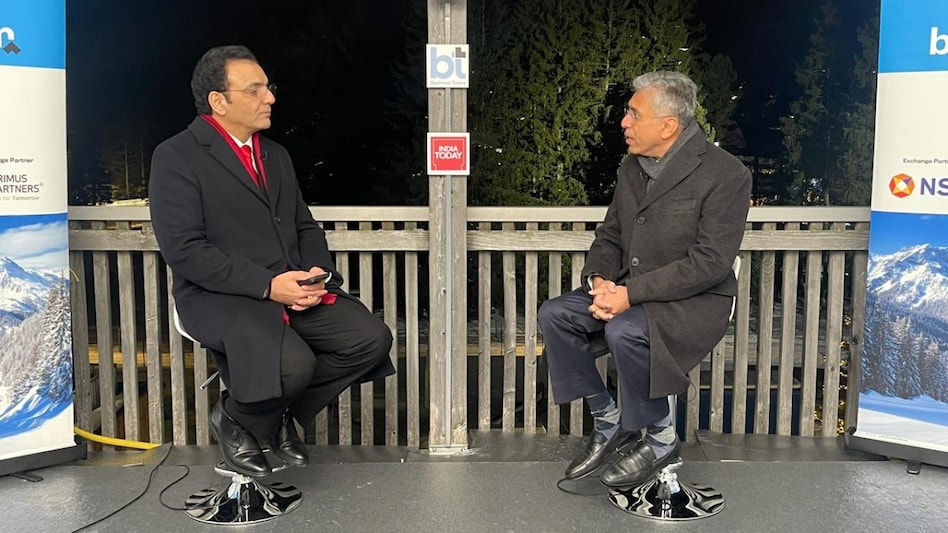
 WEF Summit 2026: On the EV front, Shah said India is in a “very good place,” pointing to strong consumer interest and product competitiveness.
Anish Shah, Group CEO and Managing Director of the Mahindra Group, struck an optimistic yet pragmatic tone on the global business landscape, trade disruptions and India’s role in the new world order during an exclusive session with the Business Today TV at Davos.
Addressing the mood among Indian and global CEOs, Shah said the current sentiment is “better than what I expected” despite ongoing geopolitical tensions and supply‑chain challenges. He attributed this to business leaders adapting to volatility and focusing on areas within their control.

 Bangladesh turns to India for wheat as Black Sea disruption pushes up prices
 Morgan Stanley accidentally leaks 100-plus deal pipeline, including India IPOs: Report
 Sebi may ease margin requirements for longer-tenure F&O products
 India boosts LPG production as festive demand rises and Gulf supplies remain uncertain
 No petrol, diesel price hike proposal yet; govt may support OMCs if crude stays high
 India Growth Outlook Gets Major Boost: S&P, Fitch, ADB Raise FY27 Forecasts; OECD Upgrades 2026 View
 A-One Steels IPO Explained: Key Details, Growth Strategy & Future Outlook | Management Live
 Market Commentary: Nifty Outlook, Stocks & Market Strategy | Deven Choksey
 Ignore Large Caps? Why Investors Are Chasing High P/E Mid Cap Stocks Now
 30 IPOs In A Month: Deven Choksey On IPO Flipping And Secondary Market Liquidity
 Sebi may ease margin requirements for longer-tenure F&O products
 RBI to conduct OMO sale of Rs 25,000 crore in government bonds on September 28
 NSE shares: Deven Choksey lists reasons for long-term investment; calls stock 'shock absorber' in volatile markets
 Crude oil prices fall for sixth session; PL Capital explains what could happen next
 Mazagon Dock, GRSE shares: Does short-term bounce signal trend reversal? Analyst decodes
 From Gulf to US: How the Iran war is redrawing India’s LPG import map
 Is ₹1 crore enough for retirement at 45? Check corpus, inflation, healthcare and longevity
 Medical tourism in focus: Indians spend up to ₹41,649 on health-related domestic trips
 Graphite, not lithium, may be the battery industry's biggest choke point: Report
 Bengaluru CEO says no male hires from UP, Bihar, Rajasthan, MP; cites alleged employee misconduct












