


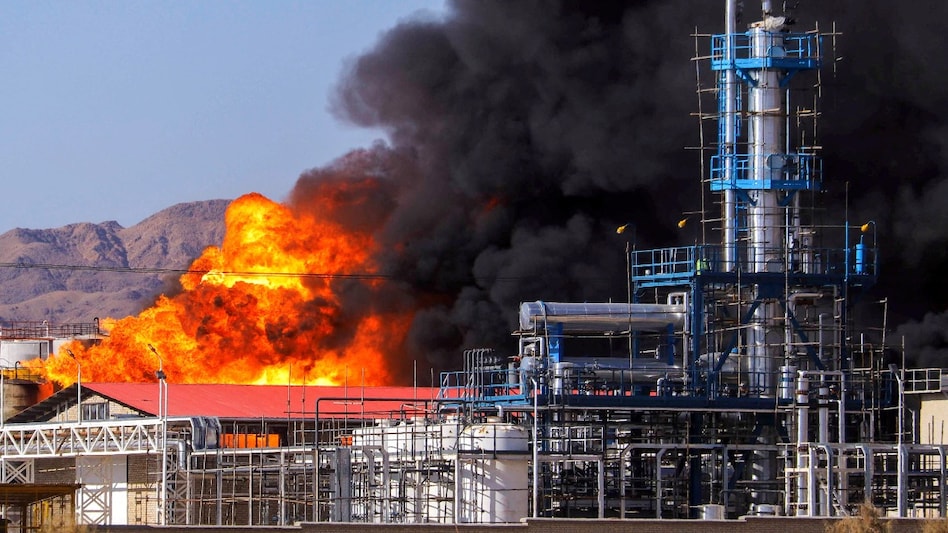
 What began as attacks on strategic fuel facilities has evolved into a nationwide supply crisis affecting millions of Russians.
 For a country that ranks among the world's biggest oil producers, importing petrol is an extraordinary step. Yet Russia is now doing exactly that. As Ukrainian drones continue targeting key oil refineries deep inside Russian territory, Moscow has been forced to buy gasoline refined in India — much of it produced from Russian crude shipped thousands of kilometres away before making the return journey.
The move underscores the growing impact of Ukraine's long-range strikes on Russia's energy infrastructure, with domestic refining capacity estimated to have fallen by around 40%. What began as attacks on strategic fuel facilities has evolved into a nationwide supply crisis affecting millions of Russians.

 Shaktikanta Das flags need to cut India's oil import dependence, cites Rs 84,000-crore offshore push
 A prolonged West Asia conflict will increase risks to corporate earnings, says Nomura's Saion Mukherjee
  No social media for under 18s? Centre mulls new safeguards after SC raises concern
 Reliance, Nayara restrict fuel sales as crude hits $107 and retail prices stay frozen: Report
 BT BIG STORY: Why crypto is still thriving among Indian investors
 Ep17: How Mira Kapoor Is Building India’s Luxury Wellness Brand | Building A $4 Mn Wellness Business
 PROMO | 27 Years Of BT Golf | BT Golf 2026-27 Tees Off On 19 October 2026
 Supreme Court Questions High Medicine Prices At Corporate Hospitals | Essential Drugs Pricing
 India Seeks Alternate Air Routes Via China, Bhutan To Cut Airline Costs | Pakistan Airspace Ban
 8 Years Of Ayushman Bharat: Benefits, Eligibility & How To Claim | Insurance Guide | Money Today
 Nilesh Shah on FOMO: Why investors should stop chasing ‘once-in-a-lifetime’ opportunities
 Indian rupee hits two-month low, ends nearly flat below 96 per US dollar
 Stock picks during correction: Coal India, Sona BLW, Blue Star form part of defensive watchlist, says analyst
 Helios Capital on why falling gold prices are not a trigger for renewed interest in yellow metal
  Prestige Estates stock outlook: Motilal Oswal sees 29% upside on strong launches, check target priceEp17: How Mira Kapoor Is Building India’s Luxury Wellness Brand | Building A $4 Mn Wellness Business
 Eiffel Tower operator to step down after female staff excluded from BAPS visit: Report
 YouTube’s India creator ecosystem generates 9.6 lakh jobs, ₹18,000 crore economic value: Report
 LPU Uni mall looting leaves ₹90 lakh loss as PS5s, iPhones and Prada perfumes stolenPROMO | 27 Years Of BT Golf | BT Golf 2026-27 Tees Off On 19 October 2026












