








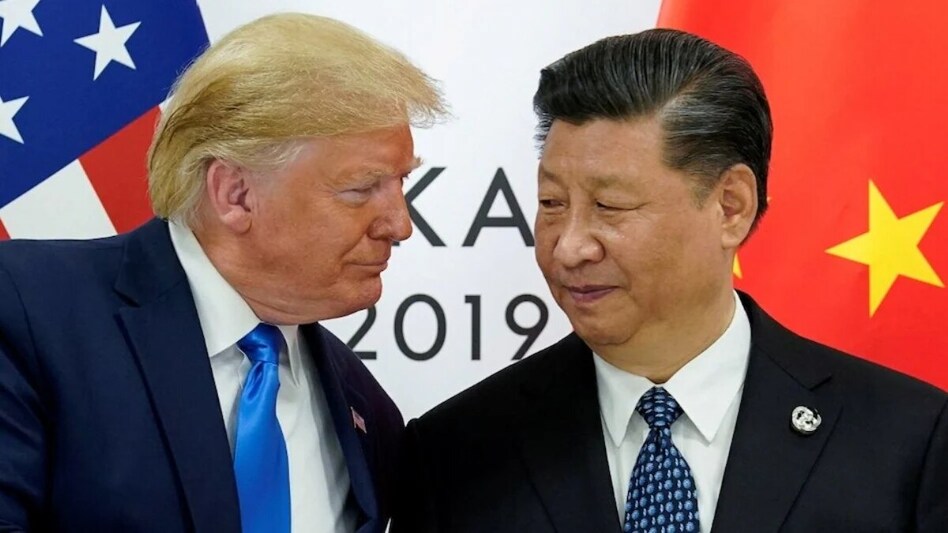
 The United States is levying a 145% tariff on most Chinese imports, after a series of hikes initiated by former President Donald Trump.
  The United States is levying a 145% tariff on most Chinese imports, after a series of hikes initiated by former President Donald Trump.
 China has indicated for the first time since last month’s tariff escalation that it may be willing to engage in trade talks with the United States, a potential softening in tone amid the most intense phase of the US-China economic standoff in years.
According to a report by Bloomberg, China’s Commerce Ministry said on Friday that it had received messages from Washington—through various channels—expressing a desire to resume discussions. “The US has recently sent messages to China through relevant parties, hoping to start talks with China. China is currently evaluating this,” the ministry said. It added, however, that while the “door is open” to dialogue, China remains prepared to “fight to the end” if provoked.
The signals from Beijing helped lift market sentiment across Asia. S&P 500 futures erased earlier losses, regional equities rebounded, and the offshore yuan strengthened. The Australian dollar, often seen as a proxy for Chinese economic prospects, also extended gains.
As of May 2, 2025, China has not yet entered formal negotiations but is reviewing US overtures. Bloomberg reported that Beijing has quietly drawn up a list of American goods that will be exempt from its retaliatory tariffs, suggesting a calculated attempt to lower the temperature without making overt concessions.
The current tariff regime remains historically high. The United States is levying a 145% tariff on most Chinese imports, after a series of hikes initiated by former President Donald Trump. This includes a base rate of 20% that climbed through successive increases—34%, 84%, 104%, and 125%—before reaching the current peak. Some exemptions have been made for critical sectors such as semiconductors, pharmaceuticals, and select minerals.
In response, China raised its own tariffs to 125% on US goods effective April 12, though it has discreetly exempted certain items, signaling a dual-track strategy of firmness and flexibility. However, the Ministry of Commerce has maintained that no official consultations or progress on de-escalation are underway.
Bloomberg notes that any movement toward negotiations is likely to spark fresh volatility, especially with Trump’s recent reshuffle placing Secretary of State Marco Rubio—sanctioned by Beijing—in dual charge as interim national security adviser. His known hardline stance on Taiwan and the South China Sea could further complicate talks.
Still, after weeks of entrenched silence, China’s public acknowledgment of evaluating talks marks a significant shift—and perhaps the first tentative step back from the brink.
 Inside the India-US interim trade agreement: Reciprocal tariffs on India to come down to 18%, 0% duty on generic pharma
 BDL, Mazagon Dock, MRF, Hindustan Copper, RVNL, others to turn ex-dividend next week
 Q3 results: HAL, Titan, M&M, HUL, ONGC, Lenskart to post earnings next week; check dates
 India, US to boost trade in GPUs, advanced tech under interim pact framework
 India-US interim trade pact: From diamonds to silk — Full list of products under 18% tariffs
 RBI Says Trade Deals With EU, US & Others Strengthen India’s External Sector Outlook
 Jeffrey Sachs Praises Modi On India-US Trade Deal: “Trump Blinked, India Must Not Depend On U.S.”
 Agra’s ₹127 Cr Housing Project In Ruins: Flats For Poor Rot Before Occupation
 RBI Credit Policy LIVE Analysis | Aditya Pagaria Explains Rate Pause Impact
 TeamLease Q3 Results: Profit Jumps 47% As Margins Improve Despite Headcount Loss
 BDL, Mazagon Dock, MRF, Hindustan Copper, RVNL, others to turn ex-dividend next weekQ3 results: HAL, Titan, M&M, HUL, ONGC, Lenskart to post earnings next week; check dates
 'Think about it': Deepak Shenoy warns indices mask stress as majority of Nifty 500 stocks lag
 Bitcoin avoids $60,000 breakdown, still down over 50% from record high
  NSE IPO: NSE board approves long-delayed listing plans; IPO to have equity shares of face value Re 1