












 According to the Compact, institutions that reject the agreement could lose access to federal research grants, student loan programs, and even visas for international students and scholars.
  According to the Compact, institutions that reject the agreement could lose access to federal research grants, student loan programs, and even visas for international students and scholars.
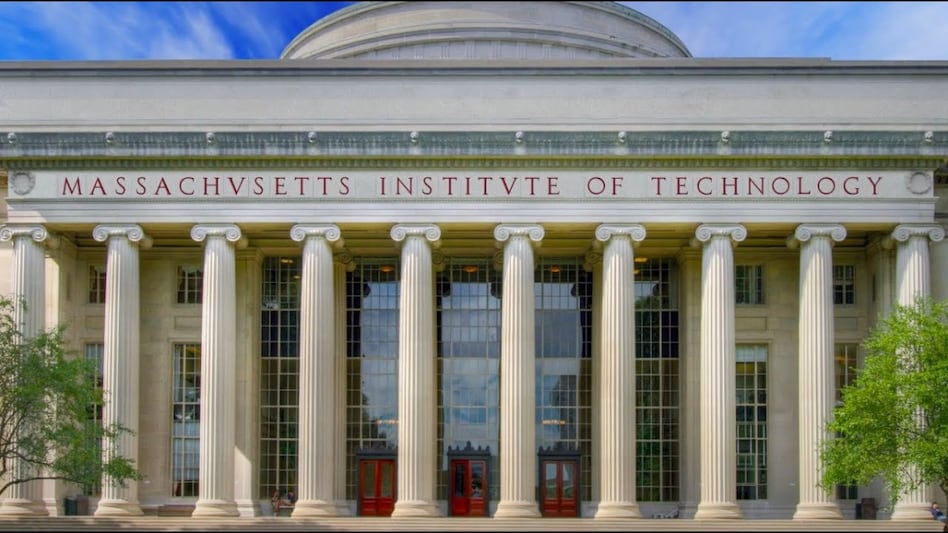
 The president of the Massachusetts Institute of Technology (MIT), Sally Kornbluth, publicly rejected a White House proposal that would have required the university to align with President Donald Trump’s political priorities in exchange for preferential access to federal research funding.
In a letter to Trump administration officials, Kornbluth wrote that she “cannot support” the proposal, arguing that it undermines the university’s principles of academic freedom, independence, and the merit-based allocation of scientific funding.
“Scientific funding should be based on scientific merit alone,” Kornbluth stated, emphasizing MIT’s long-held commitment to free inquiry and intellectual openness.
The “Compact for Academic Excellence” offer
The proposal, titled the “Compact for Academic Excellence in Higher Education,” was circulated last week to nine prominent US universities, including MIT and the University of Texas at Austin. The White House described the compact as an opportunity offering “multiple positive benefits,” including “substantial and meaningful federal grants” and potential support from private donors.
In return, the universities would have to agree to a series of conditions:
Universities were asked to submit their responses by October 20.
Pushback over free speech, institutional autonomy
While the University of Texas system called the invitation an “honor,” most institutions have refrained from public comment as they review the terms. MIT, however, became one of the first to respond forcefully against it.
Kornbluth said that the compact’s provisions risk eroding university independence and curbing free expression on campuses. “The proposal contains several provisions that are inconsistent with MIT’s core mission as a research university committed to free expression and academic independence,” she wrote.
Free speech advocates and higher education experts echoed MIT’s concerns, warning that the proposal could politicise research funding and restrict open academic discourse.
Critics warn of risks & retaliation
According to the compact, institutions that reject the agreement could lose access to federal research grants, student loan programs, and even visas for international students and scholars.
“The compact gives the illusion of choice,” said one higher education policy analyst. “Universities that decline are effectively punished through loss of access to essential federal benefits.”
A White House official, however, maintained that the initiative was voluntary and that “several colleges have already expressed interest in signing on.”
Growing standoff between academia & Washington
The proposal marks the latest flashpoint in an escalating struggle between the Trump administration and the academic community over issues such as diversity policies, free speech, and federal funding.
In recent months, the administration has reportedly frozen research grants and launched civil rights investigations into universities over perceived ideological bias. The compact, critics say, represents a further step toward politicising academic governance.
Kornbluth’s statement positions MIT as a leading voice of resistance within higher education — signaling that at least some of America’s top universities are unwilling to trade autonomy for funding.
“Our mission demands that we defend academic freedom and the independence of science,” Kornbluth concluded. “Those principles are not negotiable.”
 Petrol, diesel prices hiked again for the 4th time! Petrol up ₹2.61, rates in Delhi now cross ₹100
 Top stocks in news: TCS, Lenskart, NTPC, Groww, Suzlon, Hindalco, Divis Labs, RBL Bank, Lupin
 'Big fan of PM Modi, India can count on me 100%': Trump's special message from Washington
 'Not at the expense of alliance with India': Marco Rubio clarifies on US ties with Pakistan
 Indians spent ₹1.45 lakh crore on foreign trips in a year. That's bigger than THIS entire industry
 WHO Sounds Ebola Alarm | India Today’s Sneha Mordani Explains The Threat
 Why Britain Keeps Changing Prime Ministers | Brexit, Chaos & UK Political Crisis Explained
 No Water In 45°C Heat! Why Raipur's Rewa Village Is Facing A Brutal Water Crisis
 Honda City launched, ZR-V e:HEV Coming Soon • Double Digit Growth Target • New SUVs Incoming
 U.S. Tightens H-1B Rules As Visa Applications See Sharp 38% Decline
 Stock market, US-Iran deal, Trump: Sensex, Nifty set for gap-up start; here's why
 Nifty, Sensex, Nifty Bank outlook for today: GIFT Nifty up 215 points; key levels to watchTop stocks in news: TCS, Lenskart, NTPC, Groww, Suzlon, Hindalco, Divis Labs, RBL Bank, Lupin
 Suzlon Energy Q4 results on Monday: Stock up 35% in two months | Preview
 Varun Beverages share price targets as stock rebounds 42% from March low