

 Even if the administration loses the case, officials argue the White House still has multiple tools to maintain most of the tariffs without relying on emergency powers.
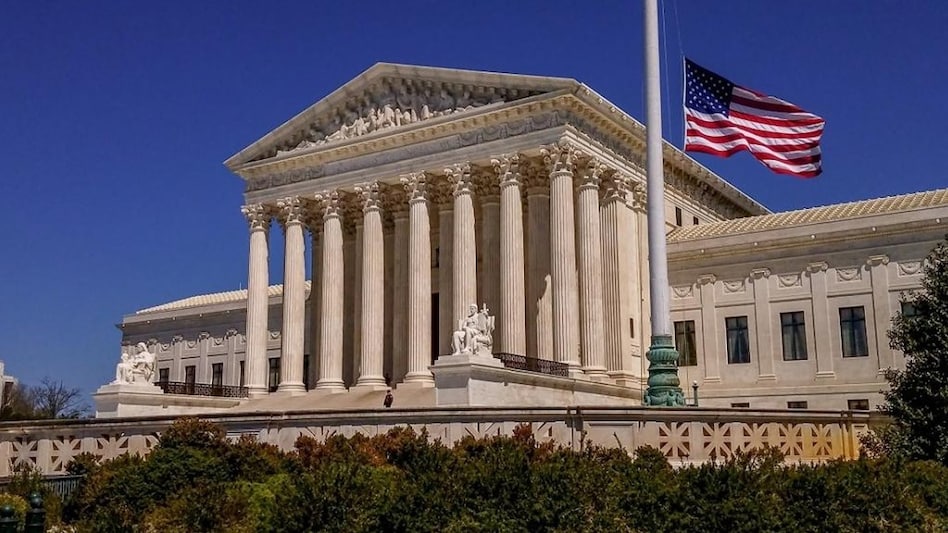
 The US Supreme Court will not issue a ruling on January 9 in the closely watched legal challenge to tariffs imposed by President Donald Trump under emergency powers, prolonging uncertainty over the future of one of the administration’s most consequential trade tools.
Speculation had mounted that the court would deliver its decision today. However, the justices released only one opinion for the day, and it was unrelated to the tariffs. No new date has been announced for when the ruling will be issued.
The case is being closely tracked by financial markets, trade groups and US importers, given its potential impact on tariff policy, government revenues and future executive authority on trade. When the ruling does arrive, the court is expected to address two core questions.
First, whether the Trump administration lawfully relied on provisions of the International Emergency Economic Powers Act (IEEPA) to impose tariffs by declaring a national emergency. Trump invoked the statute in part to curb the inflow of fentanyl into the United States.
Second, if the court finds the use of IEEPA improper, it will need to determine whether importers who have already paid duties are entitled to reimbursement — and if so, how much.
Legal experts say the court has a wide range of options, including narrowing the scope of IEEPA authority or ordering only limited repayment rather than a full refund of duties collected.
White House signals backup plans
The administration has publicly indicated it is prepared for an adverse ruling.
White House National Economic Council Director Kevin Hassett told CNBC on January 9 that senior officials discussed alternative legal strategies the previous night should the court strike down the tariffs imposed under IEEPA. Hassett said the administration could rely on other statutory authorities to replicate existing trade arrangements “basically immediately.”
While stressing that the White House expects to prevail, Hassett said contingency plans are in place if it does not.
Treasury Secretary Scott Bessent also suggested the ruling may not be clear-cut, saying on Thursday that he expects a “mishmash” outcome rather than a sweeping decision.
Other legal paths
Even if the administration loses the case, officials argue the White House still has multiple tools to maintain most of the tariffs without relying on emergency powers.
Bessent has said the administration has at least three alternative options under the 1962 Trade Act that could preserve much of the current tariff framework. However, he has also warned that large-scale reimbursements could strain government finances and complicate efforts to reduce the fiscal deficit.
According to Treasury data, tariffs generated about $195 billion in fiscal year 2025 and another $62 billion in fiscal 2026.
Market expectations & Economic impact
Prediction market Kalshi currently assigns just a 28% probability that the Supreme Court will fully uphold the tariffs as implemented. Analysts say investor expectations broadly align with that outlook.
So far, the economic impact of the tariffs has defied some earlier forecasts. Inflation effects have been limited, while the US trade deficit has fallen sharply. In October, the trade imbalance dropped to its lowest level since the aftermath of the 2009 financial crisis, driven in part by a steep decline in imports.
 CBDT issues new crypto reporting guidance: No new tax, but exchanges must track and report all transactions
 Did Cockroach Janta Party's 'Chalo Sansad' 2.0 threat trigger Dharmendra Pradhan's resignation? What we know so far
 'Will discharge my responsibilities with complete humility': Pralhad Joshi after being appointed Education Minister
 Curious about Pralhad Joshi's wealth? A closer look at his assets, investments and liabilities
 On Cockroach Janta Party's lines, now E20 Janta Party demands choice of 100% petrol
 AI Data Centers, Aerospace & Gas Turbines: What's Powering Indo-MIM's Future Growth?
 Best Healthcare Stocks: Gaurang Shah's Outlook On Apollo Hospitals, Fortis & The Manipal Health IPO
 Is Indo-MIM's IPO Valuation Justified? Here's Why The Company Sees Strong Growth Ahead
 Treasury Bills Explained: Why T-Bills Are One Of The Safest Short-Term Investment Options
 FDs vs Markets: Where Should You Keep Your Short-Term Money?
 Gland Pharma stock: Price target of Rs 3,250 likely in medium term, says analyst
  Metal recycling stocks to buy: Gravita, Pondy Oxides, Jain Resource among top picks
 TRIL shares: Should you average the falling stock? Here's 'fixed and final' stop loss
 Adani Power: 45 GW target, Rs 2 lakh crore capex plan among conference call highlights
  ITC Hotels, Chalet, Ventive, IHCL, SAMHI: Hotel stocks to buy despite travel disruptionsAI Data Centers, Aerospace & Gas Turbines: What's Powering Indo-MIM's Future Growth?
 'This is the behaviour of...' : Congress leader Kanhaiya Kumar detained by Delhi police after Kerala House altercation
 'You can do whatever you want?': Delhi HC questions EC over mandatory election duty for school teachers
 Mayor Zohran Mamdani taps tech-slayer Lina Khan to reshape New York City’s economy
 Planning a Nepal trip? You can now carry up to ₹25,000 in Indian cash. Here's what changed









