








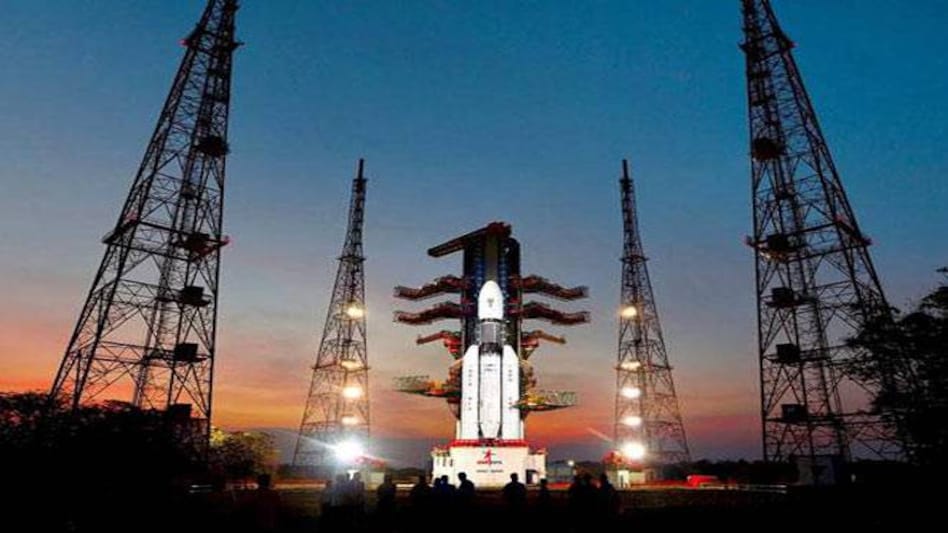
The Indian Space Research Organisation (ISRO) has successfully launched its heaviest rocket so far. The communication satellite GSAT-19 into space using the 'fatboy' rocket has successfully launched at 5:28 PM today.
The mission would augment India's communication resources as a single GSAT-19 satellite will be equivalent to having a constellation of six to seven of the older variety of communication satellites in space.
The GSLV MKIII D1/GSAT-19 mission takes India closer to the next generation launch vehicle and satellite capability. The nation is proud!
Narendra Modi (@narendramodi) June 5, 2017
Big breaking news from ISRO: watch now and feel a surge of pride in our scientists! #GSLVMK3 pic.twitter.com/gKDkx9l3ZO
Rajdeep Sardesai (@sardesairajdeep) June 5, 2017
Models of all 3 rockets of ISRO, PSLV, GSLV Mark II and #GslvMarkIII on display at Media Centre, @isro , #Sriharkotta. #AIRPics:Jayasingh pic.twitter.com/Z2oXqITdgu
All India Radio News (@airnewsalerts) June 5, 2017
At present, out of a constellation of 41 in-orbit Indian satellites, 13 are communication satellites, and the total mission life of the GSAT-19 is 10 years.
A communications satellite is an artificial satellite that relays and amplifies radio telecommunications signals via a transponder. It creates a communication channel between a source transmitter and a receiver at different locations on Earth.
Communications satellites are used for television, telephone, radio, internet, and military applications. There are over 2,000 communications satellites in Earth's orbit, used by both private and government organisations.
 NSE moves closer to listing as SEBI backs settlement in unfair access case
 ₹1-crore reality: Why it’s the new entry price for homebuyers in Bengaluru despite talks of ‘cool down’
  Tesla offers discount of ₹2 lakh on certain Model Y variants in India
 'Military strike is a possibility': Ex-NSA John Bolton urges Trump to target regime change in Iran
 NTPC arm operationalises 300 MW Bhadla Solar Project; group installed capacity hits 87 GW
 Iran Burns As Protests Explode, Death Sentences Issued And Trump Warns Khamenei Regime
 Cash, Cops And Freebies: Money Power Takes Centre Stage As Mumbai Votes For BMC Amid Bribery Claims
 After Report Exposes Crisis, Toxic Water Nightmare Ends In West Delhi Colony
 Union Budget 2026: How Capex Will Power India’s Next Growth Phase
 No New Mines, Rising Demand: Why Metals Are Rallying
 NSE moves closer to listing as SEBI backs settlement in unfair access case
 IPO in 12-18 months; GST cut caused short-term pain but used-car disruption has begun: CARS24 CFONTPC arm operationalises 300 MW Bhadla Solar Project; group installed capacity hits 87 GW
 Anand Rathi Q3 earnings: Net profit rises 33%, revenue at Rs 248 crore
  BHEL begins traction transformer supply for Vande Bharat; stock up 32% in a year; what lies ahead?