









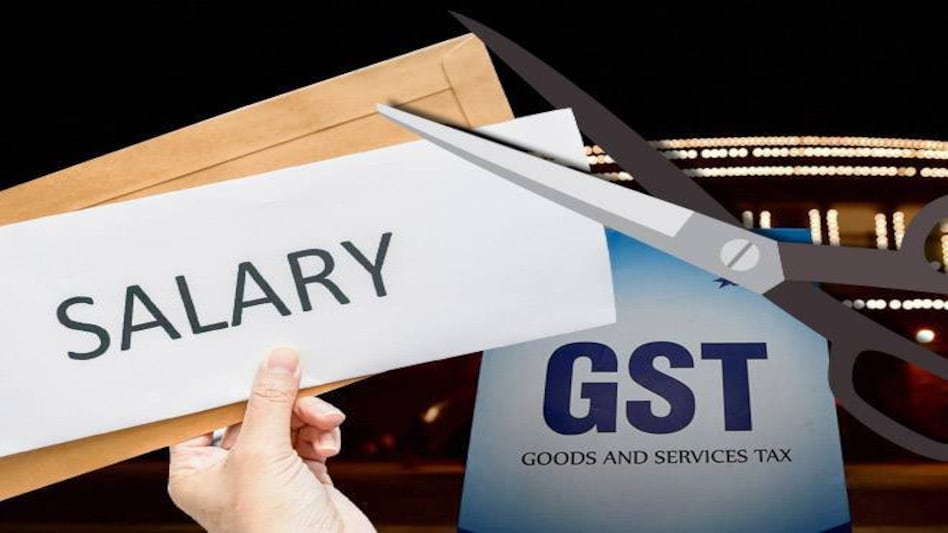
The introduction of the GST has been the source of confusion over taxes in many different sectors, but salaried employees have largely remained unaffected. However, a tax authority's judgment in Kerala has triggered a speculation on how employer-to-employee services at workplace need to be taxed.
The Authority of Advance Ruling in Kerala has given a ruling to levy GST on the amount charged by employers for canteen food given to employees. On a plea made by Caltech Polymers Pvt. Ltd, the Authority was asked to clarify whether recovery of food expenses from employees for the canteen provided by company comes under the definition of outward supplies and if it would be taxable under the GST Act. The Authority ruled that it came under outward supplies and should be brought under the ambit of GST.
This was despite the fact that the employer was carrying out this activity without any profit, and providing canteen food to employees was not a business activity. The ruling said: "Even though there is no profit as claimed by the applicant on the supply of food to its employees, there is 'supply' as provided in Section 7(1 )(a) of the GST Act, 2017. The applicant would definitely come under the definition of 'Supplier' as provided in sub-section (105) of Section 2 of the GST Act, 2017."
The order is likely to give rise to some difficulties in its implementations. "This will not only increase the compliance burden, but may lead to reduction in earnings or facilities to the employees or increase in cost to employers. Employer-Employee are considered to be related parties and deciding value of transactions between them will be a task. Further, the rate of GST on this kind of supply is under consideration" says Archit Gupta, Founder & CEO ClearTax. In many cases employers give some subsidy on the food items. This subsidy is further likely to complicate issues related to valuation of the supply.
The logic behind the order related to GST on canteen food can also be applied to many other reimbursements. It can, in fact, be taken as a precedent to bring many reimbursements under the GST following the same logic. Many reimbursements such as home rentals, telephone charges, medical expenses, transportation, uniform charges which are likely to be affected by this decision.
"Given that this pertains to supplies from Employers to Employees, it may have wider ramification for all supplies. It depends on the interpretation taken by the department of this Ruling," Bipin Sapra, Tax Partner, EY India, said. "All other reimbursements will need to be looked at to see if they constitute supplies. Employers are likely to analyse all their transactions with their employees and see if there is a GST liability on them. They may choose to discontinue services, not charge for certain services or allow the employees to bear the extra GST cost."
As a consequence of the new rule to save taxes, employers may stop charging employees and look for alternatives to save taxes. "To avoid this levy the companies may stop charging for the supplies and this may affect the salary structure of the employees," says Gupta.
Will the employees eventually bear the burden of this tax?
Gupta says "Employees could talk to their HR and restructure their package in such a way that none of the expenses are reimbursements. When these services are provided free of charge as part of a contractual agreement between employee and employer it won't attract GST. However, this will only work when the employer has paid the applicable GST on these supplies."
Ultimately the issue has to be decided by the GST Council whether they will consider expanding the scope of items. "Just like in the pre-GST era, an exemption notification can reduce the impact to a large extent." adds Gupta. The next meeting of GST council will be crucial to see if the council decides to exempt such reimbursement from the ambit of GST to bring relief to salaried class.
 BT Explainer: What Sebi’s interim order against Rajesh Exports and its promoter reveals
 Rs 54 dividend alert! Last day to buy AMC shares before record date
 Delhi hotel fire: Owner Lavkesh Bajaj arrested; CM Gupta seeks detailed report, orders probe
 Adani Total Gas shares: Investors book profit from 52-week high; should you stay put?
 Govt plans to remove capital gains tax on FPI investments in G-Secs: Report
  Section 301 Tariffs Could Hit Indian Exports Just As Trade Deal Nears Completion
 Market Masters With Aniruddha Sarkar | Top Stock Ideas, Market Outlook & Investment Strategy
 The Retirement Strategy: NPS, SWP, Mutual Funds, Insurance & Passive Income Explained
 What’s Hot: Stocks, Gold & Big Money Moves | Daily Market Show | Business Today TV
 Maruti's Flex-Fuel Car Launch: Ethanol Industry On Fuel Pricing, Mileage & Demand
 Suzlon Energy: Tracking stock's trajectory on fresh growth ambitions
 Multibagger Tata group stock showing 33% fall in some apps today; here's why
 Why Rajesh Exports shares plunged today; stock has crashed 45% in six months
 BT Opening Bell | Sensex plunges 538 pts, Nifty below 23,250; Infosys, HCL Tech lead index losersBT Explainer: What Sebi’s interim order against Rajesh Exports and its promoter reveals