


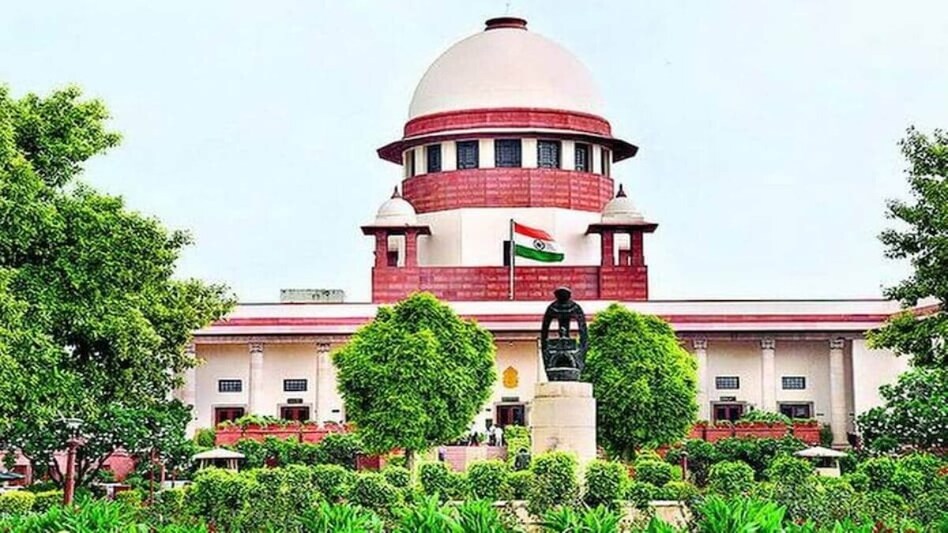
 Supreme Court
The Supreme Court has agreed to hear the Maharashtra government’s plea challenging the acquittal of all 12 men who were earlier convicted in the 2006 Mumbai train blasts - one of the deadliest terror attacks in India's history, on July 24. The state government, led by Chief Minister Devendra Fadnavi, has filed a Special Leave Petition (SLP) against the Bombay High Court’s judgment delivered on July 19.
The Maharashtra government has argued that the High Court wrongly set aside the convictions and that key evidence was not given enough importance. In its 671-page judgment, the Bombay High Court pointed out several serious issues in the investigation and trial.

 NSE becomes India's 10th most-valued firm, shares debut at Rs 1,800
 NSE adds Rs 22,000 crore to m-cap as stock rises 5% over issue price after listing
 Hurun India Rich List 2026: Adani reclaims top spot with ₹9.23 lakh cr valuation. Check where others stand
 BT Big Story: Is 66% = zero? The Tata Sons question on everyone’s minds
  NSE stock rises 5% on market debut: How shares of IFCI, SBI, Bank of Baroda, GIC Re are trading today
 Indian Stock Market Falls: Nifty Down 1% as Crude Oil and Bond Yields Surge
 Reasons Why Are Insurance & Financial Stocks Are Falling | Insurance Stocks In Focus
 India Growth Outlook Gets Major Boost: S&P, Fitch, ADB Raise FY27 Forecasts; OECD Upgrades 2026 View
 A-One Steels IPO Explained: Key Details, Growth Strategy & Future Outlook | Management Live
 Market Commentary: Nifty Outlook, Stocks & Market Strategy | Deven Choksey
 PB Fintech shares crack 26% after Irdai consultation paper; is there more pain ahead?
 Exide Industries shares rise after subsidiary commissions Phase-I of lithium-ion cell facility
 YES Bank, IndusInd, IDFC First shares: What Citi, Jefferies say on IRDAI consultation paper; targets
 Bharat Dynamics shares gain on Rs 811-crore order win from defence ministryNSE stock rises 5% on market debut: How shares of IFCI, SBI, Bank of Baroda, GIC Re are trading today
 ₹10,000 minimum pension for Railway employees: Who qualifies and how it works
 'Terror won't repay loans': India rips into Pakistan at UN, slams human rights abuses in occupied KashmirPB Fintech shares crack 26% after Irdai consultation paper; is there more pain ahead?
 China and US should be ‘partners, not rivals’, Xi Jinping says as he lands in Washington, meets TrumpExide Industries shares rise after subsidiary commissions Phase-I of lithium-ion cell facility












