


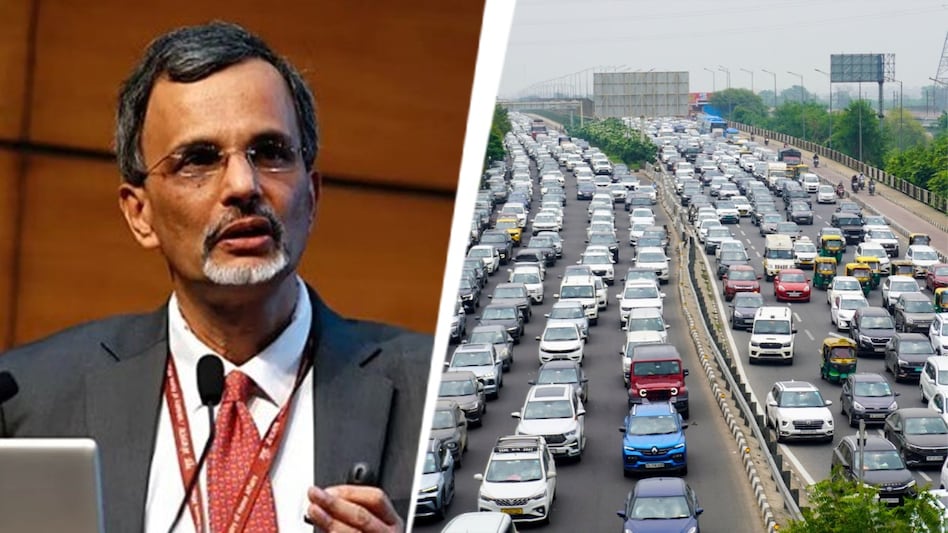
 CEA Anantha Nageswaran says govt should bring back E10 petrol for older vehicles
The government should bring back E10 blend, not because E20 petrol is wrecking engines but because E10 would calm down the public panic while ensuring that the existing fleet could be upgraded in the due time, argued Chief Economic Advisor, V Anantha Nageswaran in an opinion piece for The Indian Express. The opinion piece was co-authored with Akash Poojari, consultant with the Department of Economic Affairs.
Nageswaran acknowledged that there is a growing complaint about E20 petrol damaging engines but added that that the assumption is incorrect. “Start with the engine, and the evidence does not support the fear of damage. Ethanol carries about two-thirds the energy of petrol, so a litre of E20 takes you a little less far, but the loss is small and does not signal any malfunction. Ethanol is only a fifth of the blend, so the energy penalty is around 6 to 7 per cent, not the 30 per cent doing the rounds,” he said.

 Trump says the US could just decide to stay in Iran and ‘keep the oil’ like Venezuela
 ‘If it’s not under human control, it’s not worth pursuing’: Satya Nadella's warning on AI
 Anthropic sets sights on Nasdaq for potential October IPO, eyes $2 trillion valuation: Report
 Stock market holiday: Why NSE, BSE will remain closed on September 14
 Gold and silver ETFs beat equity ETFs in FY26: What investors should make of the shift
 Amit Shah Hails India’s Rise From Fragile Five To Top Five, Politics Of Performance Since 2014
 MEA Details BRICS Summit Outcomes as India Pushes Practical and People-Centric Cooperation
 Modi@25: Amit Shah Highlights 25 Years Of Leadership, Governance And 2047 Vision
 “Development And Environment Are Complementary”: PM Modi On Sustainability At BRICS
 Modi@25: Amit Shah Announces Seva Sankalp Campaign From Sept 17 To Mark Modi’s 25 Years Of Service
 SoftBank shares tumble 13% as OpenAI, Anthropic raise AI safety alarm
 IPOs this week: NSE, Hero Motors, SS Retail, Jindal Supreme, Sonaselection; check GMP, key datesStock market holiday: Why NSE, BSE will remain closed on September 14
 Avoid jewellery; stick to ETFs, bars and coins for investment this festive season: Navneet Damani
 SEBI’s CAS proposals: Expert weighs in on new expiry-day settlement price methodology
 Saudi pipeline shutdown threatens to wipe out 4% of global oil exports within days: Report
 Gold, silver prices on September 14: Check latest rates in Delhi, Mumbai, Kolkata, other citiesSoftBank shares tumble 13% as OpenAI, Anthropic raise AI safety alarmIPOs this week: NSE, Hero Motors, SS Retail, Jindal Supreme, Sonaselection; check GMP, key dates
 China spies on us, we spy on China too: Trump after Iran satellite images report












