Must Read: ‘Future powered by thorium’: India has the largest thorium reserve and an impressive nuclear power plan
Criticality is achieved when a sustained and controlled nuclear fission chain reaction begins. Here, neutrons produced by fission equal those lost through absorption and leakage, resulting in a stable power output. It is the essential first step towards generating heat and finally electricity.
This is a major step in India’s clean energy journey and brings the country closer to its goal of achieving net-zero emissions by 2070. More importantly, it takes India a step closer to cutting its dependence on uranium—which is largely imported—for its nuclear power programme.
With this milestone, India has entered the second stage of its three-stage nuclear programme (See India’s 3-stage nuclear programme), first conceived by Dr Homi Jehangir Bhabha, the architect of India’s nuclear programme way back in the 1950s.
India holds just 1-2% of the world’s uranium reserves, but close to 25% of the thorium reserves globally. To utilise these resources well, Dr Bhabha conceived a closed nuclear fuel cycle programme. The aim is to progressively multiply domestic fissile resources and secure long-term energy security.
India has taken decades to move to stage two of Dr Bhabha’s plan. That’s largely due to technological challenges and rising costs. It remains to be seen how quickly the country can pivot to stage three.
Lauding the development on X, Prime Minister Narendra Modi said: “Today India takes a defining step in its civil nuclear journey, advancing the second stage of its nuclear programme…It is a decisive step towards harnessing our vast thorium reserves in the third stage of the programme.”
Why is a fast breeder reactor so important?
It is an advanced nuclear reactor that produces more fuel than it consumes. It converts the uranium into plutonium. The PFBR uses Uranium-Plutonium Mixed Oxide (MOX) fuel. The core of the reactor is surrounded by a blanket of Uranium-238. Fast neutrons convert this into fissile Plutonium-239, enabling the reactor to produce more fuel than it consumes. It is designed to eventually use Thorium-232 in the blanket. Through transmutation, the Thorium-232 will be converted into Uranium-233, which will fuel the third stage of India’s nuclear power programme.
Why is this achievement so crucial?
It opens the door for more investment in nuclear power and fits in with the Nuclear Energy Mission outlined in the Union Budget 2025-‘26 that has set a target of achieving 100GW of nuclear power generation by 2047. India’s current nuclear capacity is just 8.78GW, spread across 24 reactors in seven locations. Nuclear power has consistently accounted for around 3% of India’s total electricity generation.
India’s nuclear capacity is set to grow 3x in the coming years. With indigenous 700MW and 1,000MW reactors being developed through international cooperation, the installed capacity is projected to hit 22.38GW by 2031-’32.
The Nuclear Energy Mission has allocated ₹20,000 crore towards the design, development and deployment of small modular reactors (SMR). At least five indigenously designed SMRs are to be operational by 2033. It will help the country reduce its dependence on fossil fuels to generate electricity in future.
How does this development fit into India’s future energy security?
India is currently the world’s third-largest energy guzzler after China and the United States. In 2025, the country met peak demand of 242.49GW and reduced energy shortages at the national level to a mere 0.03%.
As the country continues to grow, electricity demand is only going to rise. Considering that currently the bulk of the electricity generated in the country is based on fossil fuels, the rise of renewable energy becomes very important.
Why is thorium so important?
India has limited uranium reserves, but the energy potential of natural uranium can be increased in the second stage. Then, thorium, which is found abundantly along the Indian coast in Kerala, Tamil Nadu and Odisha can be used in the third stage. This will increase the potential for energy generation substantially. It is stated that India’s current thorium reserves can power the nation for centuries, enabling energy security in the future.
INDIA'S THREE-STAGE N-PROGRAMME
The plan was devised by noted physicist Homi J. Bhabha in the 1950s to secure long-term energy independence. It involved the use of thorium reserves found abundantly in coastal Indian sands.
STAGE 1: Pressurised Heavy Water Reactors (PHWRs) use natural uranium (U-238) as fuel to generate power. The spent fuel from these reactors produces Plutonium, which becomes the primary input for the next stage.
STAGE 2: The Prototype Fast Breeder Reactors use Plutonium-239 obtained from Stage 1 and Uranium-238 as fuel, which generates more fuel than it consumes. These reactors will be used to breed Uranium-233 from Thorium.
STAGE 3: Here, India will harness its vast Thorium reserves using the Uranium-233 bred in Stage 2 as fuel. Future reactors will use Thorium to produce Uranium-233.


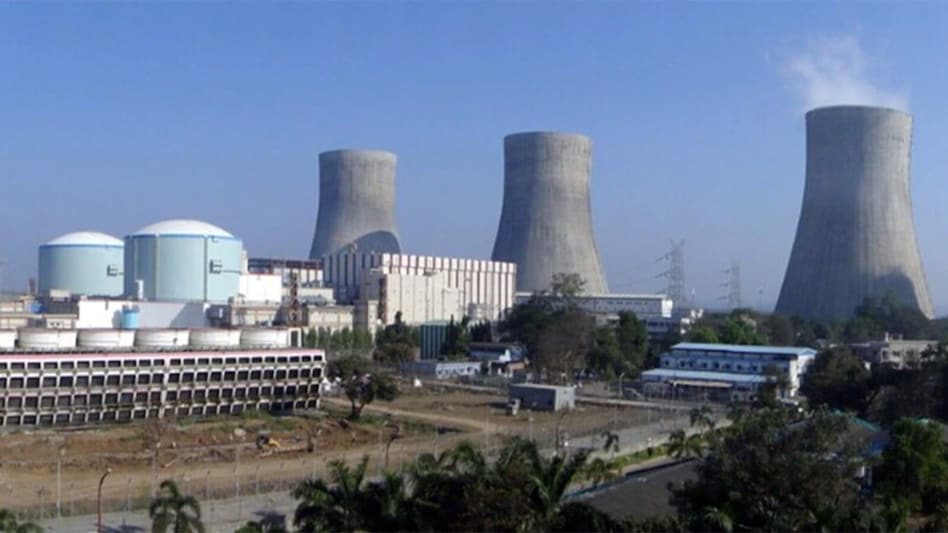 Kalpakkam PFBR is a 500MWe (megawatt electrical) reactor built by Bharatiya Nabhikiya Vidyut Nigam
 'AI ending humanity is nonsense': Ex-Infosys CEO Vishal Sikka rejects growing doom warnings
 'Majority among two is two': Tata Trusts says Chandrasekaran reappointment failed AoA condition, has no legal effect
 ICAI plans further reforms to scale up homegrown accounting firms
 'Modi admin has done a phenomenal job': Blackstone's Jon Gray on what changed in India
 'SC/ST Act is being weaponised': Tech CEO backs IIT Bombay Professor, calls for case withdrawal
 Gold Price Target 2026: Expert Sees MCX Gold At ₹1.8 Lakh By Year-End Amid Strong Demand
 Health Insurance: Why Pre-Existing Diseases And Waiting Periods Matter For Buyers
 Crude Oil Above $100: How High Energy Prices And Rupee Weakness Impact Gold Prices In India
 CEA On India’s Manufacturing Rise, Atmanirbhar Bharat And Modi’s Economic Policy
 Health Insurance Buying Guide: 7 Things First-Time Buyers Must Check Before Choosing A Policy
 SpaceX weight in Nasdaq 100 to jump to 2.82% following quarterly index rebalance: Report
 Tata Motors or Ashok Leyland? Analyst reveals his preferred auto stock for near-term gains
 Maharashtra Scooters, Dixon Tech, Bharat Dynamics, Jai Corp among stocks to turn ex-dividend on Monday
 Jindal Supreme, SS Retail, Hero Motors IPOs subscribed up to 181 times on final day; details here
 Sensex, Nifty post sixth weekly loss; TCS, Titan among top laggards, slip up to 4%
 Major milestone: Rajasthan's 700 MWe nuclear reactor begins initial fuel loading, enters key commissioning stage
 IMD warns of extremely heavy rain as Bay of Bengal low-pressure system heads towards Andhra-Odisha coast
 EAM S Jaishankar, former Army chief get SIR notices in Delhi












