


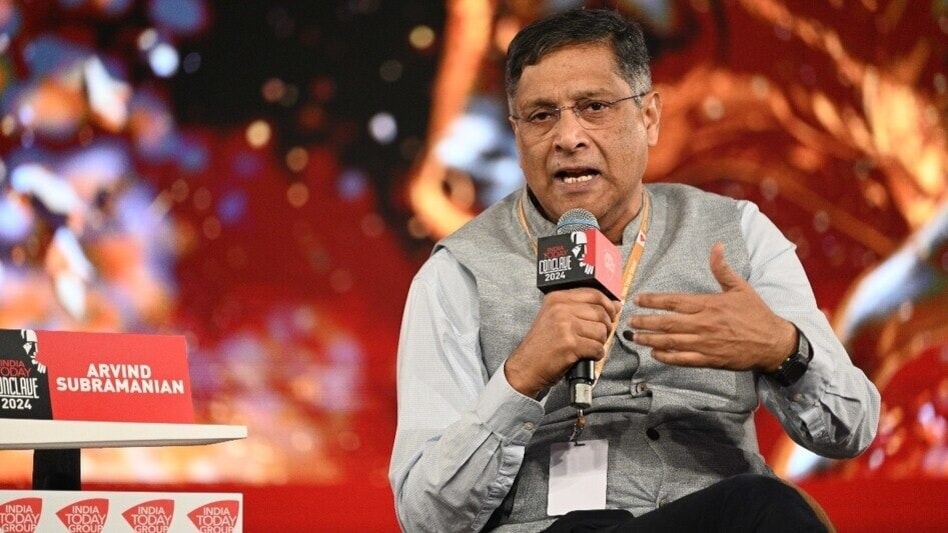
 Former Chief Economic Adviser Arvind Subramanian
Former Chief Economic Adviser Arvind Subramanian has argued that India needs a change in economic leadership to restore investor confidence, saying the country's current challenges come not only from external shocks but also from deeper concerns about growth, governance and the investment climate.
Writing in The Indian Express, the economist said the sharp decline in the rupee and growing economic pressures have raised a fundamental question.
FAQs
Why has Arvind Subramanian called for a change in India’s economic leadership?
Arvind Subramanian said India needs new economic leadership to restore investor confidence and address concerns around growth, governance and the investment climate. He argued that during economic stress, markets need clear and credible leadership.
What did Arvind Subramanian say about the rupee’s decline?
He said the rupee’s weakness is not only because of the Iran conflict and higher energy prices. According to him, it also reflects deeper market concerns about India’s medium-term growth prospects and overall economic direction.
What is the main economic problem highlighted by Arvind Subramanian?
He identified weak private corporate investment as the central challenge. He noted that private investment, which peaked at 17 per cent of GDP in the early 2000s, has fallen to nearly half that level, with the post-pandemic recovery losing momentum.
Why does Subramanian believe existing reforms have not fully reassured investors?
He acknowledged reforms such as GST simplification, labour-law changes, foreign investment liberalisation and trade deals, but said they mainly improve the cost of doing business on paper. He argued that investors remain worried about the risks of doing business on the ground due to governance-related concerns.
What changes did Arvind Subramanian suggest to improve the economic climate in India?
He suggested changing personnel at the ministerial, technocratic and bureaucratic levels to signal a break from current habits and governance instincts. He also called for bringing in officials known for quality, independence and fresh ideas rather than loyalty and cheerleading.

 BRICS must remove top 10 trade barriers, secure sea routes for seamless trade, says PM Modi
  RBI may hike repo rate 25 bps in October, another hike likely in December: SBI Research
 NSE's selling shareholders set to rake in bonanza amid a weak broader market
 Modi, Putin review India-Russia ties across trade, defence, energy and space
 Solar scale must now give way to resilient grids, storage and finance: Prahlad Joshi
 Market Commentary: Arun Kejriwal On Nifty, Stocks & The Next Big Move
 Gadkari: FASTag Is More Than Toll Payment, It’s Digital Mobility Infrastructure
 Russia Eyes Bigger India Investments: Sberbank CEO Herman Gref On The Next 2-3 Years
 India’s Cybersecurity Is Still In The Awareness Phase?
 Modi-Putin Meet: Trade Deficit, Defence And The Next Phase Of India-Russia Ties In Focus
 NSE IPO: Haven't applied for shares to trade on own platform, says MD and CEO ChauhanNSE's selling shareholders set to rake in bonanza amid a weak broader market
 Milky Mist shares hit 5% upper circuit; here's what analysts say
 Sensex, Nifty settle lower but recover sharply from intraday lows; here's why
 Quantum AMC bets on cash logistics revival as consolidation boosts pricing power
 BRICS Summit 2026: From sattu to handicrafts; Media goodie bag showcasing India’s cultural diversity
 Modi-Putin 'car diplomacy': Aurus ride at BRICS 2026 continues a years-long tradition
 Coforge independent director D.K. Singh resigns from board amid governance turmoil
 PM Modi, Iranian President Pezeshkian hold talks on West Asia, bilateral tiesRBI may hike repo rate 25 bps in October, another hike likely in December: SBI Research












