


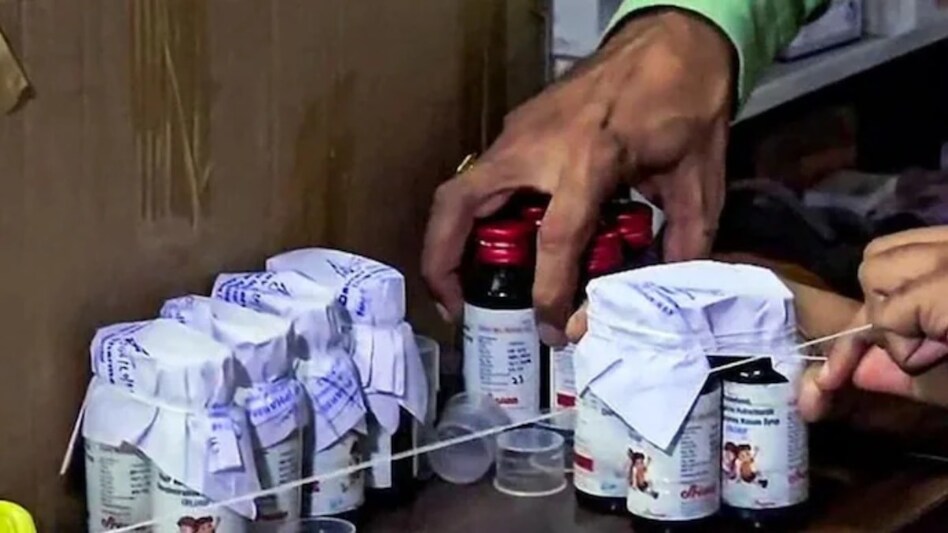
 Tamil Nadu authorities launched state-wide inspections of all pharmaceutical manufacturing units, with large-scale compliance checks currently underway.
The Tamil Nadu Drugs Control Department has permanently cancelled the manufacturing license of Sresan Pharmaceutical company after its Coldrif cough syrup was linked to the deaths of at least 22 people in Madhya Pradesh and three children in Rajasthan.
An investigation by the state health department found the presence of toxic Diethylene Glycol (DEG) in the Coldrif formulation, prompting the immediate shutdown of the Kanchipuram-based company. In response to the fatal contamination, Tamil Nadu authorities launched state-wide inspections of all pharmaceutical manufacturing units, with large-scale compliance checks currently underway.

 HDFC Bank shares in focus: MD, CFO, Group Head fined in MSRDC case; warning letters issued
 'AI is a profound civilisational shift': N Chandrasekaran says software companies won't be left behind
 Parliament set for first major debate of Monsoon Session on Anti-paper leak bill; Here's what the bill proposes
 'Create jobs, do not replace them': Satya Nadella calls for community-first AI growth
 ITR filing last date July 31: Will the deadline be extended? Here’s what we know
 DCB Bank Management | Q1 Earnings, Loan Growth, Margins & Asset Quality Explained
 Infosys Fined In France: 70-Hour Work-week Debate Returns After €175,000 Labour Penalty
 I.T. Sector Outlook: Is the Worst Over for Indian I.T. Stocks After Long Underperformance?
 France And Spain Wildfires Threaten Cap Ferret Mansions And Bordeaux Wine Country
 Maruti Suzuki Eyes 25-30% SUV Growth, Says CNG Demand Has Overtaken Diesel
 Meesho shares down 3% amid block deal buzz; check fresh targets, upside potential & more
 Coforge shares jump 10% after Q1 results, dividend; Morgan Stanley sets Rs 1,700 target
 Suzlon Q1 results today: Key expectations, share price targets ahead of earnings
 Nifty weekly expiry today: Kotak suggests short strangle strategy; key levels to watch
 BEL share price targets: What Jefferies, UBS, Goldman Sachs, Nomura, Morgan Stanley say
 'The Odyssey' box office collection Day 11: Despite Monday blues, Christopher Nolan's epic film crosses ₹140 crore mark in IndiaMeesho shares down 3% amid block deal buzz; check fresh targets, upside potential & moreCoforge shares jump 10% after Q1 results, dividend; Morgan Stanley sets Rs 1,700 target
 LPG, CNG, PNG prices today, July 28: Check latest rates in Delhi, Mumbai, Jaipur, other cities
 Brent crude lowest since July 20 as US, Iran pause attacks










