


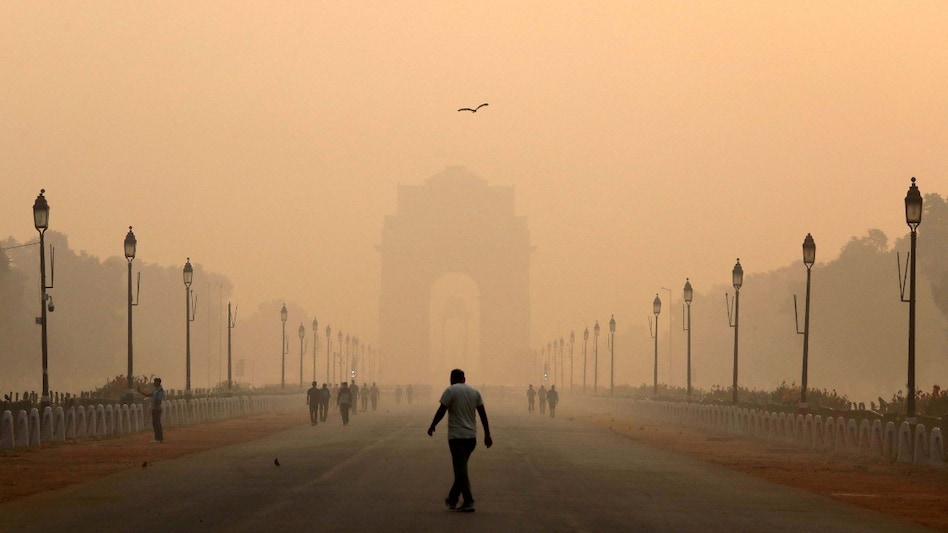
 In the NCR, air quality also varied. Noida’s Sector 1 recorded an AQI of 227 (‘poor’), while Gurugram’s Vikas Sadan touched 300 (‘very poor’).
Delhi woke up to slightly cleaner air on Wednesday after several days of choking smog. But pollution levels are still far from safe. By early afternoon, the city’s Air Quality Index (AQI) was 161, still in the ‘unhealthy’ range.
Particulate matter or PM2.5 (fine particles made of dust, soot, smoke, metals, and liquid droplets) was recorded at 70 micrograms per cubic meter, and PM10 at 92, both well above safe limits. Other pollutants also remained high, carbon monoxide at 360 ppb (parts per billion), nitrogen dioxide at 35 ppb, sulfur dioxide at 5 ppb, and ozone at 18 ppb.

 BT BIG STORY: Tata Sons restructuring: What it means for the listing and governance
 West Asia tensions: Crude climbs past $102 a barrel as US deploys third aircraft carrier strike group
 flydubai mid-air attack: Saudi hands over Omani co-pilot to UAE after cockpit assault on Tel Aviv flight
 India’s jobs market: Participation up, unemployment down — but self-employment dominates, shows MER
 Apple Pay in India: Why Axis Bank made the cut before HDFC, ICICI and SBI Card
 Oral GLP-1 Drugs: Novo Nordisk, Eli Lilly Eye India Launch In 2027 | Pharma Stocks In Focus
 U.S. Leaves Iraq After 23 Years: Who Will Fill The Power Vacuum?
  IOC Buys Iraqi Crude At $32 Discount: What It Means For Refining Margins & Profitability
 New-Age Stocks: Why Quick Commerce Could Be The Next Big Consumption Opportunity
 CDMO Stocks: Why The Sector Could See Strong Long-Term Growth
 Goldman Sachs pushes back on 'short-AI' India narrative, says report; 42 stocks in focus
 PB Fintech shares crash 48% in six sessions; stock barely holds above IPO price
 Welspun Living shares gain 5%; Jefferies retains 'Buy' call; check target price
 Nifty extends slide to eighth straight week, longest in 25 years; TMPV, Maruti, M&M, Jio Financial among top drags
 Rs 2.7 lakh crore gone! Tata Sons tussle wipes out 10% value of Tata group stocksWest Asia tensions: Crude climbs past $102 a barrel as US deploys third aircraft carrier strike group
 Quote of the Day by Steve Jobs: 'Our goal is to make the best devices in the world, not to be the biggest'flydubai mid-air attack: Saudi hands over Omani co-pilot to UAE after cockpit assault on Tel Aviv flight
 Planning to buy a car in 2027? India’s new CAFE-III rules could shape the petrol, hybrid and EV choices ahead
 Yami Gautam brings a mysterious bride into a chaotic Meerut home in Nayyi Navelli, releasing October 16












