


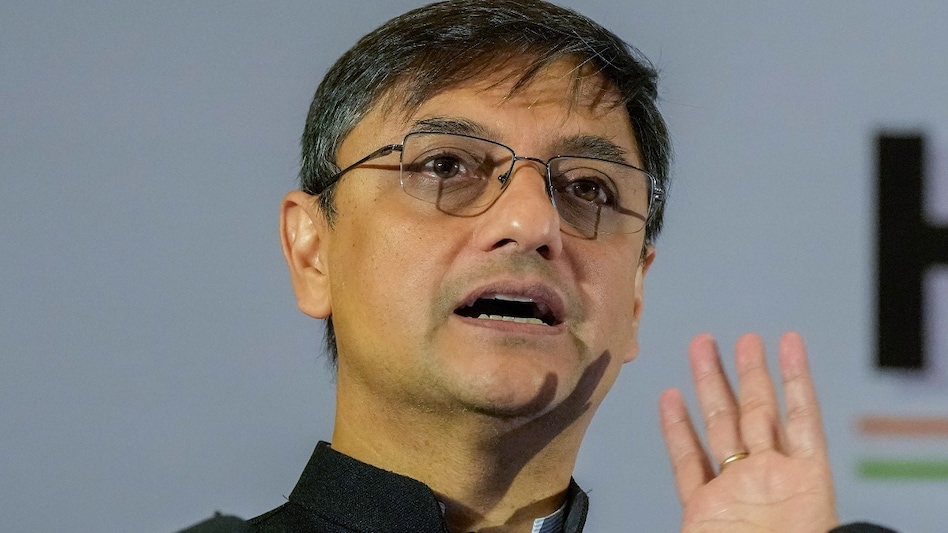
 Economist and PMEAC member Sanjeev Sanyal
 Economist and PMEAC member Sanjeev Sanyal argues that India's main economic challenge is not income inequality, but a spatial divide between the eastern and western parts of the country. "Our real problem - which I keep pointing out - is really a spatial one. The eastern half of India is distinctly poorer than the western half of India," Sanyal told Business World.
He noted that while debates about the North-South divide persist, indicators show an east-west disparity across multiple states. "People go on about the North-South divide, but on any socioeconomic indicator, it's actually an East-West divide. It's quite clear that West Bengal, Bihar or even Eastern UP - even if you look within states - you'll see that the eastern part of it is poorer than the western part. You look at Madhya Pradesh, the eastern part is poorer than the western part. This is true for any big state," he said.

 Google to shift Pixel production to India by 2027 to reduce China dependency: All details
  'India was number one': Sergio Gor applauds Indian companies for $20 bn US investment
 Income Tax Dept identifies suspicious entities sending money abroad; 394 entities under scanner
 RBI’s surprise FCNR (B) move leaves banks scrambling as communication concerns grow: Report
 Why India's medical devices manufacturing has seen limited success
 BJP’s New Digital Gameplan: Deepak Mhaskey On Winning The Social Media Battle
 Govt May Cut 100% Sugar Import Duty: Impact On Prices And Sugar Stocks
 Global Bond Yields Surge: Why Rising U.S. Treasury Yields Could Pressure Stock Markets
 Defence Stocks Rally As India Adds 405 Items To Sixth Indigenisation List Worth ₹3,000 Crore
 Breaking News | Tata Sons AGM Adjourned Over Lack Of Quorum: Sources
 Maruti, Hyundai shares emerge as top auto picks as four-wheelers eye catch-up rally
 Despite low valuations, HDFC Bank stock still not a buy: Coheron Wealth's Aditya Agarwal
  Nifty falls for fifth session as brent crude price crosses $91 per barrel mark
  From Class 5 dropout to Lalithaa Jewellery IPO: Kiran Kumar builds Rs 11,000 cr empire with 4 gold bangles
 BTTV Exclusive| Gaja IPO: CEO explains valuation, AIF growth, business model and plans after listing
 Highway builders flag risks in revised BOT model, seek changes
 SEBI NRI onboarding reform may unlock more foreign capital for Indian markets, says Nithin Kamath
 Epsilon’s lithium-ion battery anode project gets government nod
 'Why glamourise street protests?': Kanwal Sibal warns against foreign forces exploiting youth concerns
 Public health: The rising cost of falling ill












