


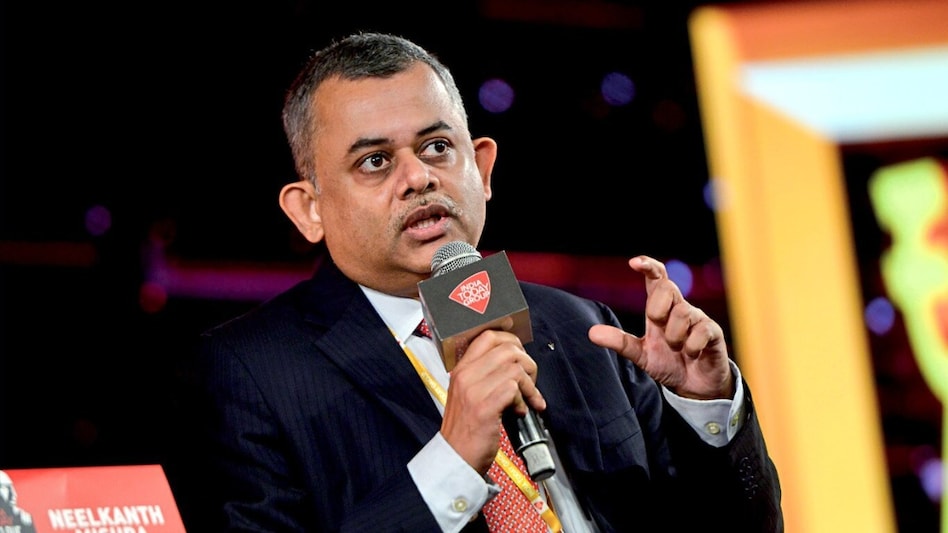
 Neelkanth Mishra, chief economist at Axis Bank
 Neelkanth Mishra, chief economist at Axis Bank and a member of the Prime Minister’s Economic Advisory Council, has said the 50 per cent tariff imposed by the United States on Indian goods is unlikely to remain in place for long.
"I don't think the 50% tariffs will last very long. I think the US also is now beginning to realise that they can keep it on because just like they've put those fentanyl tariffs on Canada and Mexico and China. They can keep it on for a while. But it's unlikely that the US-India relationship can be viewed purely through the prism of goods trade,” Mishra said in a podcast conversation with Sonia Shenoy.

 BT Big Story: Why India Inc is warming up to non-English-speaking executives
  G20 Summit: PM Modi expected to travel to US; bilateral with Trump likely on the cards, say sources
 Tata Sons IPO battle: Why Shapoor Mistry has so much at stake
 India’s imports of Russian crude fell in August; could fall further in September: Report
 Google offers free AI Plus and AI Pro to university students: Here’s how to claim it
 Macro Volatility Vs Earnings: Why Earnings Matter More Than Valuations | Anshul Saigal
 India’s CDMO Opportunity: Anshul Saigal Spots Underappreciated Names
 IT Stocks Under Pressure: What Next For Indian Markets? | Chakri Lokapriya
 Karnataka’s Welfare Schemes Under Pressure As Finance Department Flags New Challenges
 Family Disputes Can Hold Businesses Back: Nirmala Sitharaman’s Message To Family Firms
 Glenmark Pharma stock reacts as Goa facility gets VAI status post USFDA inspection
 Welspun Living, Texmaco Infra shares jump up to 6%, Meesho falls after block deals
 NSE may surpass Infosys, Titan, Kotak Mahindra Bank, HCL Tech in m-cap on market debut
  Adani Enterprises, Adani Total, Adani Green, Adani Energy, AWL Agri shares in focus today; here's why
  ESDS stock surges 302%, emerges as second-best new listing; stock that tops the list
 Govt will be cautious about Adani Group's airline plans amid conflict of interest concerns, says aviation minister Ram Mohan Naidu
 Snapdragon 8 Elite Gen 6 series is here: Qualcomm’s new chips target flagship AI smartphones
 Gold, silver prices on September 23: Check latest rates in Delhi, Mumbai, Kolkata, other citiesGlenmark Pharma stock reacts as Goa facility gets VAI status post USFDA inspectionWelspun Living, Texmaco Infra shares jump up to 6%, Meesho falls after block deals












