








 Army releases images of top generals monitoring Operation Sindoor live from South Block
 Army releases images of top generals monitoring Operation Sindoor live from South Block
As India carried out precision strikes on terror infrastructure in Pakistan and Pakistan-occupied Kashmir (PoK) under Operation Sindoor on May 7, top military commanders monitored the action live from an Army facility inside South Block, The Print reported on Monday.
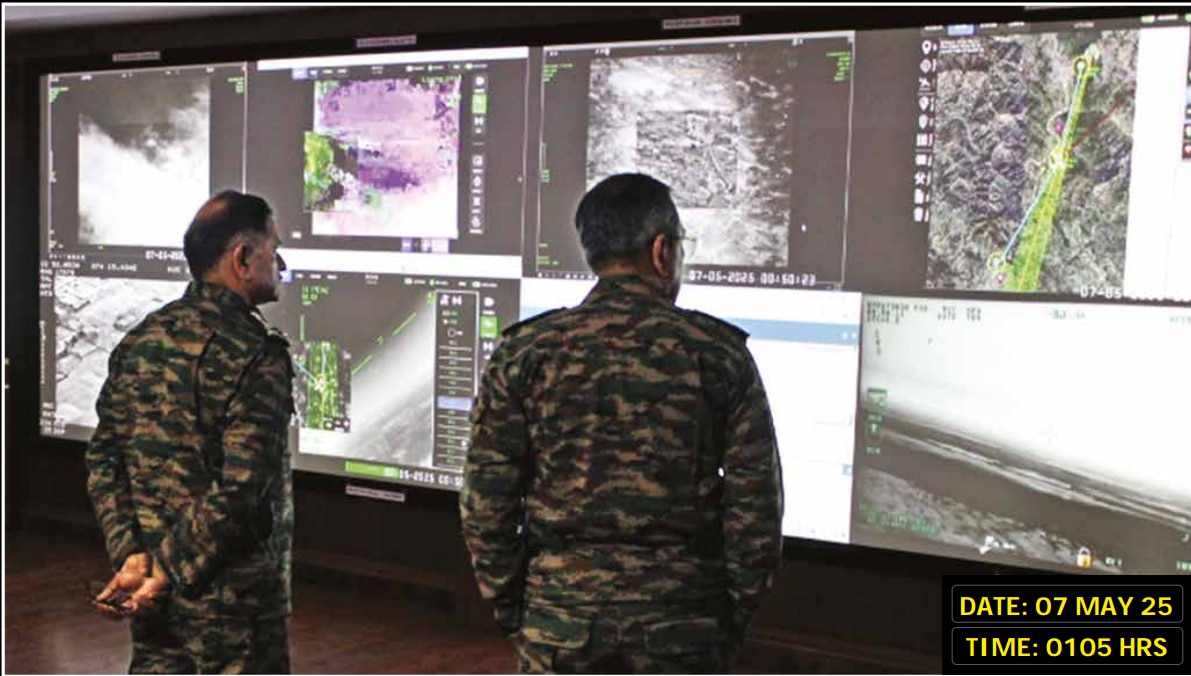
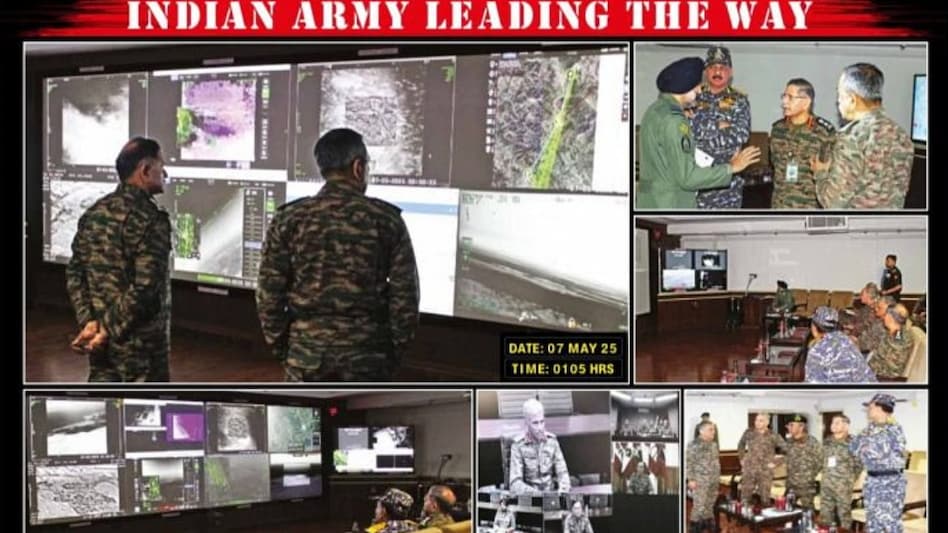
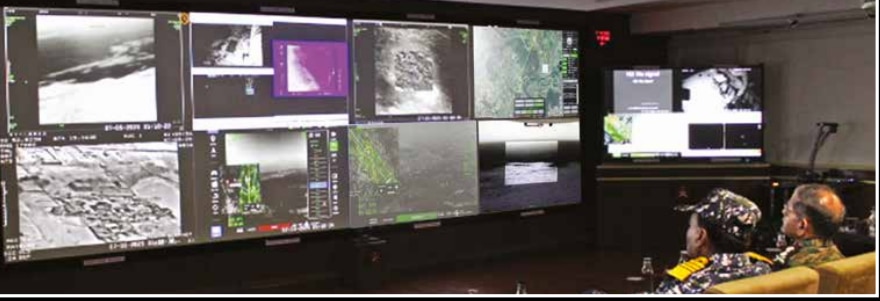
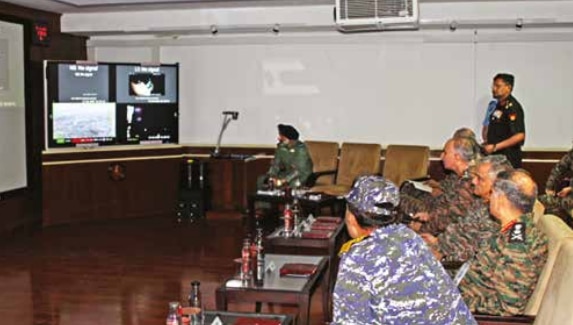
The latest edition of the Army's internal publication Baatcheet has released five images showing Chief of Defence Staff Gen Anil Chauhan, Army Chief Gen Upendra Dwivedi, Air Chief Marshal AP Singh, Navy Chief Admiral Dinesh Tripathi, Army Vice Chief Lt Gen NS Raja Subramani, and Director General Military Operations Lt Gen Rajiv Ghai watching real-time feeds on large screens.
One of the photos is time-stamped 0105 hours on May 7, the moment the operation began. The room was reportedly equipped to receive live transmissions from various surveillance and targeting systems used by the three services during the operation.
Among the key technologies deployed was the Scalp missile, used by the Indian Air Force to hit two of the nine terror targets. The missile transmitted continuous video from its nose during flight, enabling in-flight navigation. The remaining seven targets were struck by the Indian Army using loitering munitions and other drones.
The terror targets included Sawai Nala Syedna Bilal, Kotli Abbas, Bhimber, Kotli Gulpur in PoK, and Sarjal and Mehmooma Joya in mainland Pakistan. The Army also reported the use of air defence systems like L-70, ZU-23 guns, OSA-AK combat vehicles, MRSAM, and Akash to shoot down nearly 300 Pakistani drones in retaliation to subsequent cross-border strikes on May 8, 9, and 10.
The Baatcheet issue also credits Lt Col Harish Gupta and Havildar Surinder Singh as the creators of the official Operation Sindoor logo. It reiterates the Army’s assessment that The Resistance Front (TRF) is a Lashkar-e-Taiba front, while Kashmir Tigers and People’s Anti-Fascist Front are linked to Jaish-e-Mohammad.
Meanwhile, CDS Gen Chauhan visited the Army's northern and western commands on Sunday to review operational preparedness. At Udhampur, he was briefed on the neutralisation of terror networks and rehabilitation efforts for civilians in border areas.
"At Udhampur, the Chief of Defence Staff was briefed on the success of the Northern Army in neutralising the terror network, adversary's assets that supported terror and counter-measures taken to protect own military assets and civil population during Operation Sindoor," the army said.
The Chandimandir command detailed both kinetic and non-kinetic actions undertaken during the operation. "A detailed overview of the operational environment, defence preparedness and key outcomes of the operation were provided, while underscoring the prevailing security situation along the western borders," the Army said in a statement.
Gen Chauhan praised the “valour, resolve, precision & discipline” of the troops involved, attributing the success of Operation Sindoor to the "high morale, discipline and unwavering commitment" of the Indian Army.
India launched Operation Sindoor in retaliation to the Pahalgam terror attack, targeting nine sites linked to terror outfits across the border. Following India's strikes, Pakistan attempted retaliatory attacks over the next three days, which were repelled.
 US-Israel-Iran war LIVE Updates: 'You'll see it within 2-3 hours' - Iranian envoy confirms safe passage to Indian ships via Hormuz
 West Asia conflict: Record India outflows, GEM flows negative as markets enter ‘no-buyer phase’, says report
 IndiGo to levy fuel charge from March 14 as aviation turbine fuel prices surge
 India’s transparent insolvency resolution process has taken a hit: Vedanta chairman on Jaiprakash Associates
 Helium shortage: Dixon Tech, Lal PathLabs, Vedanta, HAL, MTAR shares take a hit; here's why
  Hidden Gems To Be 'Kohinoors Of Tomorrow'
 LPG Shortage Sparks Panic Buying: Induction Cooktop Sales Surge 300% Across India
 Iran Threatens Oil Shock As Tankers Burn & Missiles Fly Over Israel, Hormuz Routes At Risk
 LPG Shortage Sparks Parliament Showdown: Rahul Gandhi Attacks Govt As MPs Protest With Utensils
 Sergio Gor Defends H-1B Visa Delays, Says Not Targeting India | India Today Conclave
 Helium shortage: Dixon Tech, Lal PathLabs, Vedanta, HAL, MTAR shares take a hit; here's why
  RIL stock falls 14% from January high; what lies ahead for the index heavyweight?
 Rs 2,000 crore daily loss! OMCs take Rs 20 per litre hit on petrol, Rs 45 on diesel
 Sensex, Nifty plunge over 5% this week; investors lose Rs 19 lakh crore — will markets fall further next week?
 NSE unlisted share hold firm as IPO preps intensify; valuations near Rs 5 lakh crore