












The Ministry of External Affairs has issued a second advisory urging Indian citizens to avoid traveling to Nepal and advising those already there to stay indoors, avoid the streets, and follow local safety instructions.



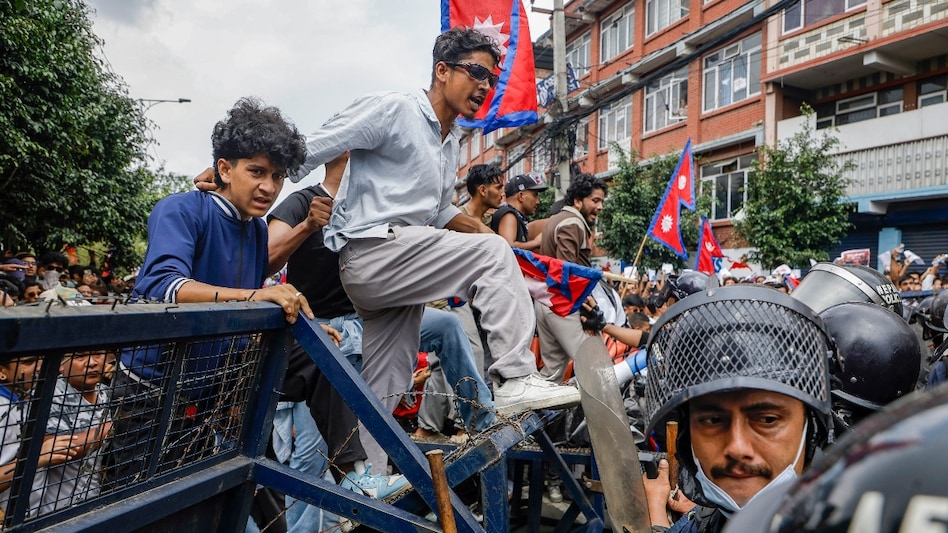 The protests, primarily youth-driven, have led to the resignation of Nepalese Prime Minister KP Sharma Oli.
 The Ministry of External Affairs has issued a second advisory urging Indian citizens to avoid traveling to Nepal and advising those already there to stay indoors, avoid the streets, and follow local safety instructions.
In light of the ongoing political unrest in Nepal, the Indian Embassy in Kathmandu has urged all Indian nationals in the country to note emergency contact numbers. These contacts are intended to assist in case of emergencies or if any help is required amidst the current volatile situation.

 AI safety warning: Sam Altman, Elon Musk back Anthropic CEO’s call to slow down frontier AI. Why?
 Tata Sons listing may be inevitable after RBI rejection to deregister as CIC
 US-Iran tensions add another layer of volatility to gold as oil prices complicate Fed outlook
 Pezeshkian rejects US nuclear charge, says ‘enrichment’ was an alibi to attack Iran
 RBI rejects Tata Sons’ CIC deregistration bid, makes stock market listing mandatory: Report
 BRICS Summit 2026: PM Modi Hosts Gala Dinner For Putin, World Leaders At Bharat Mandapam
 BRICS Summit 2026: Mega VIP Move! Ministers, CMs Travel Together In Bus
 PM Modi Proposes BRICS Reform Roadmap, Calls For Global Governance Reset
 PM Modi Proposes 10-Point BRICS Reform Roadmap For Global Governance
 PM Modi, Xi Jinping, Vladimir Putin & BRICS Leaders Explore Bharat Innovates Exhibition In Delhi
 SEBI’s CAS proposals: Expert weighs in on new expiry-day settlement price methodology
 Large caps stocks under pressure as rising US bond yields, crude prices weigh on foreign flows
  SEBI proposes bringing unexecuted Iceberg orders into closing auction
 SEBI proposes new expiry-day settlement formula for derivatives after CAS concerns
 Silver may climb to Rs 3.25 lakh, but January peak looks distant: Navneet Damani
 Quote of the Day by Nikhil Kamath: 'I’ve learned everything I have learned only through failure. I don’t think success teaches much' Tata Sons listing may be inevitable after RBI rejection to deregister as CICAI safety warning: Sam Altman, Elon Musk back Anthropic CEO’s call to slow down frontier AI. Why?
 BRICS Summit 2026: Cloudy skies, light rain forecast as summit concludes on Sept 13
 ₹60 lakh EV? VinFast VF9 is set to shake up India’s luxury electric SUV market


