


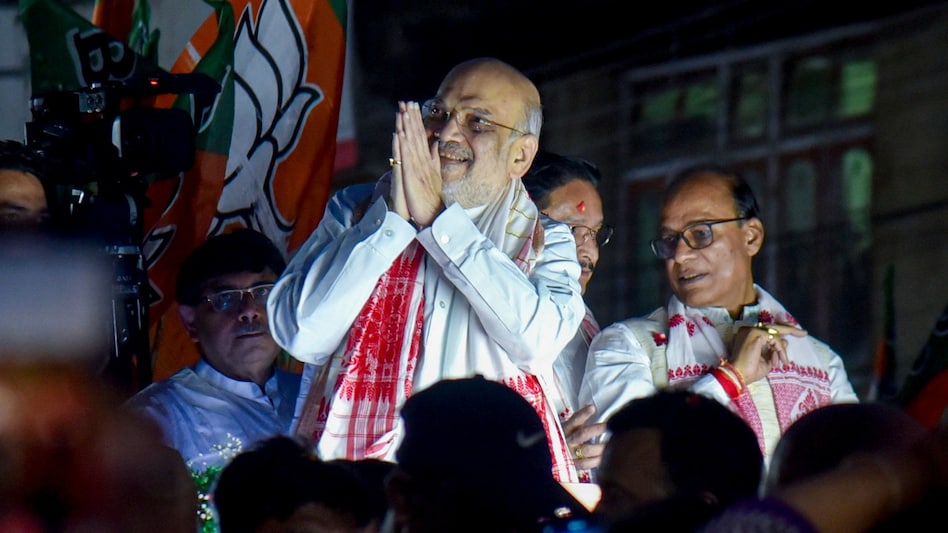
 Union Home Minister Amit Shah
 Union Home Minister Amit Shah on Saturday ruled out any disruption to normal life amid global energy market volatility, saying there was "no question of a lockdown" and that fuel supplies remained stable across the country.
Must Watch: Modi Govt Cuts Fuel Duties, ATF Tax Scrapped Amid Oil Shock & Market Jitters

 NDA explores holding joint polls in 22 states, UTs in 2029: Report
 ABH Healthcare IPO: Check key dates, price band, issue size, latest GMP, listing details & more
 Cargo vessel with 20 Chinese crew sinks near Odisha; Coast Guard deploys 3 ships for rescue ops
 'Asked too much, offered too little': Carney on why Canada suspended US trade talks
 Trump doubles down on Hormuz claim, shares map calling strait 'NEW US Territory'
 No Claim Bonus Explained: When Should You Claim Or Pay For Repairs Yourself?
 Motor Insurance Premium: What Factors Determine How Much You Pay?
 How Is Retirement Income Taxed For Senior Citizens? Key Rules Explained
 Rental Income Tax: 3 Key Deductions Every Senior Citizen and Property Owner Should Know
 Meta’s $200 Billion Trial: Did Instagram & Facebook Keep Kids Hooked?
 ABH Healthcare IPO: Check key dates, price band, issue size, latest GMP, listing details & more
 India stocks lag global markets in 2026: BofA data shows 9.1% decline in USD terms
 'FOMO, fixed return': SEBI proposes revamped ad code for bond portals from misleading investors
 Crompton Greaves says no plan to sell stake, expects revenue to double by FY31
 Gaja Alternative Assets IPO: 3 ways to check application status; allotment odds, GMP, listing date
 ‘F&O trading is bad for almost 99% of retail traders’: Nikhil Kamath draws ITC parallel, says brokers need to diversify
 'My three friends ended up seeing psychiatrists': Why ixigo co-founders walked away from a lucrative exit
 'IAF is not against theaterisation': Air Force chief AP Singh cautions against copying foreign models
 Gold, silver prices today (August 23): Check latest rates in Delhi, Mumbai, Kolkata, other cities
 CJP leader Abhijeet Dipke booked over alleged unauthorised entry into Latur school, threatening teachers












