









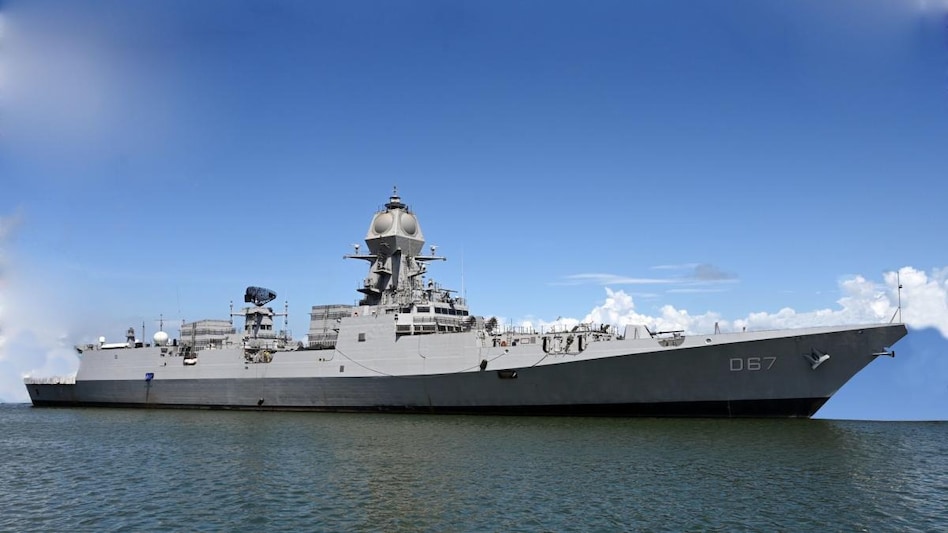
 Sanyal bats for full-stack marine engine independence: "A hull without an engine is just a shell"

 Sanyal bats for full-stack marine engine independence: "A hull without an engine is just a shell"
India's quest for self-reliance in critical defence technologies must extend beyond fighter jet engines to marine propulsion systems, argues economist Sanjeev Sanyal and policy analyst Aditya Sinha in a detailed opinion piece in The Indian Express.
Highlighting the strategic vulnerabilities of foreign engine dependence, the authors wrote: "A vessel may be built in India, flagged in India, and crewed by Indians, but unless we build the engine, we will never truly steer our own course."
The remarks come amid increased calls for indigenous aero engine development — particularly the Kaveri engine — and come at a time when India's shipbuilding ambitions are being scaled up through major policy and investment pushes.
"The 2025 Union budget laid the foundation for a maritime resurgence, with mega clusters, a Rs 25,000-crore Maritime Development Fund, customs duty exemptions, and infrastructure status for large vessels," the authors noted.
However, they cautioned that India’s dependence on a handful of global marine engine manufacturers poses a strategic chokepoint. "Presently, over 90 per cent of engines rated above 6 MW installed on Indian commercial and naval vessels are sourced from a concentrated group of five global manufacturers," they wrote, naming MAN Energy Solutions (Germany), Wärtsilä (Finland), Rolls-Royce (UK), Caterpillar-MaK (US/Germany), and Mitsubishi Heavy Industries (Japan).
"These engines are embedded with proprietary ECUs, closed-source control software, and IP-restricted components," they added, warning that "any disruption in diplomatic or trade relations, export control regime, or intellectual property licensing can effectively immobilise India’s shipbuilding programme."
The authors praised the Indian Navy's April decision to sanction a Rs 270-crore order to Kirloskar Oil Engines for a 6 MW marine diesel engine, but said the true game lies in building engines in the 30 MW class and above. They flagged four major hurdles to overcome: lack of access to modern engine designs, metallurgical limitations, gaps in tribology and machining precision, and outdated training in India's top institutes.
"To develop large marine engines, India must build a dedicated propulsion design ecosystem," they said, urging investment in advanced materials, embedded software, simulation capabilities, and domain-specific tools.
Their pitch fits with growing domestic pressure to indigenise aero engines as well. Former IAF fighter pilot Group Captain Ajay Ahlawat recently called for "Kaveri 2.0," a new turbofan engine for AMCA and Tejas Mk2, and stressed that "the need for an indigenous aero engine has now become an urgent national demand." He warned that engine dependency, unlike other imports like ejection seats or radars, could ground the fleet if supplies are cut.
Sanyal and Sinha expressed similar concerns for naval platforms: "A hull without an engine is just a shell, strategically dependent on foreign suppliers." They recommended shifting away from legacy PSUs and large firms alone, and instead funding innovation-driven startups with the support of institutions like IIT Madras. "Without the ability to build our own marine engines, we are laying the keel for dependency."
 From 'monstrously stupid' to mainstream fuel: Has ethanol proved legendary Charlie Munger wrong?
 Political stability beats high returns: The world's safest countries for investors in 2026
 Centre cracks down on Meta over child sexual abuse ads on Instagram; seeks reply in 7 days
 Mumbai rains: Red alert remains as 300 mm+ rain batters city; BMC urges residents to stay safe
 Super Typhoon Bavi threatens US Pacific islands: What makes it a Category-5 beast?
 TVS Capital Funds’ ₹4,000 Crore Investment Plan
 Mega IPOs To Shake Indian Stock Market? SBI AMC, NSE, Jio Platforms And Liquidity Impact Explained
 Power Demand Is Booming: Market Expert Reveals Why Energy Stocks Could Be The Next Winners
 Lower PF Contribution Ceiling Explained: Will Higher Take-Home Salary Increase Your Tax?
 FMCG Stocks Vs Consumption Plays: Where Should Investors Put Their Money Now? Devang Explained
 Zomato, Swiggy shares: How to play the quick commerce theme ahead of a potential Zepto IPO
 YES Bank, HDFC Bank, Axis Bank, RBL Bank, IDFC First: Banking stocks to buy ahead of Q1 show
 Sterlite Tech, Olectra Greentech, Kaynes Tech shares: Buy, hold or sell? Trading strategy
 HCLTech, Mphasis, Persistent, Tech Mahindra, Zensar Tech: Brokerage revises ratings, share price targets
 Midcap, smallcap stocks offer fresh value as earnings support revival, says Devang Mehta