












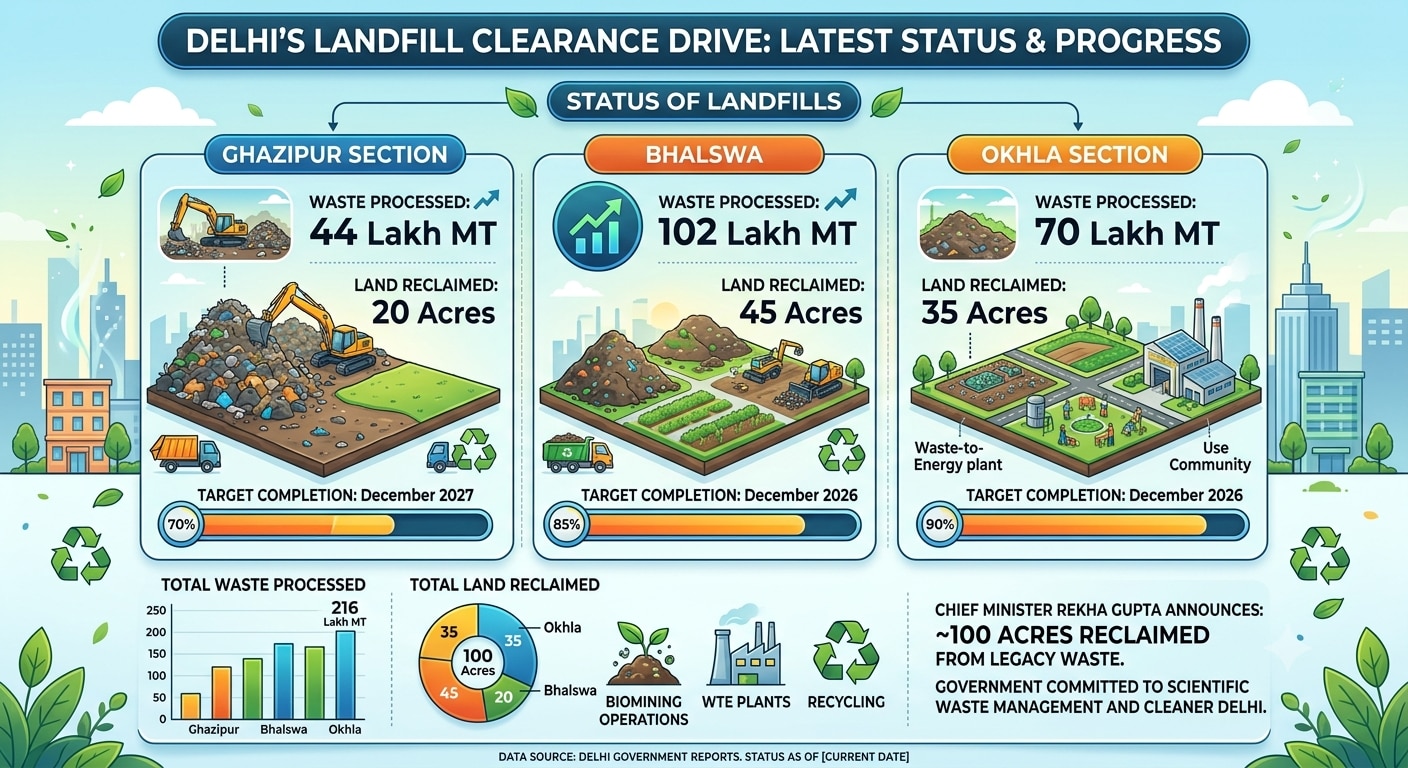



 To prevent new garbage mounds from forming, the administration has finalised plans to set up four new Waste-to-Energy (WtE) plants across the city.
 Heavy excavators and biomining units have carved through decades of accumulated legacy waste across Delhi’s three iconic garbage mountains.
Delhi Chief Minister Rekha Gupta announced that the government has successfully processed 216 lakh metric tonnes of garbage across the Okhla, Bhalswa, and Ghazipur landfill sites. The systematic biomining drive has cleared significant stretches of land previously buried under towering waste heaps, reclaiming approximately 95-100 acres across the capital.

 India's China trade deficit may not tell the full story, FM Sitharaman explains why
 Festive season sales: ACs, TVs, appliances to get costlier by up to 8% from October 1
 Tata Sons-Trusts battle: When Justice Nariman said nominee directors not bound by Trusts' directions
 Mehli Mistry steps down from Tata Medical Centre Trust board, marks 6th exit from group entities
 Global debt hits $365 trillion: Why inflation masks the world’s rising debt burden
 R Veeramani Case: Granite Tycoon Faces Widening POCSO Probe In Chennai
 Gen Z And Money: Why Young Investors Want Quick Returns Over Long-Term Wealth Creation
 How Is Alexa+ Different? Will It have Ads Even If You Pay? Exclusive Chat
 Demand Robust Across Segments | Production To Ramp Up, Exports To Expand: Vivek Srivatsa
 GST Council To Meet On October 7: Invoice Matching, ITC & UPI MDR Tax In Focus
 IPO rush: Four IPOs conclude today; check subscription status, other details of issues still open
 Meesho shares slip 7% as Nomura assigns 'reduce' call; here's what the brokerage says
  Sensex, Nifty extend losing streak to seventh week, longest since 2020: What's next?
 Suzlon in bear grip: Oversold signals emerge near 52-week low for the stock
  EIL shares jump 7% to hit record high; stock up nearly 62% in six months: What's driving the rise?
 Hotmail co-founder Sabeer Bhatia calls for 55% inheritance tax to make India a ‘truly competitive nation’
 From ₹18 lakh debt to ₹2 crore: How Anushka and Virat's chole bhature order changed a restaurant's fate India's China trade deficit may not tell the full story, FM Sitharaman explains why
 CISF catches alleged fraudster at Pune airport after passenger transfers Rs 11,000, finds 3 different identities
 ‘Zero tolerance’: Air India suspends pilot after failed Zurich alcohol screening


