









 A video clip of the remarks quickly went viral on social media platforms, triggering immediate criticism and sharp political satire from opposition leaders.
 A video clip of the remarks quickly went viral on social media platforms, triggering immediate criticism and sharp political satire from opposition leaders.
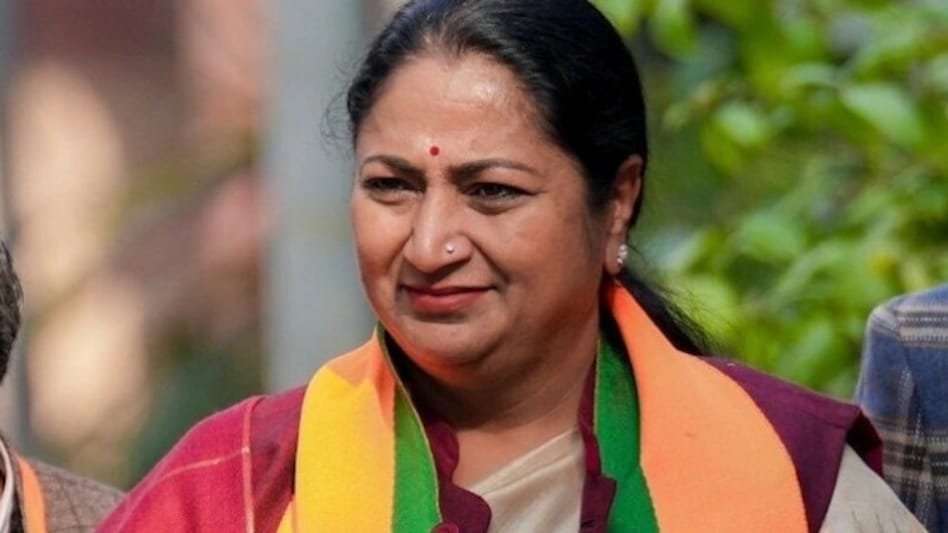
As the national capital grapples with an increasingly dire water crisis, Delhi Chief Minister Rekha Gupta has sparked a major political storm and a social media backlash over her explanation for the city's dry taps.
Addressing a BJP party event, the Chief Minister offered a unique scientific theory for the ongoing shortage, claiming that supplied water is simply vanishing into thin air on its journey due to the intense heatwave.
"People are facing a severe water shortage. When the heat is so intense, some of the water that is supplied evaporates on the way. Because of that, Delhi is facing a water shortage. (Pani ki kitni dikkat ho rahi hai.) Jab itni bhari garmi ho rahi hai, pani jo aata hai wo evaporate ho jata hai beech me kuch pani, to uske karan shortage ho jati hai," she said.
A video clip of the remarks quickly went viral on social media platforms, triggering immediate criticism and sharp political satire from opposition leaders.
Former Delhi minister and Aam Aadmi Party leader Saurabh Bharadwaj took a swipe at the theory online, posting, “Water evaporation is the cause of water shortage in Delhi. So 'Condensation' should be upcoming solution.”
Congress spokesperson Ragini Nayak also did not mince her words, taking a sharp jibe at the Chief Minister's logic as the online debate intensified.
On the ground, however, the reality for Delhi residents is far from a laughing matter. The actual numbers paint a much more critical picture than simple atmospheric evaporation.
The water level at the Wazirabad barrage has remained critically low, dropping to around 669.5 feet against its normal level of 674.5 feet. This drop has forced the Delhi Jal Board (DJB) to slash production at two of its key water treatment plants — Wazirabad and Chandrawal — due to a severe shortage of raw water supply. The disruption is actively squeezing water availability across North, West, and parts of South Delhi.
The ground reality is particularly brutal in areas like Dakshinpuri in South Delhi. With temperatures soaring past 45 degrees Celsius, the critical water shortage is directly impacting around 5,000 local residents. The situation has become so desperate that many local women who work as domestic help are now forced to ask their employers for permission to bathe at their workplaces.
In response to the growing crisis, a Delhi Jal Board official stated that the DJB and the government are working around the clock to ensure minimum inconvenience to the public.
Earlier controversial remarks
This is notably not the first time Chief Minister Rekha Gupta has faced public backlash and opposition ridicule over environmental or historical explanations.
In December 2025, while addressing the city's severe winter pollution crisis, she drew widespread mockery during an interview by referring to the Air Quality Index (AQI) as "AIQ." In that same statement, she claimed that AQI was "a kind of temperature which can be measured by any instrument," leading to an immediate wave of memes and criticism from environmental activists and opposition parties alike.
Furthermore, during the Delhi Assembly's Winter Session in January, the CM triggered a massive historical dispute on the floor of the House. While delivering a speech, she mistakenly linked the actions of revolutionary freedom fighter Bhagat Singh to a "Congress government."
The gaffe prompted AAP leaders to stage protests and upload satirical videos, pointing out that Bhagat Singh, Rajguru, and Sukhdev had targeted British colonial rule in 1929, decades before India achieved independence.
 Meet Bangladeshi-origin Robin Khuda, whose firm AirTrunk announced ₹3 lakh crore investment in India
 Tata Trusts refutes 1989 share transfer claims, says transaction was fully lawful
 RBI's 5 Big Moves To Attract Foreign Capital Amid U.S.-Iran War & Rupee Pressure
 What makes Delhi airport the country’s largest aviation hub?
 RBI holds repo rate at 5.25%: What it means for home loan borrowers and homebuyers
 Hindalco Eyes ₹1,000-Cr Revenue From Eternia Business By 2028; New Copper Recycling Plant Soon
 Govt's Big Tax Gift To FIIs! Will Global Money Flood Back Into Indian Markets?
 What’s Hot: Stocks, Gold & Big Money Moves | Daily Market Show | Business Today TV
 Daily Calls LIVE: Ask Your STOCK MARKET TODAY QUERIES | Market Update LIVE | Share Market News Today
 TMC Rebellion Deepens: After MLAs, Are MPs Next To Leave Mamata Banerjee's Party?
 CMR Green Tech IPO attracts over Rs 56,200 crore bids, subscribed 127 times; check GMP, listing timeline
 IFCI shares gain 31% in nine days: Key factor behind the rally and price targets
  IT stocks to ‘Buy’ amid AI push: Infosys, TCS among nine names – Check target prices
 BT Closing Bell | Sensex settles 474 pts lower from day’s high, Nifty below 23,400; Tata Group trio lead index losers
 Rajesh Exports latest news: 'Confident that Sebi will … ' - Another clarification from Rajesh Mehta-led company | 10 points